★★★★★
“The guys did a great job in repairing our chimney. They were reliable, friendly and efficient. Buddy kept me in the loop throughout the whole process and I would not hesitate to use Roofline again!”
Hollie FurnivalTwo legitimate answers, and they are genuinely different products rather than a cheap one and an expensive one.
A traditional ridge is bedded: the ridge tiles are laid on a bed of sand and cement along the apex, with mortar between them, and that mortar is doing the whole job of holding them down.
It fails for three reasons that all arrive together. The ridge is the part of the roof with the greatest daily temperature swing, so the mortar is constantly expanding and contracting against tiles that move at a different rate. Frost gets into any crack that opens. And rigid mortar has no tolerance for the small movements a roof makes.
Once it cracks, water gets behind it, and the freeze-thaw cycle does the rest.
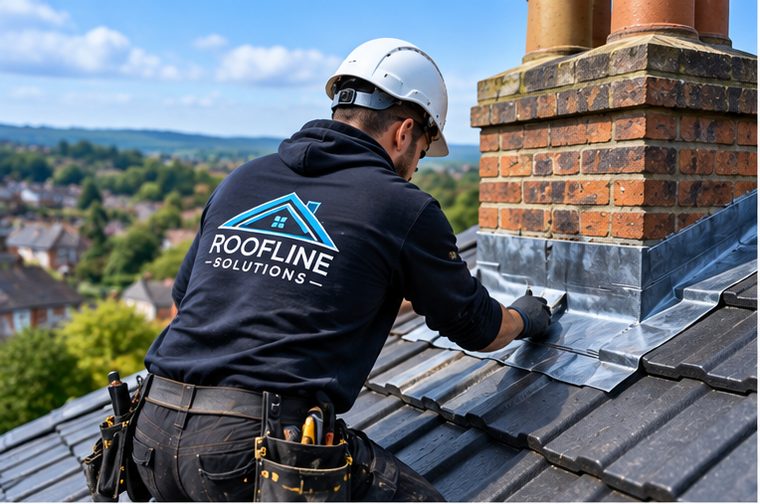
Rebedding means the ridge tiles come off, all the old mortar is removed from the tiles and from the roof beneath, and they are relaid on a fresh bed.
The bit that matters is "all the old mortar removed". The commonest bad job in this category is pointing over the existing bedding - filling the visible cracks from outside without lifting anything. That looks tidy for a season and fails faster than the original did, because new mortar has nothing to bond to and the failed bed underneath is still failed.
A proper rebed also uses a sensible mix - too strong and it is more rigid than the tiles and cracks sooner; too weak and it does not hold. And it should include mechanical fixing of the ridge tiles rather than relying on the mortar alone, which brings us to the standard.
Rebedding matches what is already there, which matters on an older or a characterful property, and it is generally the lower up-front cost. It will need doing again in due course.
A dry ridge replaces the mortar with a mechanical system: a batten along the apex, a ventilated roll or union piece that seals against the tiles either side, and each ridge tile screwed down through a clamp or bracket.
It does not rely on mortar at all, so it does not crack, and it tolerates the movement that breaks a bedded ridge. It also ventilates the roof space at the ridge, which is a genuine benefit in a loft that is otherwise struggling to breathe - and in a shaded, damp Frodsham roof space that is worth having.
It costs more up front, it looks slightly different close up, and on a listed building or in a conservation area it may not be the right answer. On an ordinary house it usually is.
Roof tiling in Britain is designed against BS 5534, and the 2014 revision of it changed the position on mortar significantly: mortar alone is no longer accepted as a fixing for ridges, hips and verges. New work uses mechanical fixing, either dry systems or bedding plus fixings.
That does not make your existing mortar-bedded ridge defective - it was correct when it was laid. It does mean that a new ridge going on today should not be relying on mortar alone, and if somebody is proposing a straight rebed with no mechanical fixing, that is a fair thing to ask about.
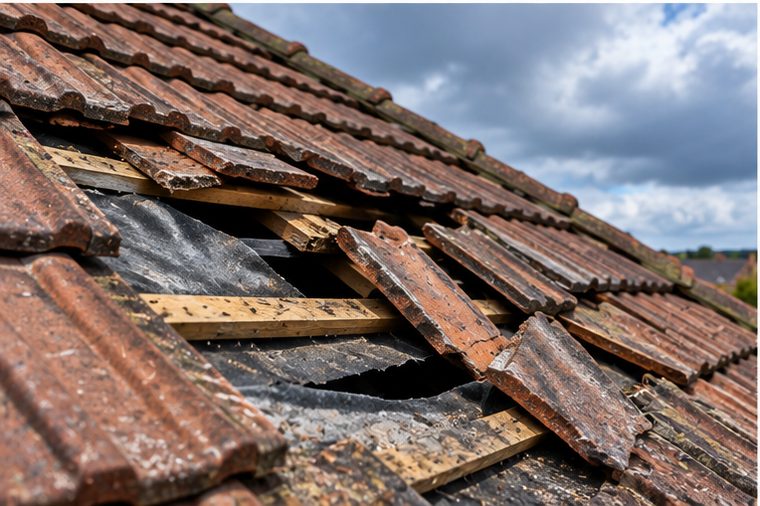
If one section of a bedded ridge has failed, the rest of it is the same age, the same mix and has had the same weather. Doing the whole run while access is up is materially cheaper than three visits over three years, and it is the single most common piece of advice we give on this.
It is also worth knowing that mortar work is weather-dependent. Bedding laid in a frost does not cure properly and fails early, so in cold weather the honest answer is sometimes to make it safe now and do the permanent work when it will actually set. A dry ridge does not have that constraint, which is occasionally the deciding factor in midwinter.
The rest of the series, on the questions people ask most.
Every town has its own page, written around what the roofs there are actually like. Start with the main roof repairs page.
“The guys did a great job in repairing our chimney. They were reliable, friendly and efficient. Buddy kept me in the loop throughout the whole process and I would not hesitate to use Roofline again!”
Hollie Furnival“Excellent work replacing ridge tiles, repointing chimney and repairing flashing. Also fixed other broken tiles. Clean and tidy job. Would definitely recommend.”
Neil“Very pleased with Roofline
Efficient, reliable, fast and friendly”
Describe what is happening and roughly where you are, and we will come back to you — usually the same day. If water is coming in now, please call instead.
Prefer to talk? Call 07464 259566 · WhatsApp 0044 7464 259566 · Email Evensbuddy@yahoo.com
We cover Chester, Cheshire, the Wirral and Flintshire from Elton, just north of Chester.
2 Manley View
Elton
Chester
CH2 4QF
Almost all of our work happens at your property rather than here, so please call before travelling.
Monday – Friday — 24hrs — Emergency Call-Outs
Saturday — 8:00 – 19:00
Sunday — 8:00 – 19:00
Weekday emergency call-outs are answered around the clock. Weekend cover is 8:00 to 19:00.