Roof Repairs After Wind and Heavy Rain
The tell is where the damp is and when it happens. Roof leaks generally show on ceilings, in the roof space, or around a specific feature such as a chimney or a roof window. Rainwater goods generally show on walls — a vertical damp strip below a gutter joint, staining at the top of an upstairs wall, or a patch that always appears in the same corner, always after prolonged heavy rain rather than after wind.
The mechanism is straightforward. A gutter that is blocked, sagging or has a failed joint overflows at that point. The water then runs down the fascia and the wall behind it, soaks the masonry, and after enough of it the inside face goes damp. Do that every winter for five years and the wall never fully dries out.
The other version is water going the wrong way behind the gutter. If a gutter has dropped, or the felt at the eaves does not carry into it properly, water coming off the roof lands behind the gutter rather than in it, and runs straight down the top of the wall. From inside, that looks exactly like a roof leak. It is a twenty-minute job at the eaves.
Blockage is the commonest single cause, and it is cumulative. Grit washes off the roof covering, leaves and moss add to it, and eventually the gutter is carrying a sludge that holds water permanently and freezes solid in January. A cast iron downpipe full of ice splits, and the split shows up as a damp stripe in March.
None of that is a criticism of the roof, and we will tell you when the roof is fine. It is also why we look at the rainwater goods on every repair inspection, whether or not anybody asked us to. If the gutters are the problem, that is the cheapest good news we ever deliver.
When it genuinely is the roof, the Ellesmere Port pattern is what you would expect from a town this exposed to the estuary: verges, ridges and the first course above the gutter, plus flashing at the abutments on the extensions that most of the housing here has gained at some point.
Heavy Rain Versus Driving Rain
These are two different tests and a roof can pass one and fail the other. Prolonged vertical rain tests drainage: gutters, valleys, outlets, and whether water can get away fast enough. Wind-driven rain tests the covering and its details: laps, verges, flashings and anything with an exposed edge.
So the single most useful thing you can tell us on the phone is which sort of weather produces the leak. "Only when it is blowing in from the estuary" and "only after it has rained solidly for a day" point at completely different parts of the building.
Repair or Replace in Ellesmere Port?
Because so many Ellesmere Port calls turn out to be drainage rather than covering, the repair-or-replace question often does not arise at all. Get the water off the building properly and the problem stops.
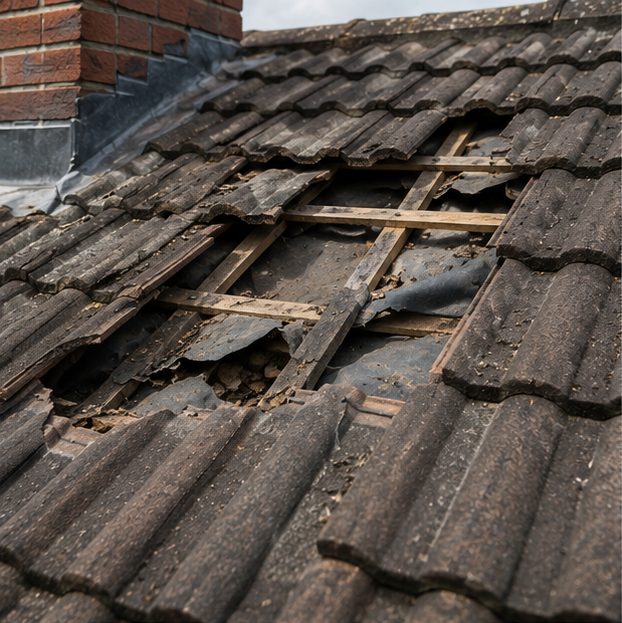
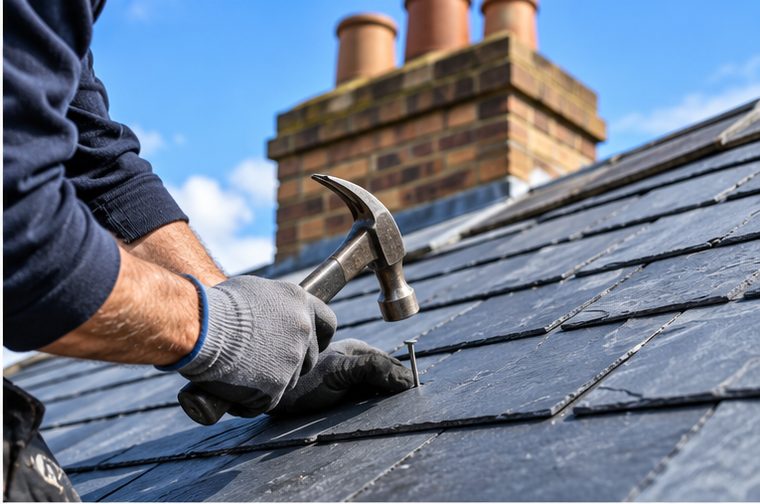
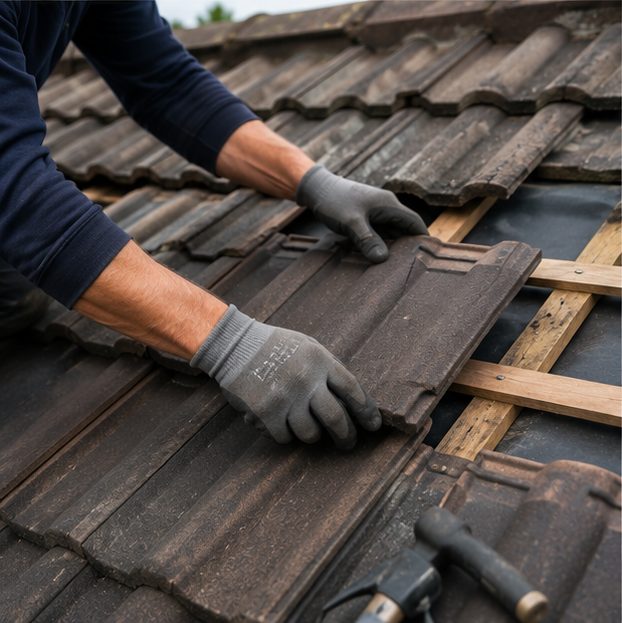
Where the covering itself is at issue, the ordinary test applies. A specific defect with a specific cause is a repair. Failures appearing across a slope with no cause each time mean the covering is going, and we will say so plainly rather than sell you a fourth repair.
Storm Damage & Emergency Roof Repairs in Ellesmere Port
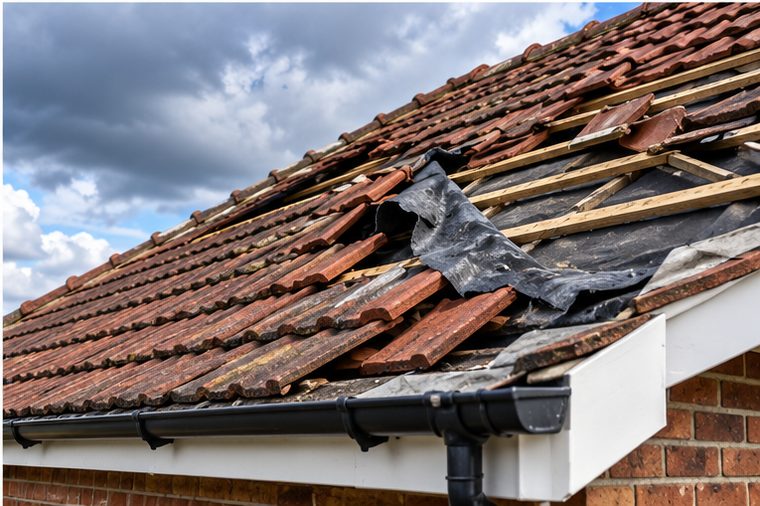
The estuary gives the wind a long clear run at this town, and after a gale the calls are verges, ridges and lifted flashings rather than holes in the middle of slopes.
Heavy rain produces a different set of calls entirely — overflowing gutters, backed-up valleys and water getting behind fascias. Both are urgent; they are just not the same problem, and it helps to say on the phone which weather brought it on.
Emergency call-outs run 24 hours a day, Monday to Friday, with
Saturday and Sunday cover from 8:00 to 19:00.
Please do not go up to look. More people are
hurt inspecting storm damage than by the storm itself. Call
07464 259566 and describe what you can see from the ground.