★★★★★
“job well done good communication throughout the job very clean and tiddy when the job is finish flat roof replacement many thanks.”
Sumit Bal
Leaks traced and repaired, overlays where they genuinely make sense, and full strip-back and replacement in EPDM rubber — on garages, extensions, dormers, porches and bay canopies.
There are three honest answers to a flat roof that is letting water in, and the difference between them is not a small one. Sometimes it is a repair: a split at a lap, a trim that has lifted, a blocked outlet, a cracked fillet where somebody used mortar instead of lead. Sometimes the covering has had enough but the deck underneath is still sound, and a new membrane over a properly prepared base is the right call. And sometimes the deck has gone, in which case anything laid over the top is money spent twice.
Nobody can tell you which of those three you have from the ground, and anyone who quotes without getting on the roof is guessing. What we do is look, say which one it is, and say why — including on the jobs where the answer is “this needs far less than you were expecting”.
Roofline Solutions works on flat roofs across Chester, Cheshire, the Wirral and Deeside: rear extensions, detached and attached garages, dormer tops and cheeks, porch and bay canopies, outbuildings and conservatory roofs. Where we replace, we replace in EPDM rubber, and the material itself is explained in detail on the EPDM rubber roofing page rather than repeated here.
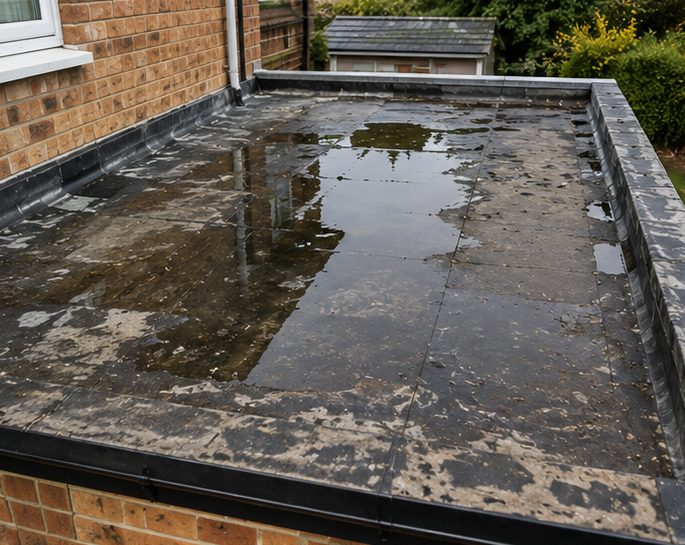
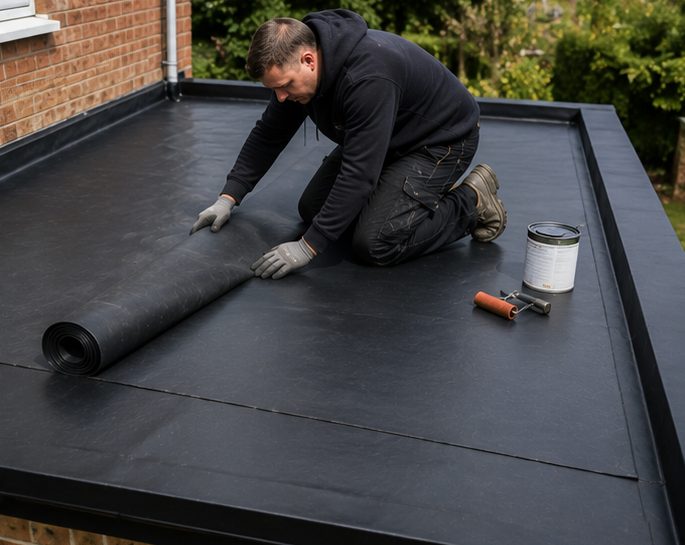
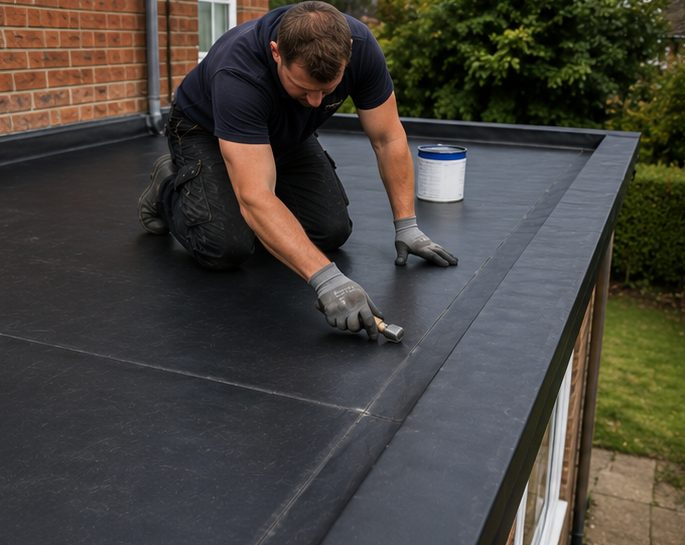
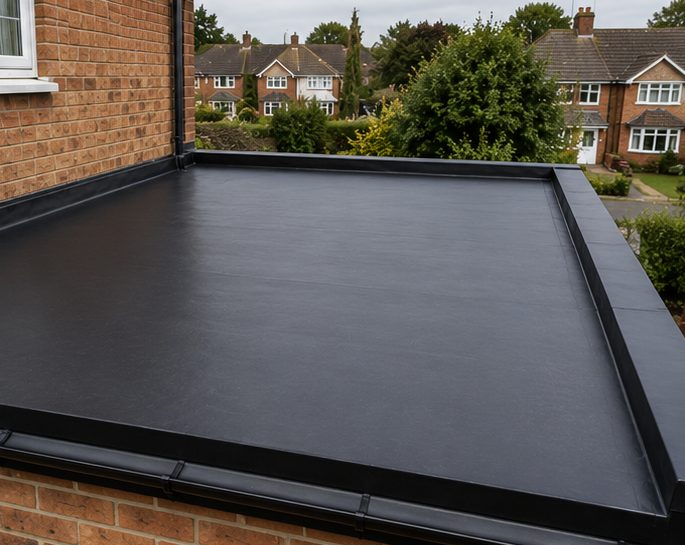
The four images in this row are stock artwork, for illustration purposes only. Every photograph further down this page is our own work.
A repair is right when the covering is sound except in one identifiable place and the deck underneath is firm everywhere. A split seam, a lifted trim, a failed upstand, a blocked or badly placed outlet, storm damage to one corner. These are real jobs with real fixes and they are worth putting first, which is worth saying because the internet gives the impression that every flat roof leak means a new roof.
An overlay — a new membrane bonded over the old covering — is right when the existing surface is firmly stuck down everywhere, dry underneath, with falls that work and a deck that feels solid under every step. It is quicker and it makes less mess. It is also the option that hides the most, because the deck and the joist ends never get looked at. We will tell you plainly when we think it is sensible and when we think it is a way of postponing something.
A full replacement is right when the deck is soft, when water is standing where it should not be, when the falls were never correct, or when the covering has failed in several places at once. It means stripping back to the joists, checking and replacing what has rotted, laying a new deck, putting the falls right, then trims, upstands and a new membrane.
The thing that decides between them is almost always what the deck is doing, and the deck is the one part nobody can see. That is why our survey involves walking the roof and pushing on it rather than looking at it from a ladder.
Most domestic flat roofing is one of five things, and each one fails in its own way. Garages, attached or detached, are the simplest: low, square, easy to access, usually the oldest covering on the property and usually the one nobody has looked at since it was built. Rear extensions are the ones that matter most, because there is a habitable room underneath and a failure shows up on somebody’s ceiling rather than on a pile of boxes.
Dormers are the fiddly ones. There is a small flat top, two cheeks, a junction with the main pitched roof and almost no room to form a proper upstand anywhere. More dormer leaks start at the junction with the main roof than on the flat itself. Porch and bay canopies are small, all edge and no field, and they are the roofs most visible from the street, so how the trim line looks is part of the job. Conservatory roofs and outbuildings round out the list.
That variety is why a flat roof quotation should name the building and what is on it rather than just giving an area. Two roofs of exactly the same size can be completely different jobs depending on how many edges, upstands, outlets and rooflights they have between them.
We come out, get on the roof, and walk it. Underfoot is how you find a soft deck, and it is not something a photograph will tell you. We look at where the water is going and whether it gets there, at every edge and upstand, at any rooflight kerb, and at the ceiling underneath from the inside where we can get to it.
What comes back is a written quotation that says which of the three answers yours is and why, what is included, and what is not. If a strip-back is involved it also says what happens if the deck turns out worse than it looks, because nobody can price rotten joists they have not seen yet, and a quotation that pretends otherwise is one that changes later.
Access is priced honestly. Where the roof is at first-floor level, or where there is an open edge to work along, that means a scaffold or a tower, and scaffolding is quoted separately rather than buried in a rate. A ladder is a way onto a low garage roof; it is not a platform to work from and it is not edge protection.
There is no charge for coming out and no charge for the quotation, and Roofline Solutions is fully insured.
When we replace a flat roof we replace it in EPDM rubber. The short reason is that it comes as a single sheet large enough to cover most domestic roofs in one piece, which takes the laps out of the middle of the roof — and laps in the middle of the roof are where built-up felt usually fails. It also stays flexible in the cold, where bitumen stiffens.
The longer reason, along with what the deck should be, what the falls should do, the difference between a warm and a cold deck, and how the trims, upstands, corners and outlets are actually formed, is set out on the EPDM rubber roofing page. It is worth ten minutes before you take a quotation from anybody, ours included.
What we will say here is the part people get wrong when comparing quotations: the membrane is the cheap, easy half of a flat roof. The deck under it and the edges around it are the half that decides whether it leaks. Two quotations naming the same membrane can be completely different jobs.
If water is coming in now, call rather than fill in a form. Weekday emergency call-outs are answered around the clock and weekend cover runs from eight in the morning to seven in the evening.
Before we get there, in this order. Turn off the lighting circuit for that room at the consumer unit if water is anywhere near a fitting or a ceiling rose. Move what you can out from under it and put something down to catch the drip. If the ceiling is bulging with trapped water, put a bucket underneath, stand to one side and pierce the lowest point of the bulge with something long — letting it out in a controlled way is far better than waiting for the whole thing to come down at once.
What not to do is go up. A flat roof looks like the one roof you could safely walk on, and that is exactly the trap — the whole reason it is leaking may be that the deck has gone soft, and a soft deck gives way without warning. There is no edge protection up there either.
A temporary cover buys time and dry weather buys a proper repair. We will make it safe first and come back to do the permanent work when conditions allow, because neither the adhesives nor a stripped deck behave in the wet.
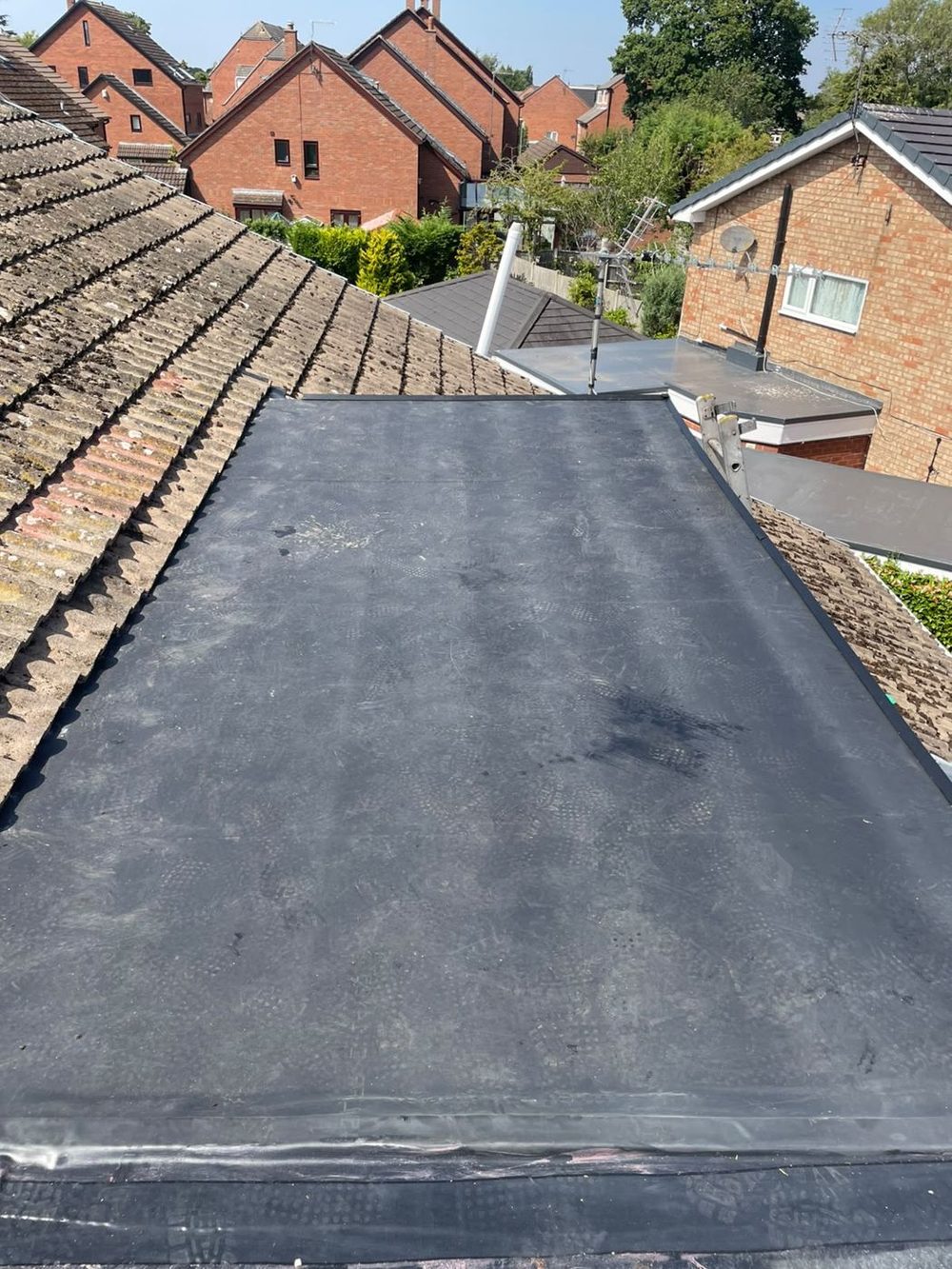
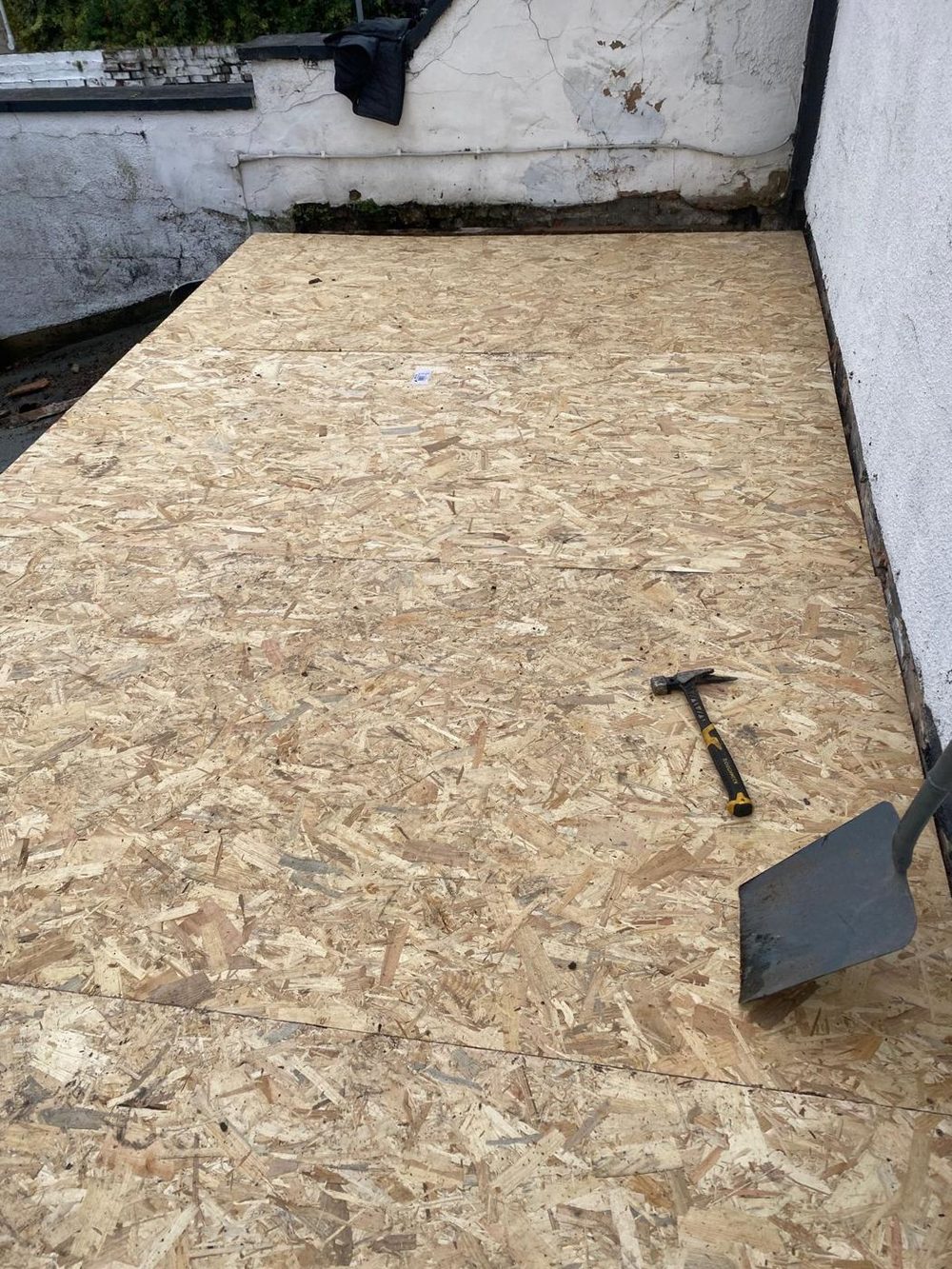
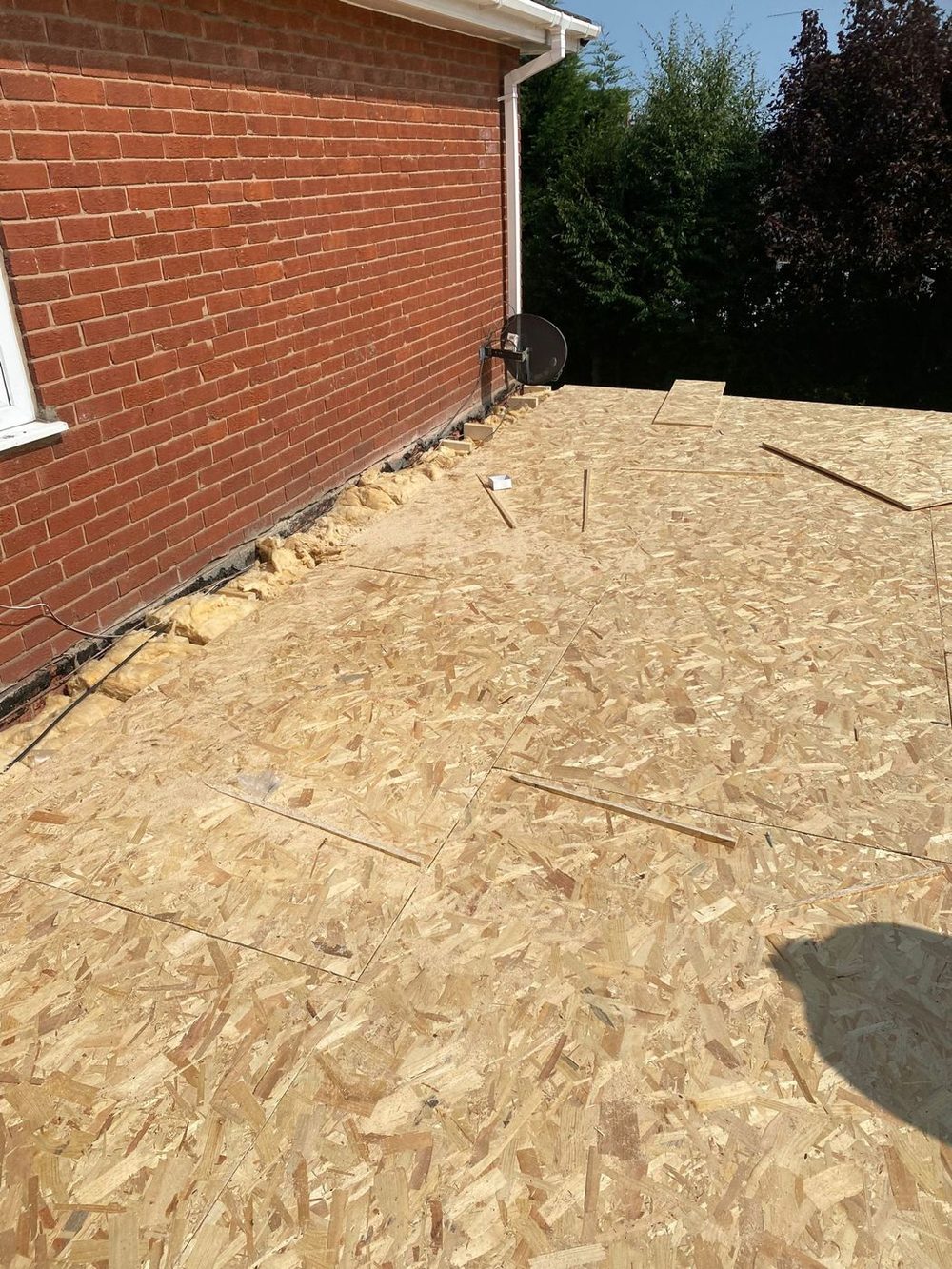
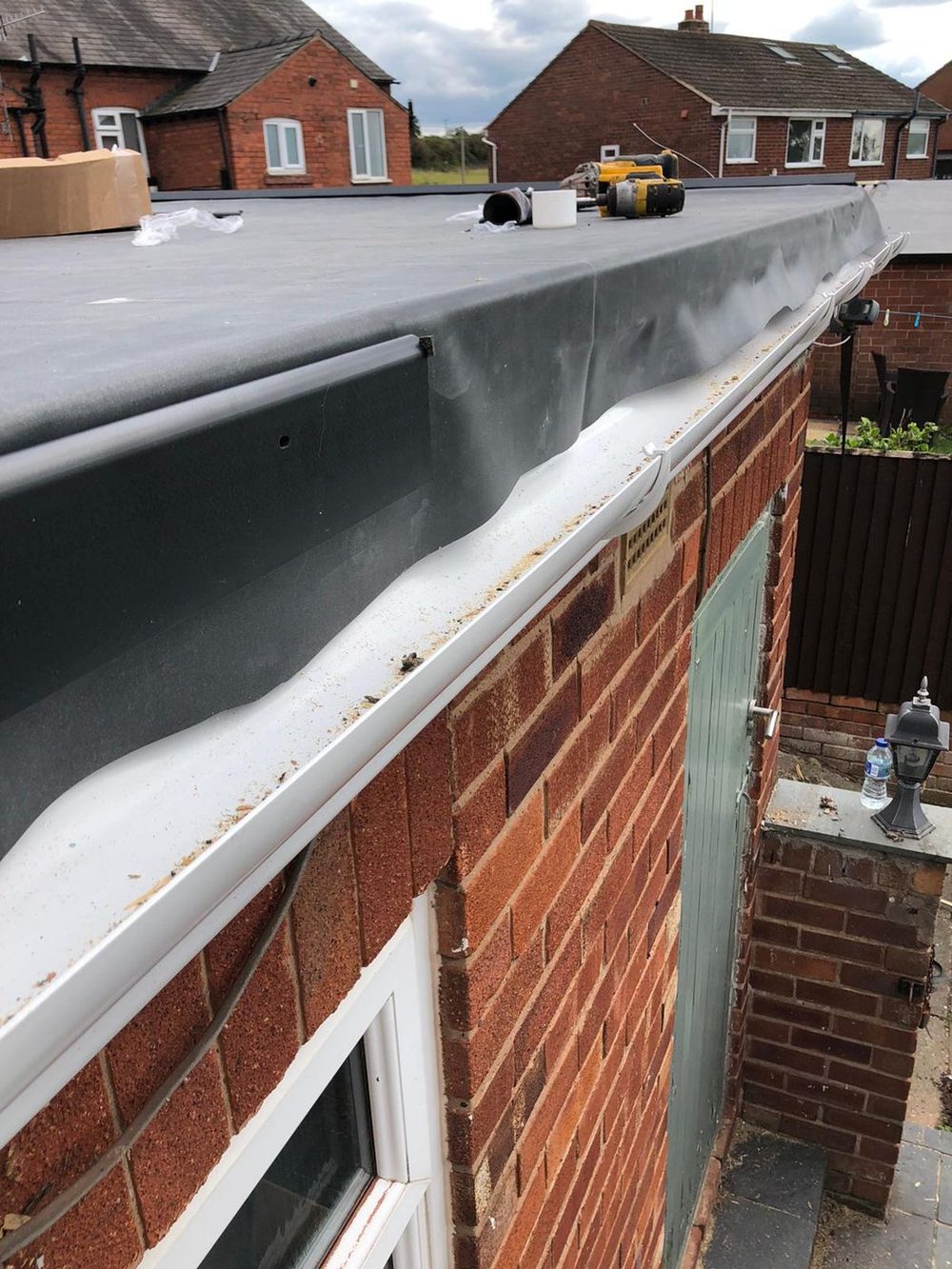
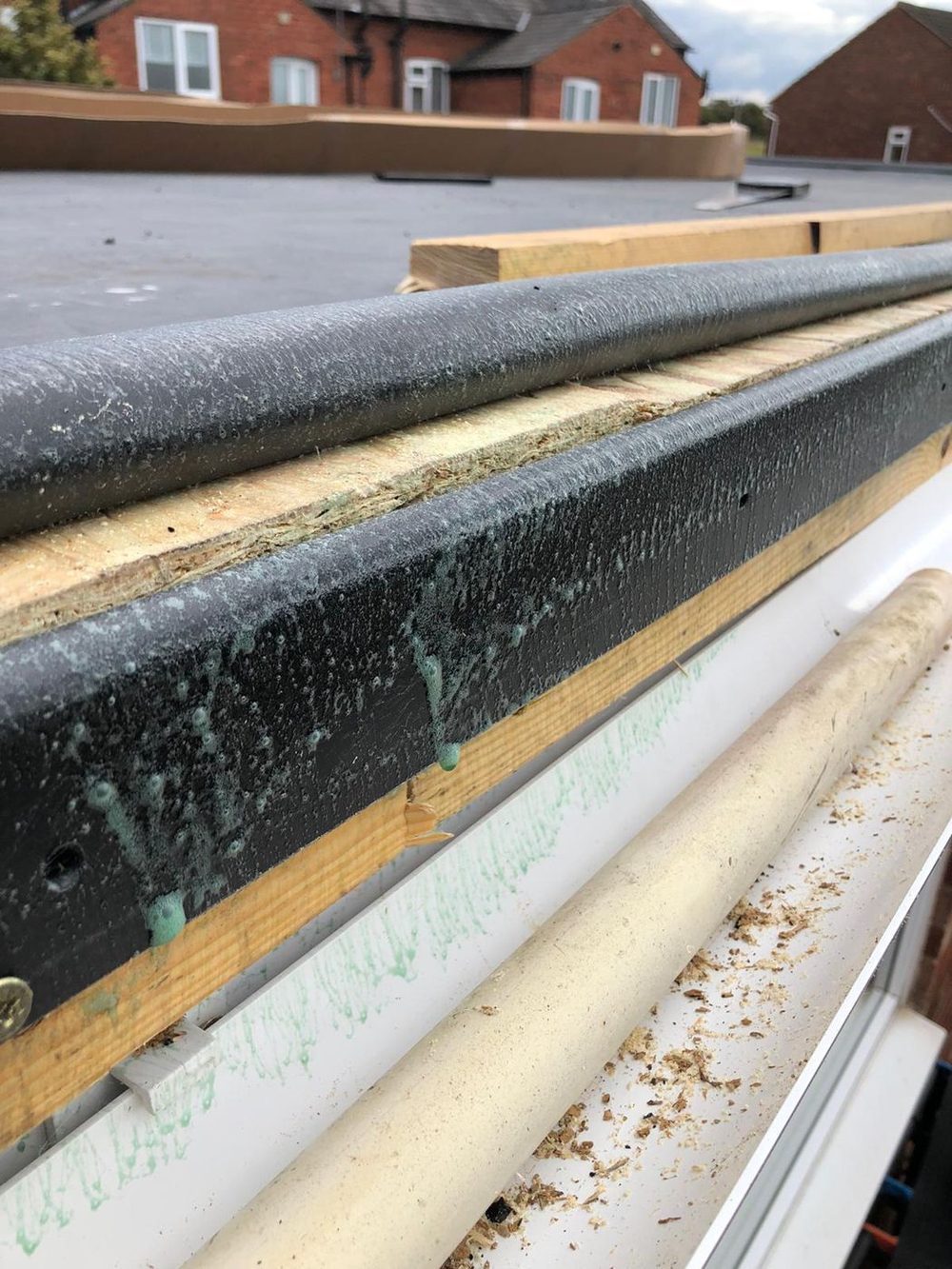
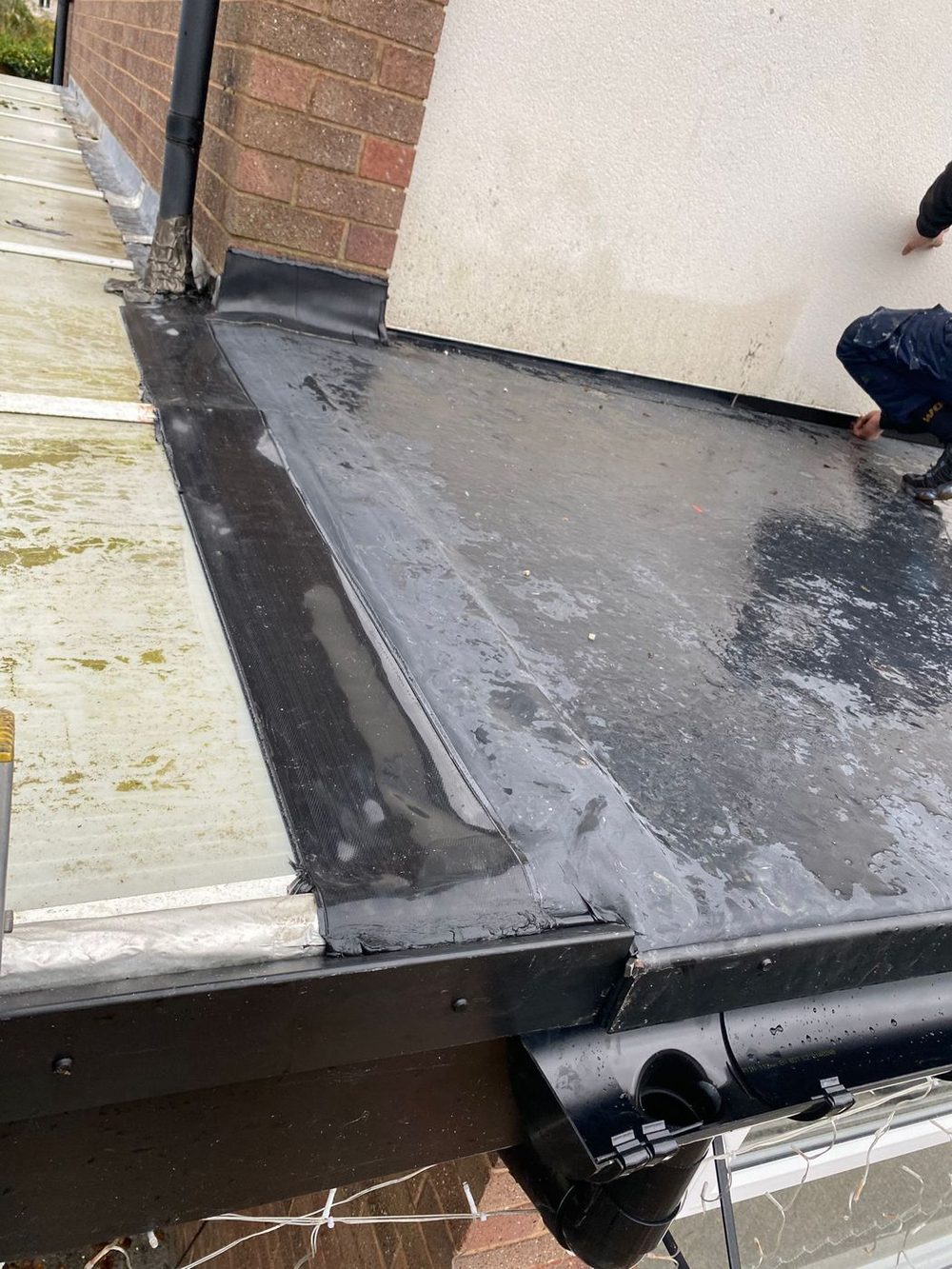
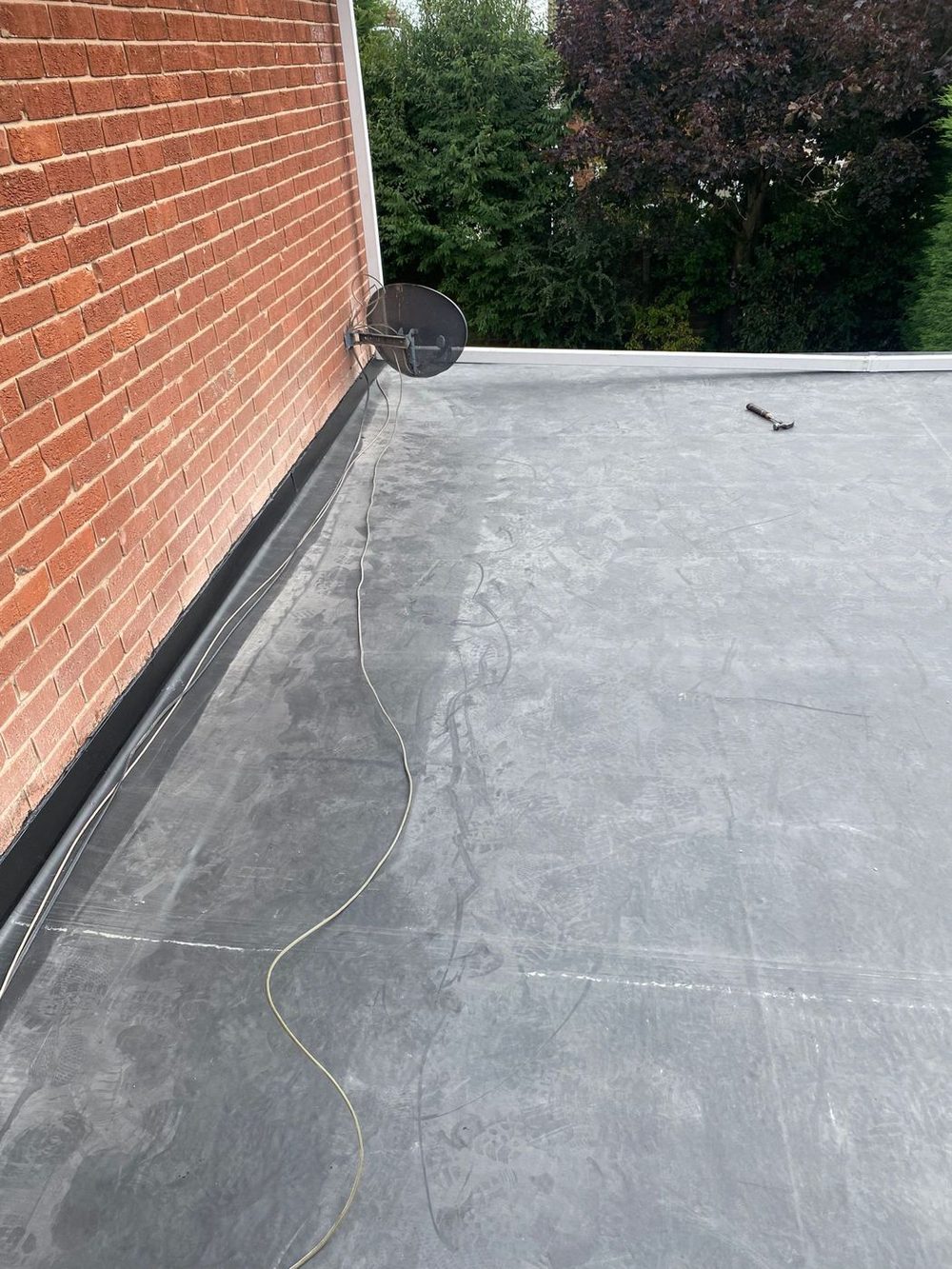
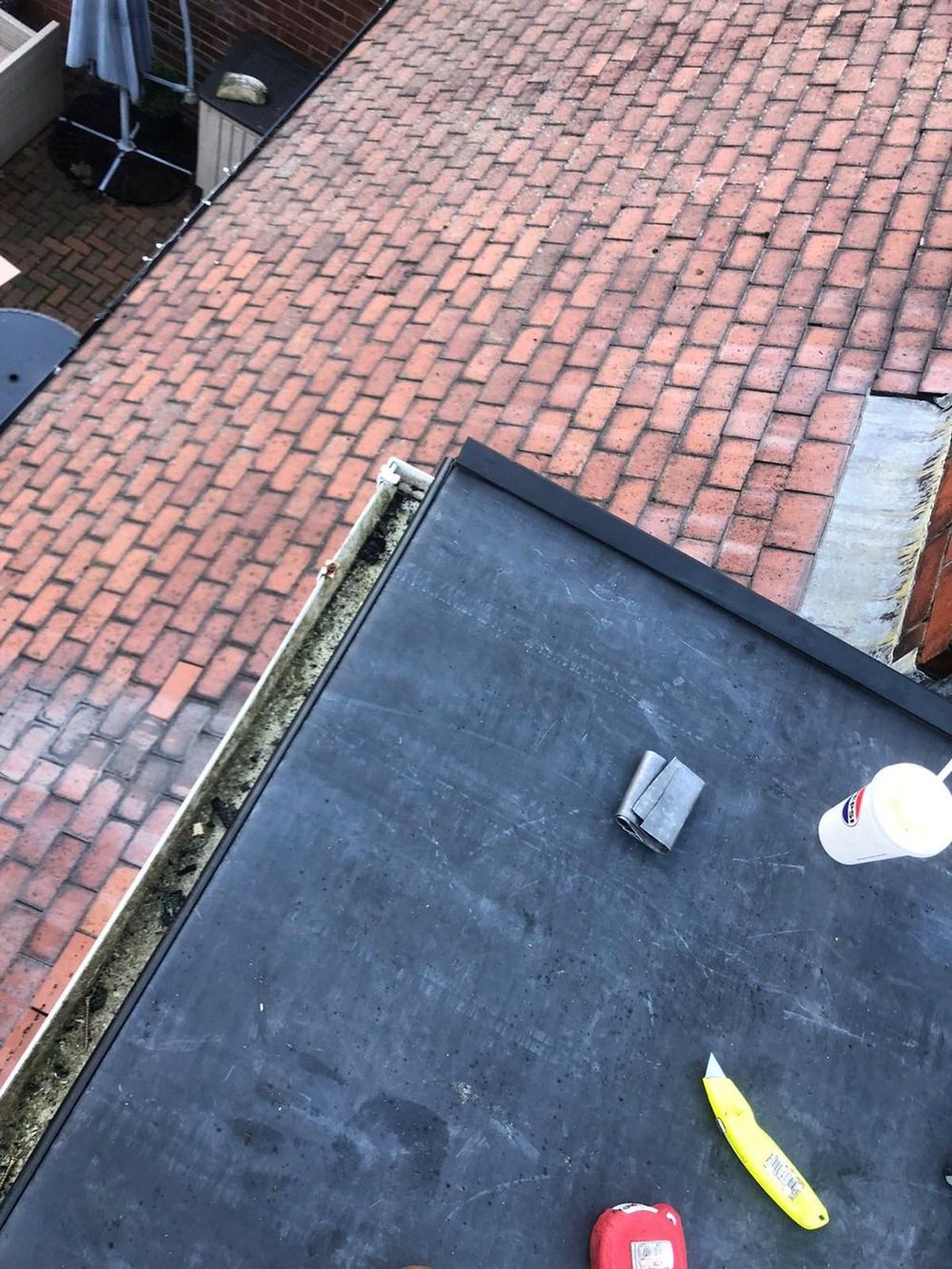
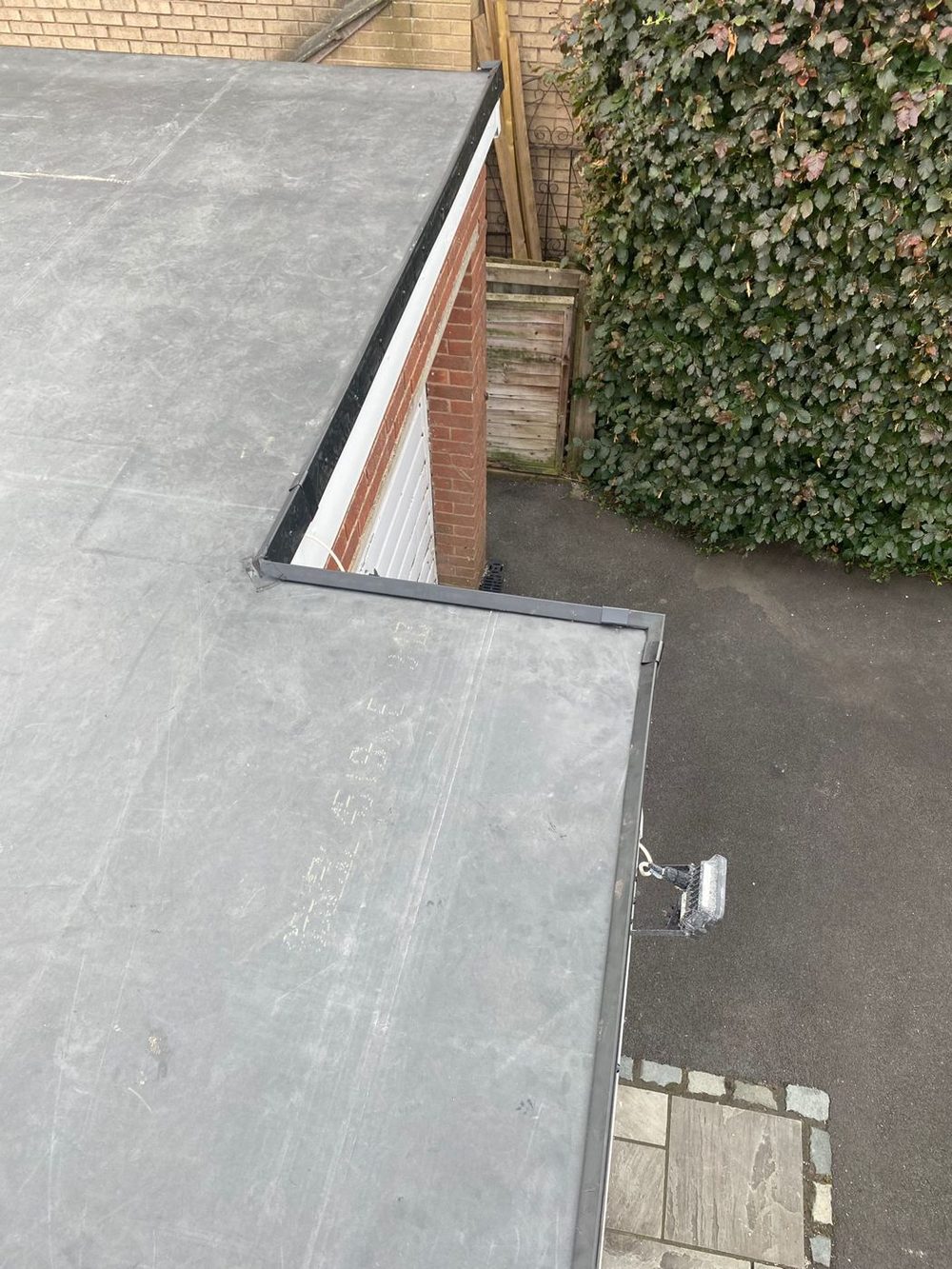
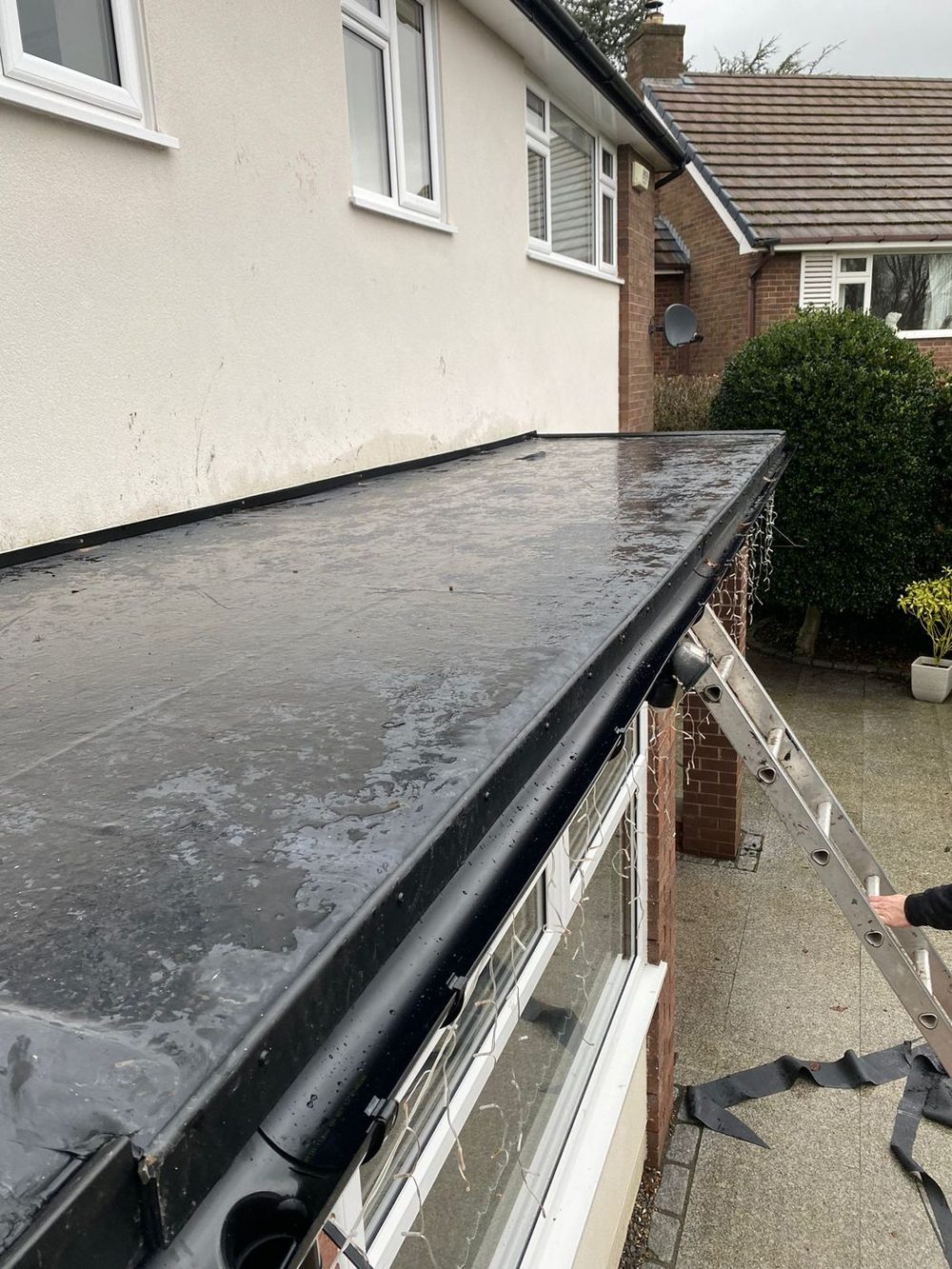
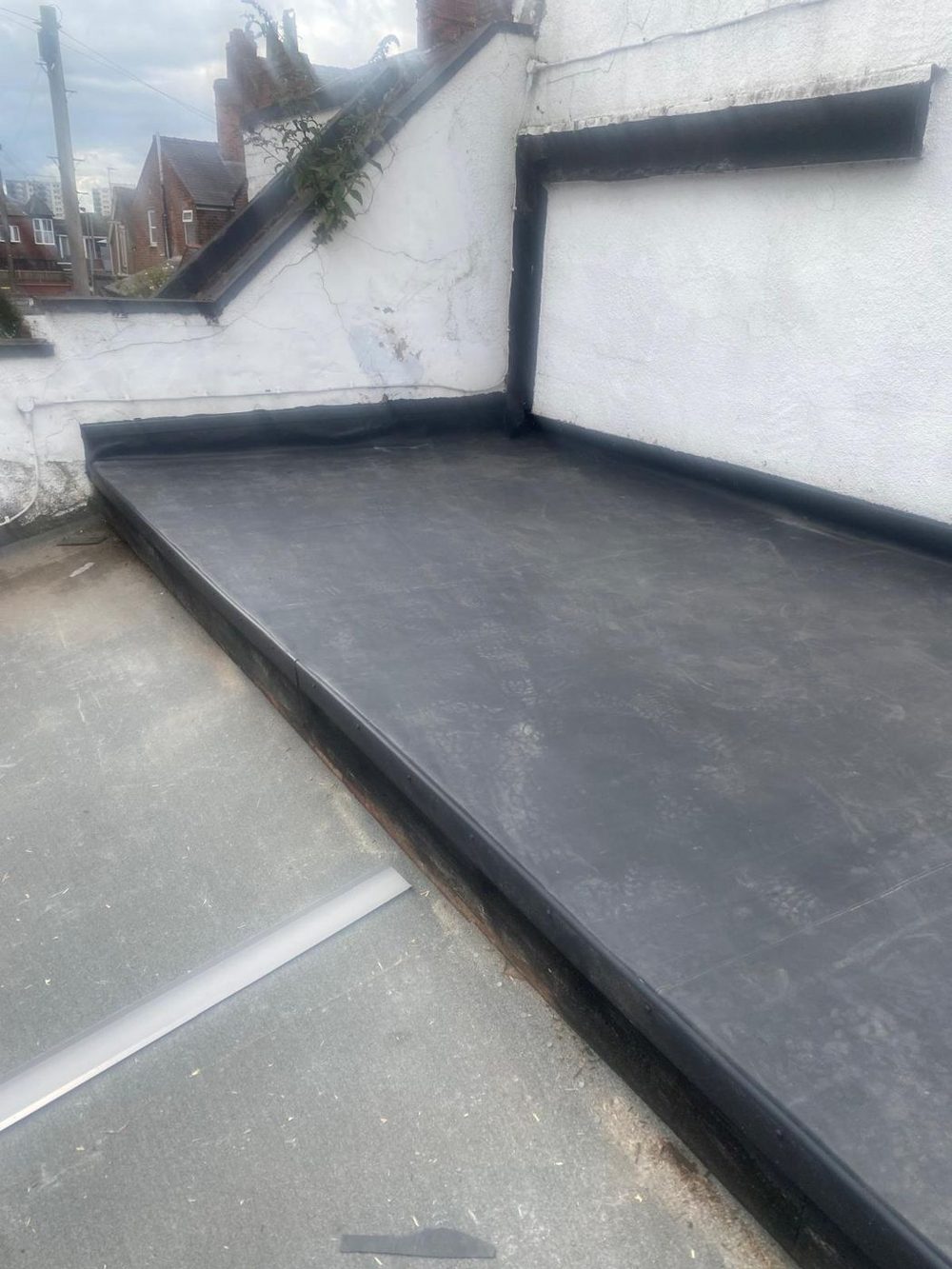
Two roofs at the end of the line, and two decks that nobody could have assessed until the covering came off. The rot in the third picture is the reason we walk a roof before quoting on it.
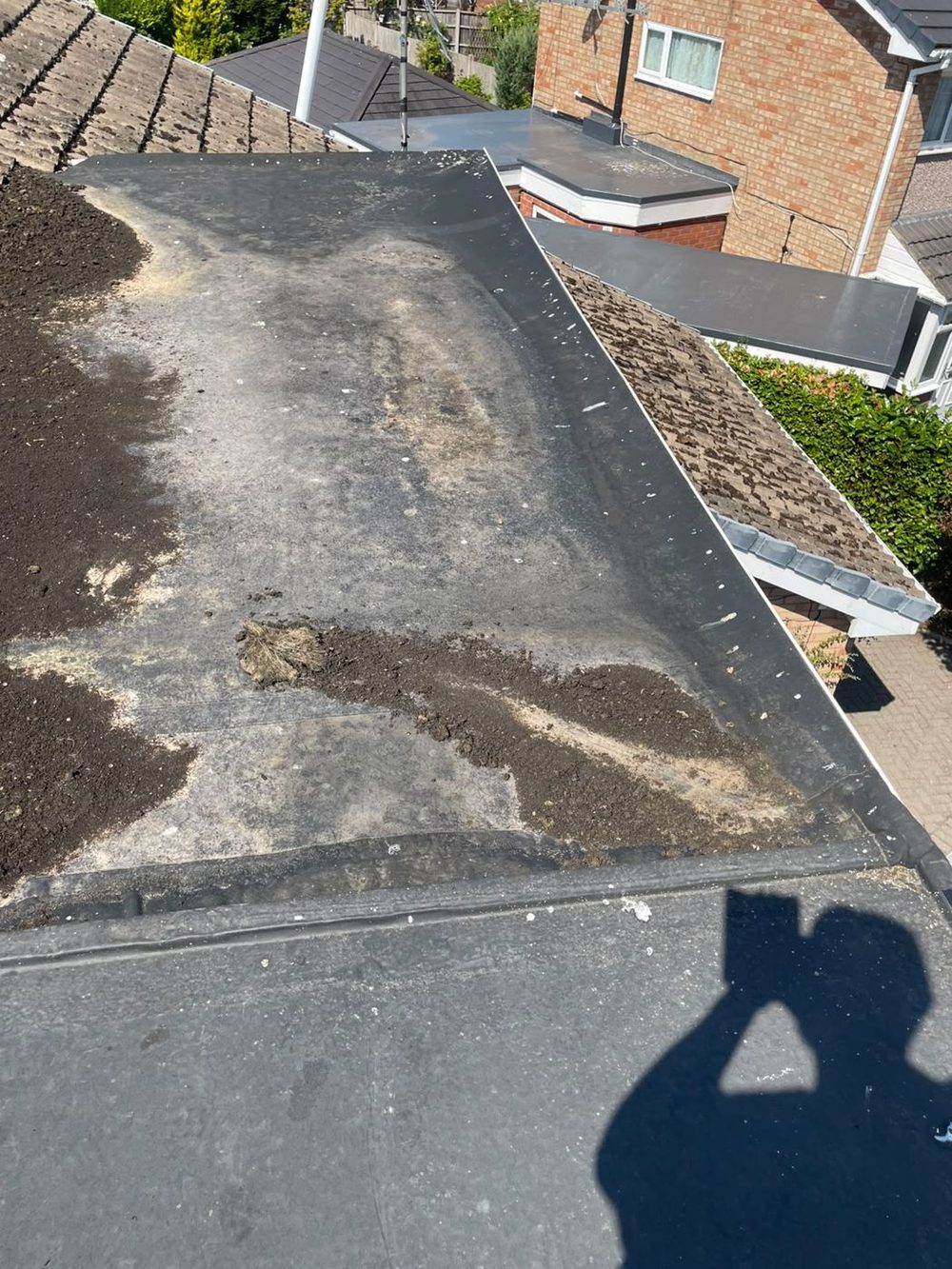
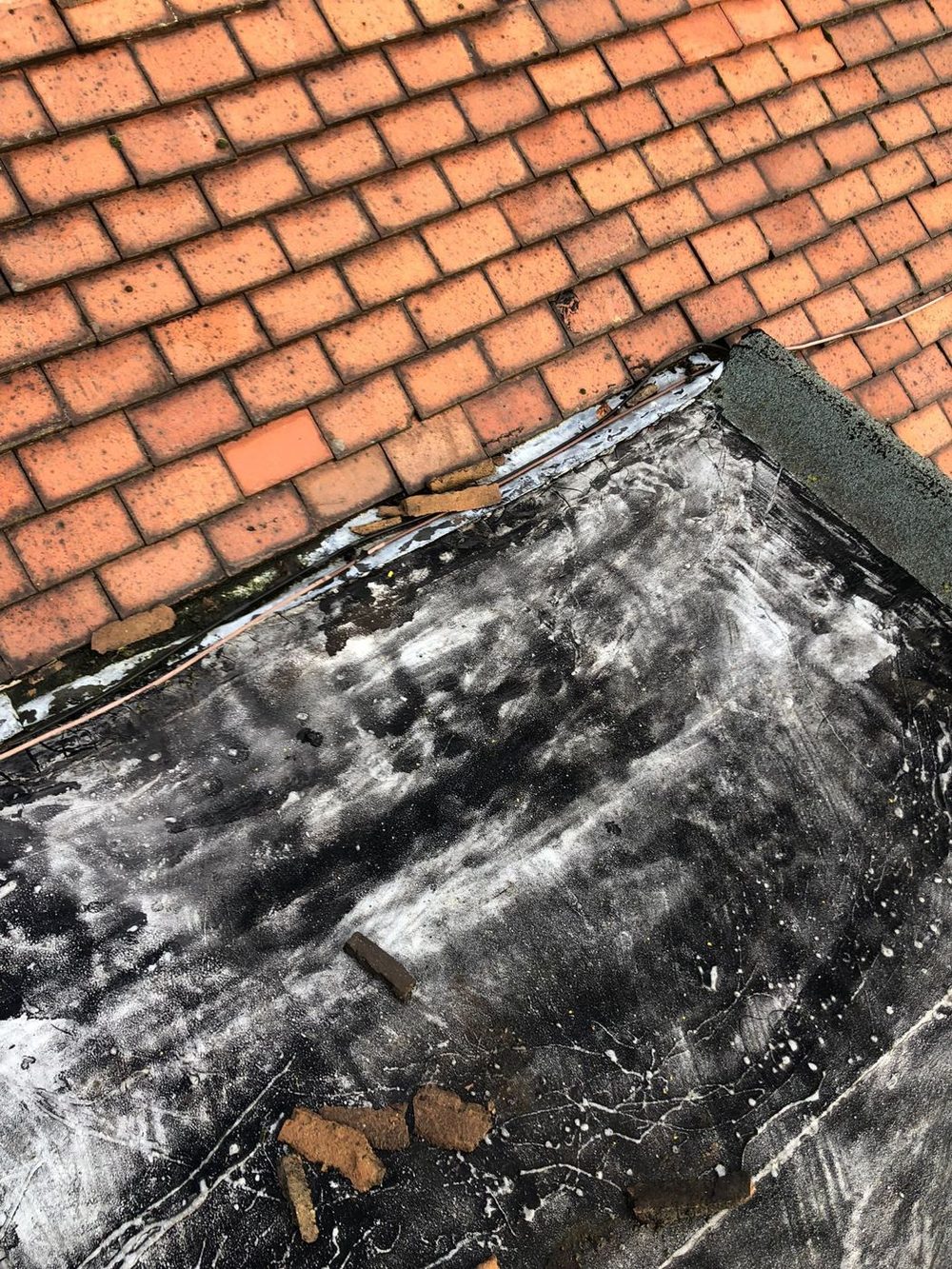
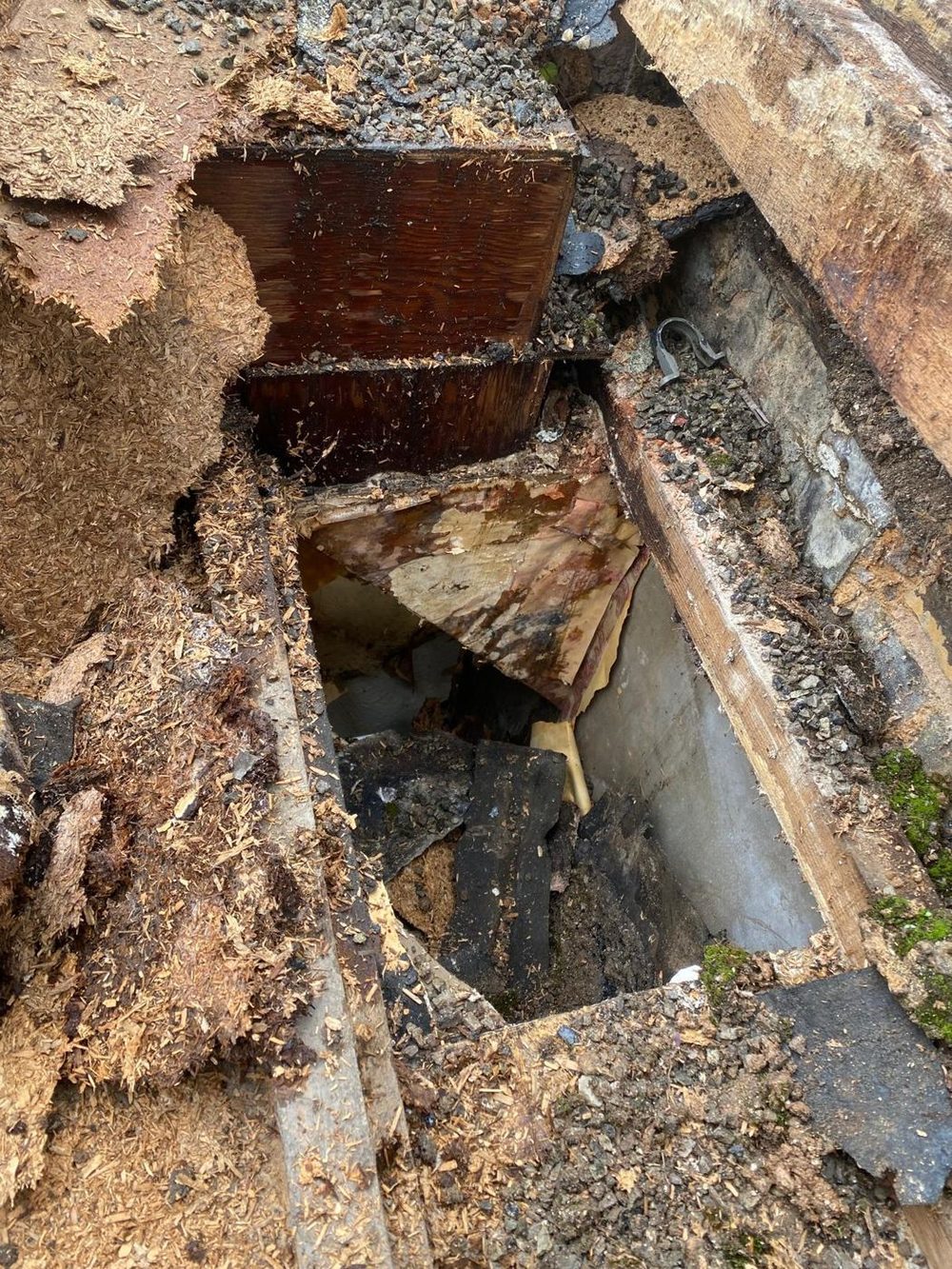
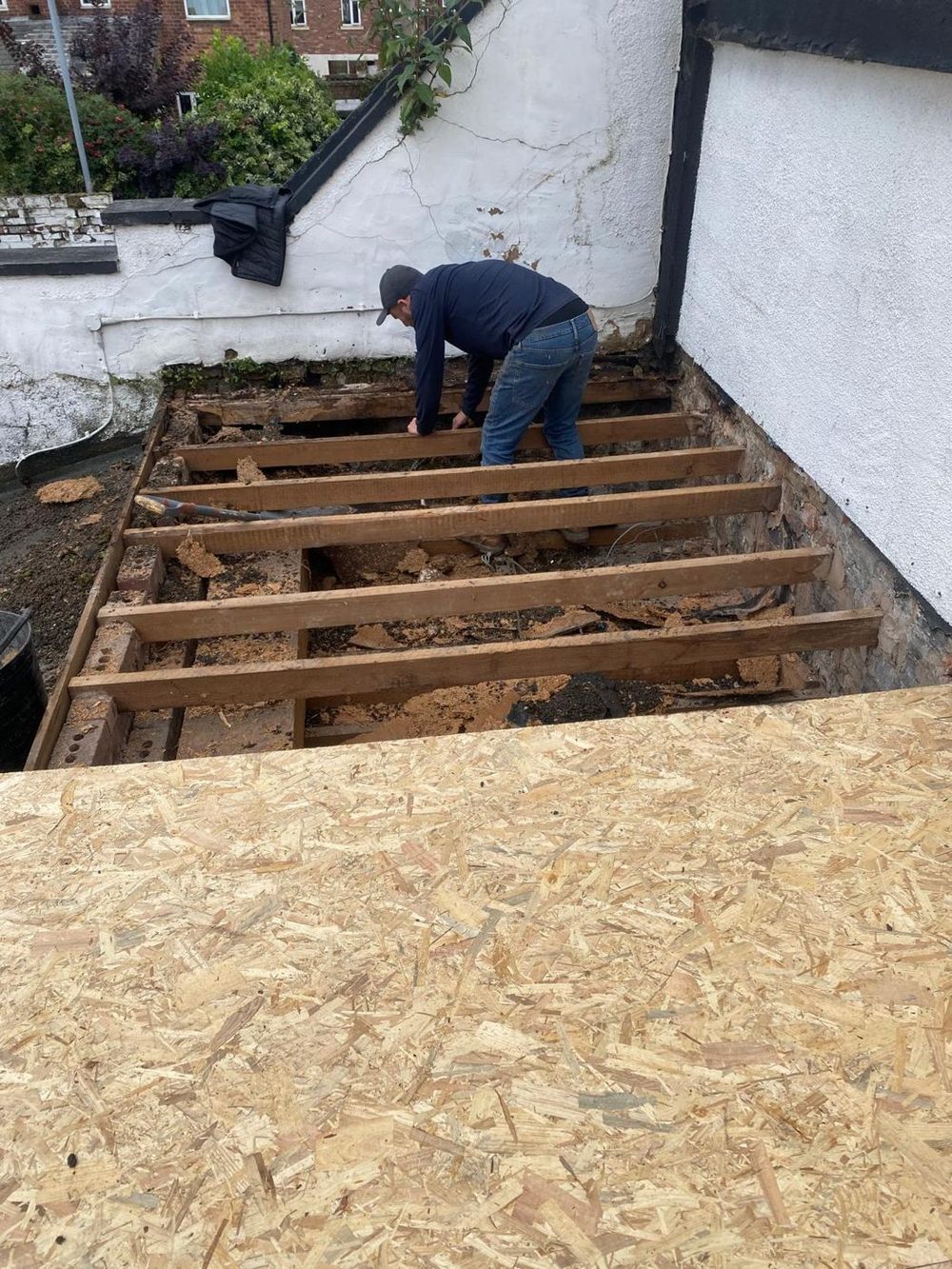
Photographs of our own work.
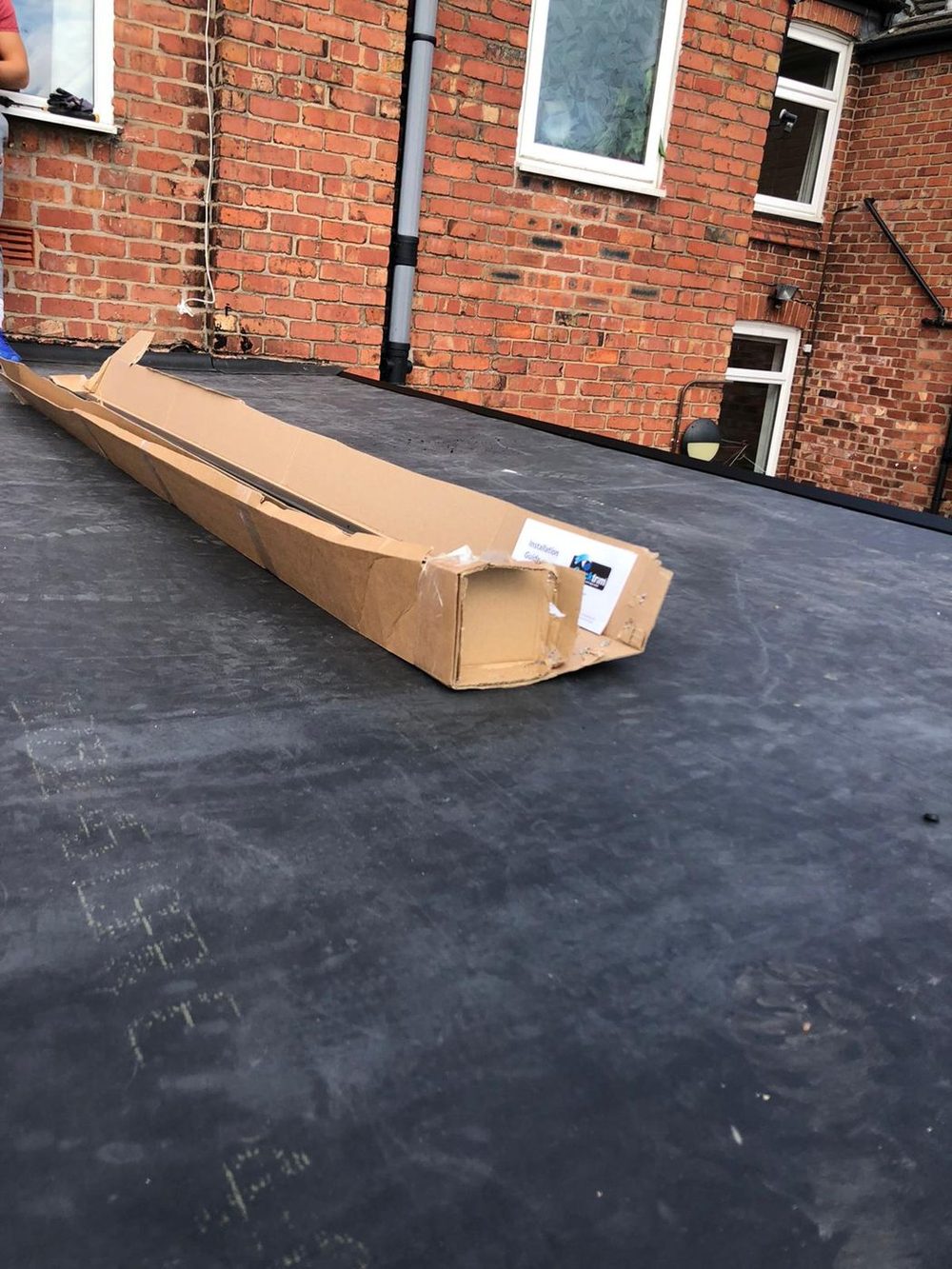
The rest of the job on our own roofs — the deck going down, the sheet laid out to relax, the trim details and the finished roofs. There are more in the gallery.
Ten guides, written for the homeowner rather than the trade. They sit with the EPDM rubber roofing page, which is where the material itself is set out in full.
“job well done good communication throughout the job very clean and tiddy when the job is finish flat roof replacement many thanks.”
Sumit Bal“Excellent service from Buddy and the team in installing a new garage roof in a really professional manner. Was kept updated at all stages and given good advice as to our options. Would highly recommend”
Peter Aspinall“Highly recommend. Very quick and efficient. Great communication. Went above and beyond to work the weekend to complete the work that needed to be done. Very happy with the results.”
Karen JonesEvery town below has its own page, written around the flat roofs that are actually on the buildings there.
Describe the roof and roughly where you are, and we will come back to you — usually the same day. If water is coming in now, please call instead.
Prefer to talk? Call 07464 259566 · WhatsApp 0044 7464 259566 · Email Evensbuddy@yahoo.com
We work across Chester, Cheshire and the Wirral from our base at Elton, just north of Chester.
2 Manley View
Elton
Chester
CH2 4QF
Almost all of our work happens at your property rather than here, so please call before travelling.
Monday – Friday — 24hrs — Emergency Call-Outs
Saturday — 8:00 – 19:00
Sunday — 8:00 – 19:00
Weekday emergency call-outs are answered around the clock. Weekend cover is 8:00 to 19:00.