The short version
- Electrics first if water is anywhere near a fitting
- A bulging ceiling is trapped water - keep out of the room
- A bin, not a bowl. You will not empty it as often as you think
- Four things on the phone get us there with the right kit
Electrics, Before Anything Else
Water and electricity is the one genuine danger inside the house, and it is the thing people do last rather than first.
If water is dripping through or near a ceiling light, a downlighter, a ceiling rose or anything wired, turn that circuit off at the consumer unit and leave it off. If you are not sure which circuit, and water is spreading, turn the whole thing off until somebody competent has looked.
Do not touch a light switch in a room where water is running down a wall. Do not stand in water and reach for anything electrical.
Downlighters are the specific hazard, because water tracking along a joist finds the hole cut for the fitting and comes out of it. A light fitting dripping water is not a plumbing curiosity; it is a live circuit with water in it.
Then the Ceiling
A ceiling holding trapped water is heavier than it looks and gives way without warning. If a ceiling is bulging, sagging, or dripping steadily from one point, get everybody out of that room and shut the door.
If you can reach the doorway safely and are confident, piercing the bulge deliberately with a screwdriver, over a bucket, at its lowest point, releases the water in a controlled way instead of letting the whole ceiling come down in one go. It feels like the wrong thing to do and it is usually the right one. If you are not confident, leave it and shut the door.
Move furniture, electronics and anything irreplaceable out from underneath, and lift carpets and underlay if water is spreading across a floor. Underlay holds water against floorboards for weeks.
Containment That Actually Works
A bin rather than a bowl. People consistently underestimate the volume coming through a roof in sustained rain and end up emptying a washing-up bowl every twenty minutes for six hours.
A towel in the bottom of the container stops the noise and the splashing.
If water is running along a beam or a ceiling line rather than dripping in one place, a length of string or a bootlace taped to the wet spot and hung into a bucket will lead the drips down it rather than letting them spread across the ceiling. It is an old trick and it works.
And if you can get into the loft safely, a bucket up there catches it before it reaches the ceiling at all. Only if it is safe: joists only, torch, and not at all if the loft is dark, cramped or unboarded.
The Four Things to Tell Us on the Phone
This is the part that changes what happens next, and it is why we ask.
Where is the water showing? Ceiling, wall, chimney breast, around a roof window. Each points somewhere different.
What was the weather doing? This is genuinely the most useful thing. Ellesmere Port takes the wind off the estuary with very little in the way, and driving rain from one direction and prolonged heavy vertical rain find completely different faults. Driving rain points at verges, flashings and exposed edges. Steady heavy rain points at drainage - gutters, valleys, a back gutter.
Can you see anything from the ground? A gap, a slipped tile, something hanging, mortar on the path. A photograph from the pavement is worth having.
Is anything loose above a path, a door or a pavement? That changes the priority, because it stops being a water problem and becomes a falling-object one.
And the One Thing Not to Do
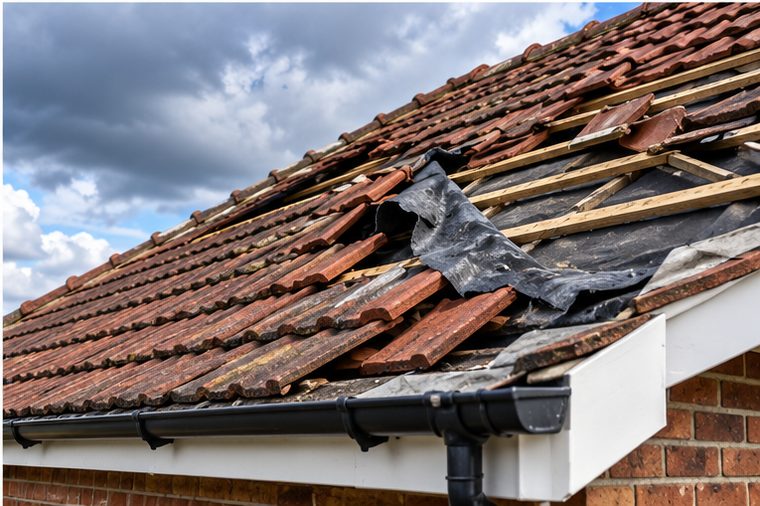
Do not go outside and up. Not to look, not to put something over it, not for a better photograph.
The conditions immediately after or during a storm are the worst there are - wet surfaces, loose material, and usually more wind on the way. More people are hurt inspecting storm damage than by the storm itself, and there is nothing you can establish from up there that we cannot establish more safely.
Emergency call-outs run 24 hours a day Monday to Friday, with Saturday and Sunday cover from 8:00 to 19:00. Ring, describe what you can see from the ground, and stay inside.