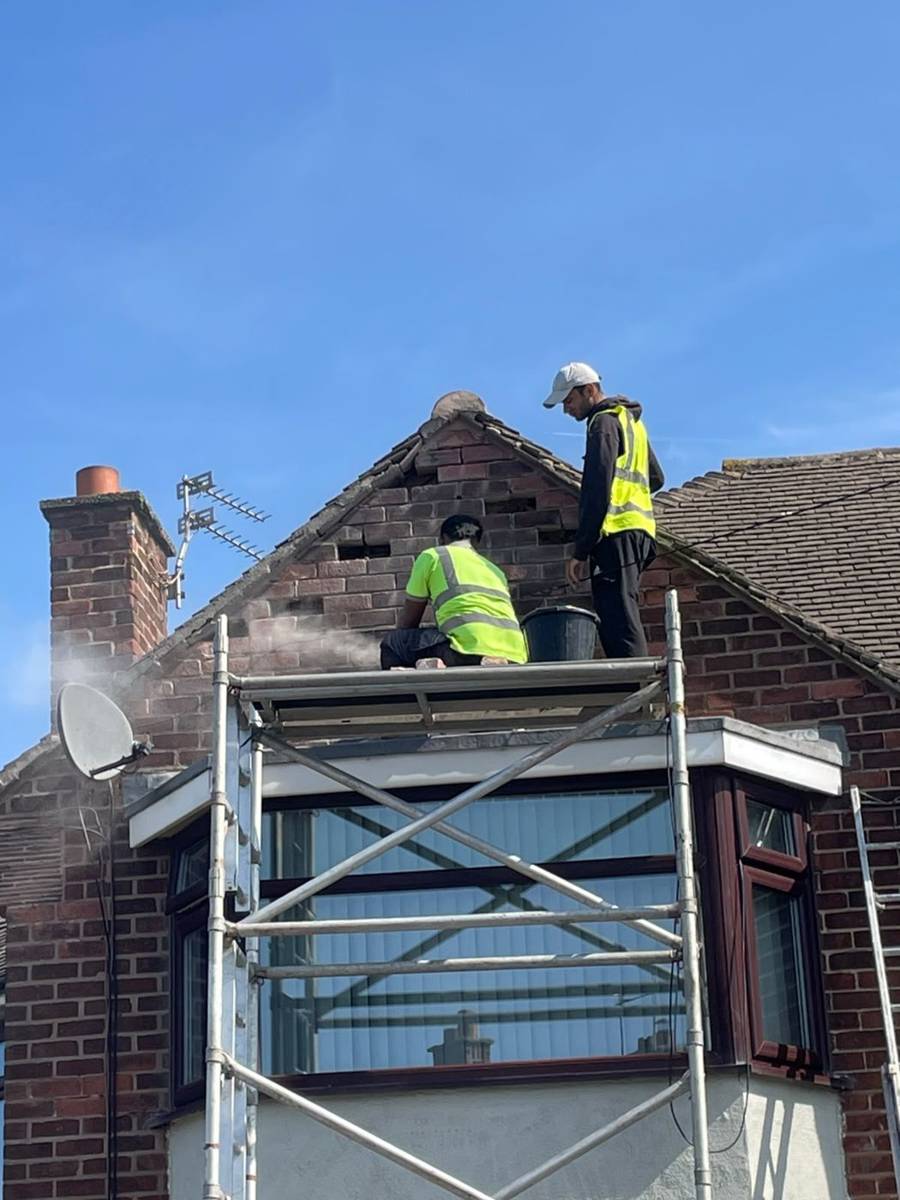
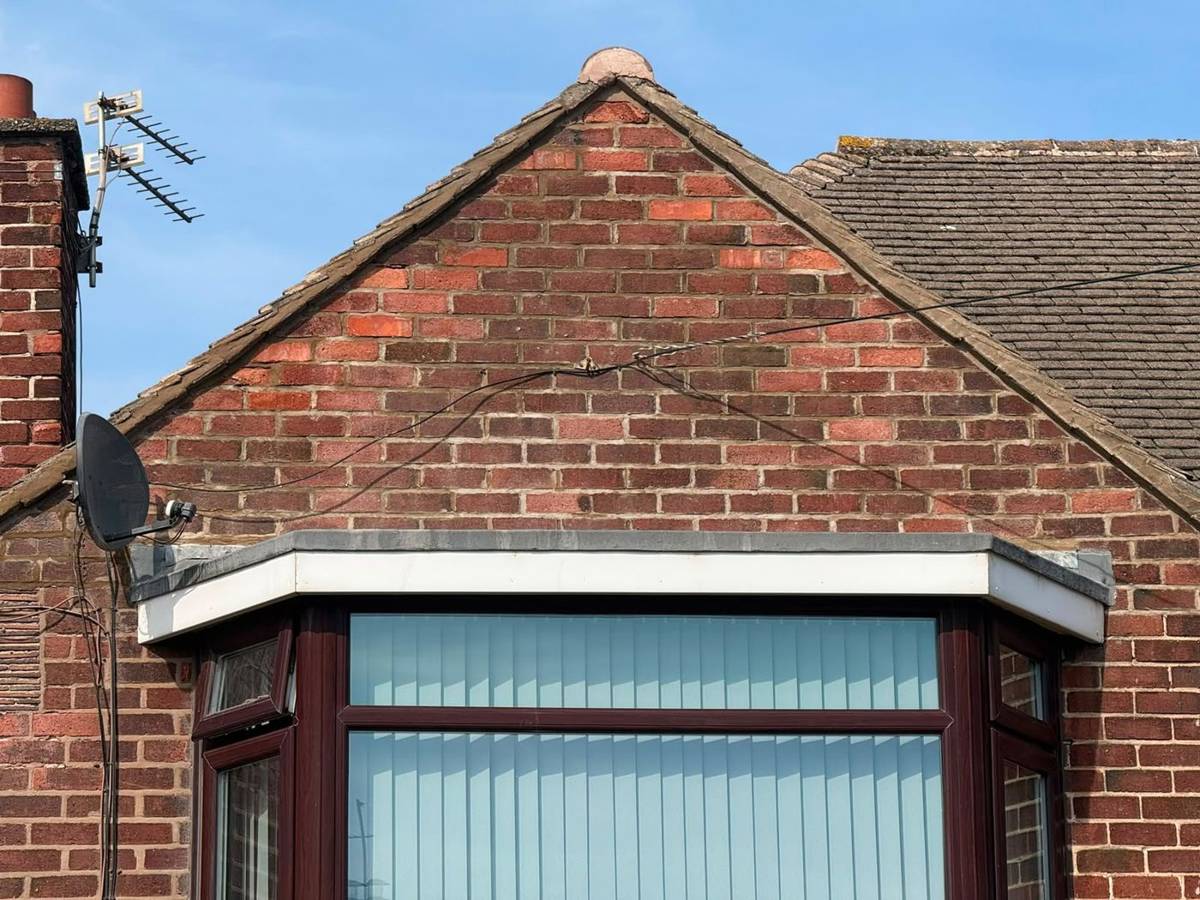
This Chester job was all about the upper part of a gable end. The brick gable rises above a flat-topped bay window, with the tiled roof running up one side to a round terracotta finial at the apex, and it was the brickwork in that triangle that needed attention.
We worked from an aluminium tower set up in front of the bay. The first photo was taken mid-job, with one of the team cutting out old joints (hence the cloud of dust) while another stands by with a bucket. The other two photos show the gable afterwards.
What the photos show
Looking at the finished gable from the ground, the joints in the upper brickwork are clean and full, and they follow the slope of the verge up to the apex. The brick colours vary a lot, as they often do on houses of this age, so the aim was to get the joints right rather than to make the wall look new.
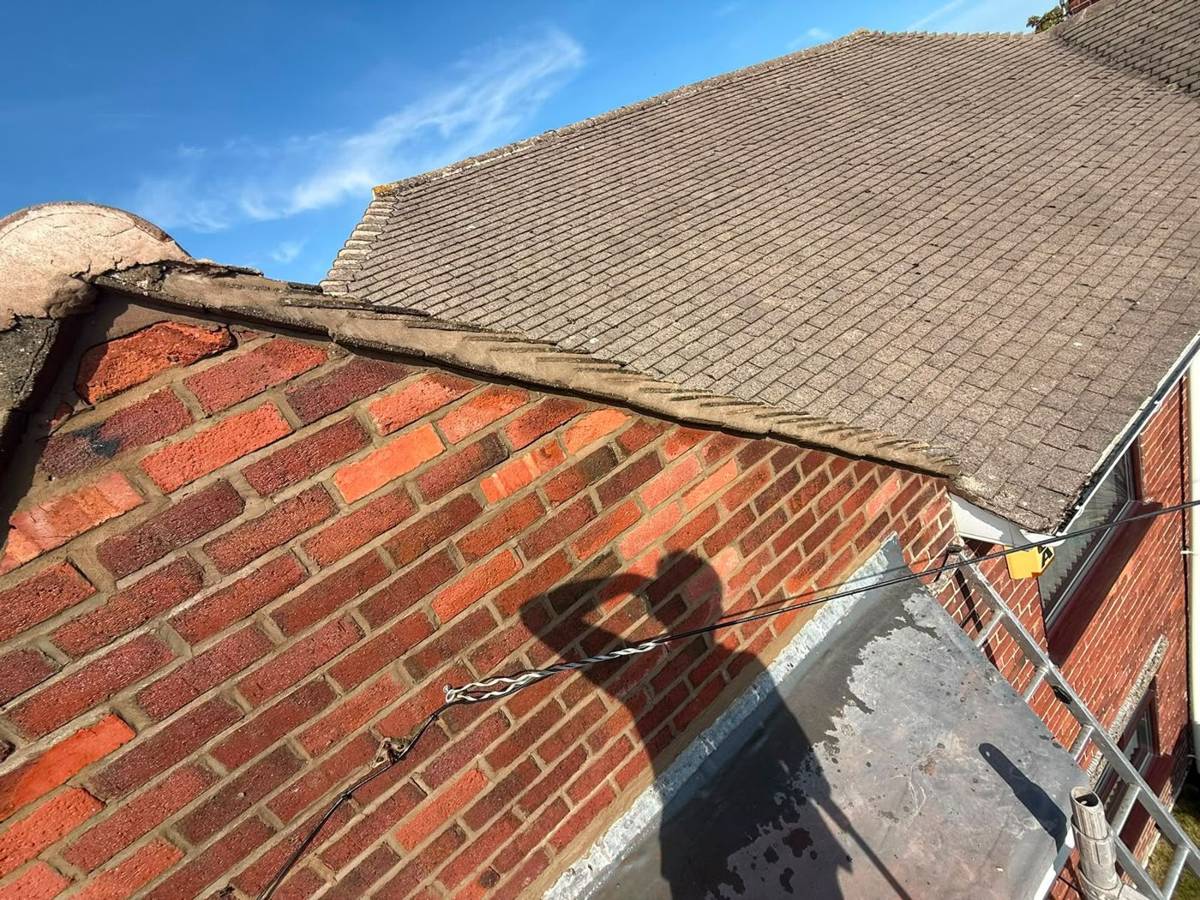
The close-up from the tower gives a better idea of the work. Fresh mortar lines run through the bricks right up under the verge, where the tiles overhang the gable and sit on a bedded edge. You can also see the flat top of the bay just below and the tower rails at the edge of the frame.
- Old, crumbling joints raked out at the top of the gable
- Brickwork repointed up to the underside of the tiled verge
- Access from a scaffold tower standing over the bay window
Why gable tops need looking after
The upper part of a gable takes weather from the side as well as from above, and rain driven against the wall soaks into soft or cracked mortar. Once joints wash out, water can get into the brick itself, and in a cold snap that moisture expands and breaks off the brick faces. Left long enough, loose bricks near the verge can let water in behind the tiles.
Repointing is the straightforward fix: rake out the failed mortar to a sensible depth, damp the joints, and fill them with a mortar suited to the brick. It is part of our wider roof repairs work, because the gable and the verge above it tend to fail together. Where the verge itself is the weak point, a dry verge system is another option we can talk through.
Questions About This Kind of Job
How can I tell if my gable end needs repointing?
Look for mortar that is recessed well back from the brick face, crumbles when scratched, or has fallen out altogether. Damp patches on the inside of the gable wall upstairs are another clue.
Do you need full scaffolding for gable brickwork?
Not always. On this house a tower set over the bay gave safe access to the top of the gable. Taller or awkward gables may need scaffolding, and we will say which when we look at it.
Can you match the colour of the old mortar?
We mix the mortar to sit comfortably with the existing joints. New pointing looks a little brighter at first and tones down as it weathers.
Can you look at my gable?
Yes. Send us a message with a photo of the wall if you can, and we will arrange to have a look.