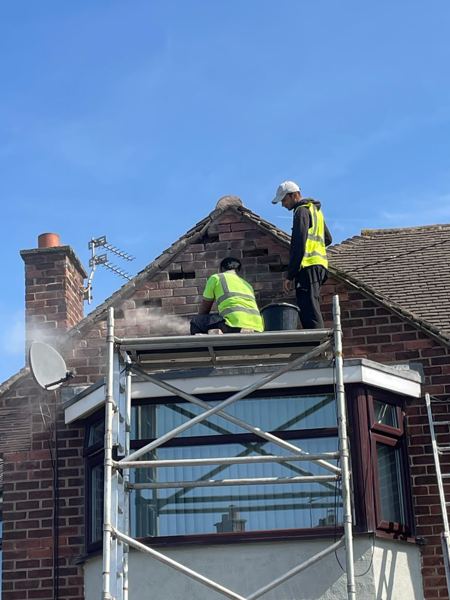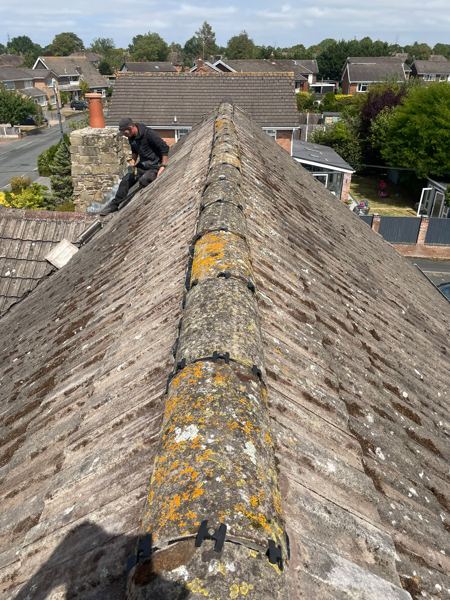
On this Chester house the old ridge tiles sat in mortar along the top of a concrete double-roman tiled roof. Rather than lift the ridge and bed it again, we replaced the bedding with a dry ridge system, where every ridge tile is fixed mechanically and nothing relies on mortar holding it in place.
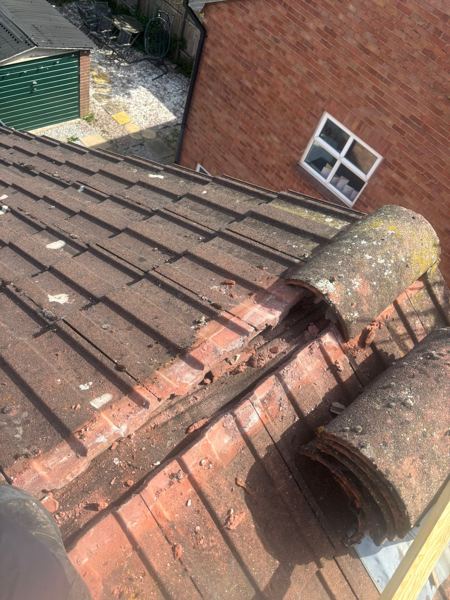
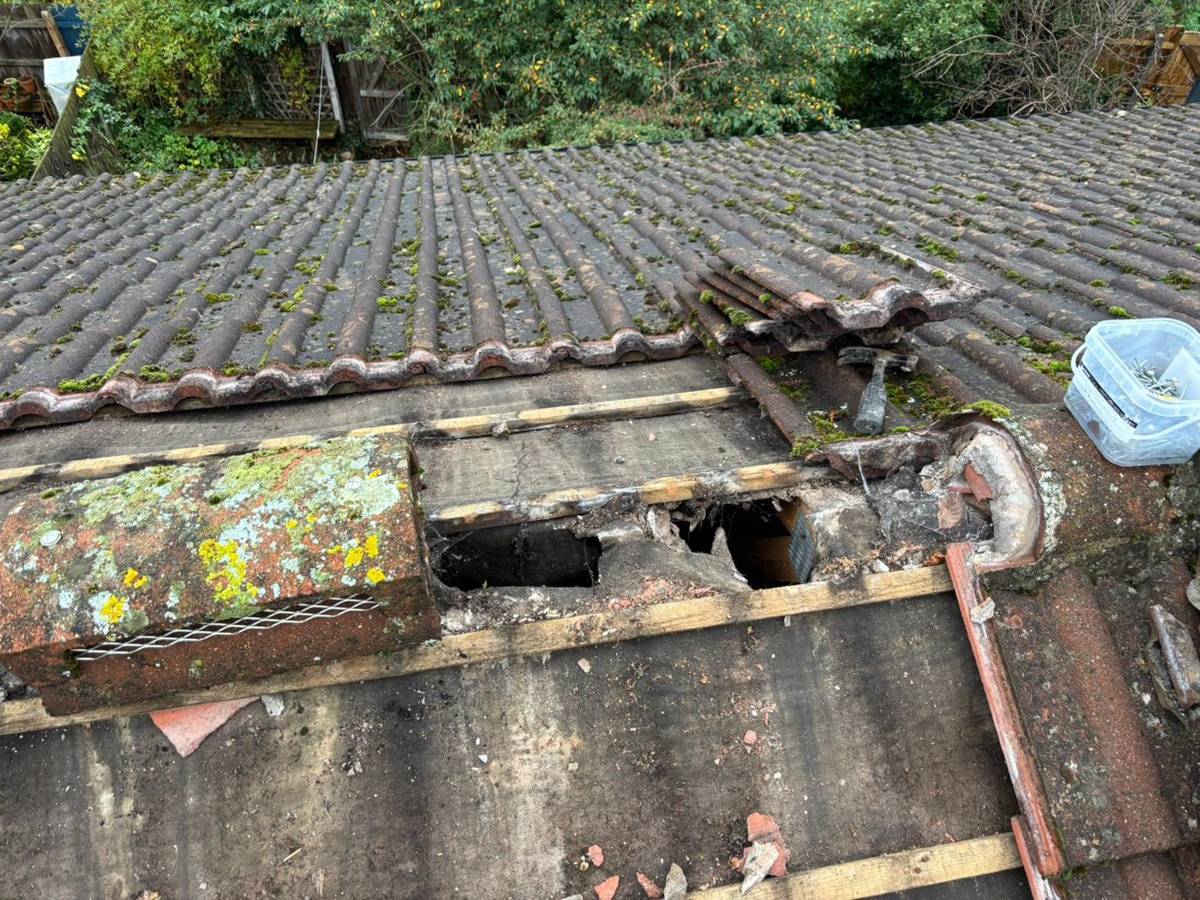
The photos show that we went further down than the ridge itself. The top courses of tiles on both slopes came off, which exposed the old black bitumen felt and the original battens underneath. That gave us the chance to put the top of the roof back on a sound footing before the new ridge went on.
Stripping back the top of the roof
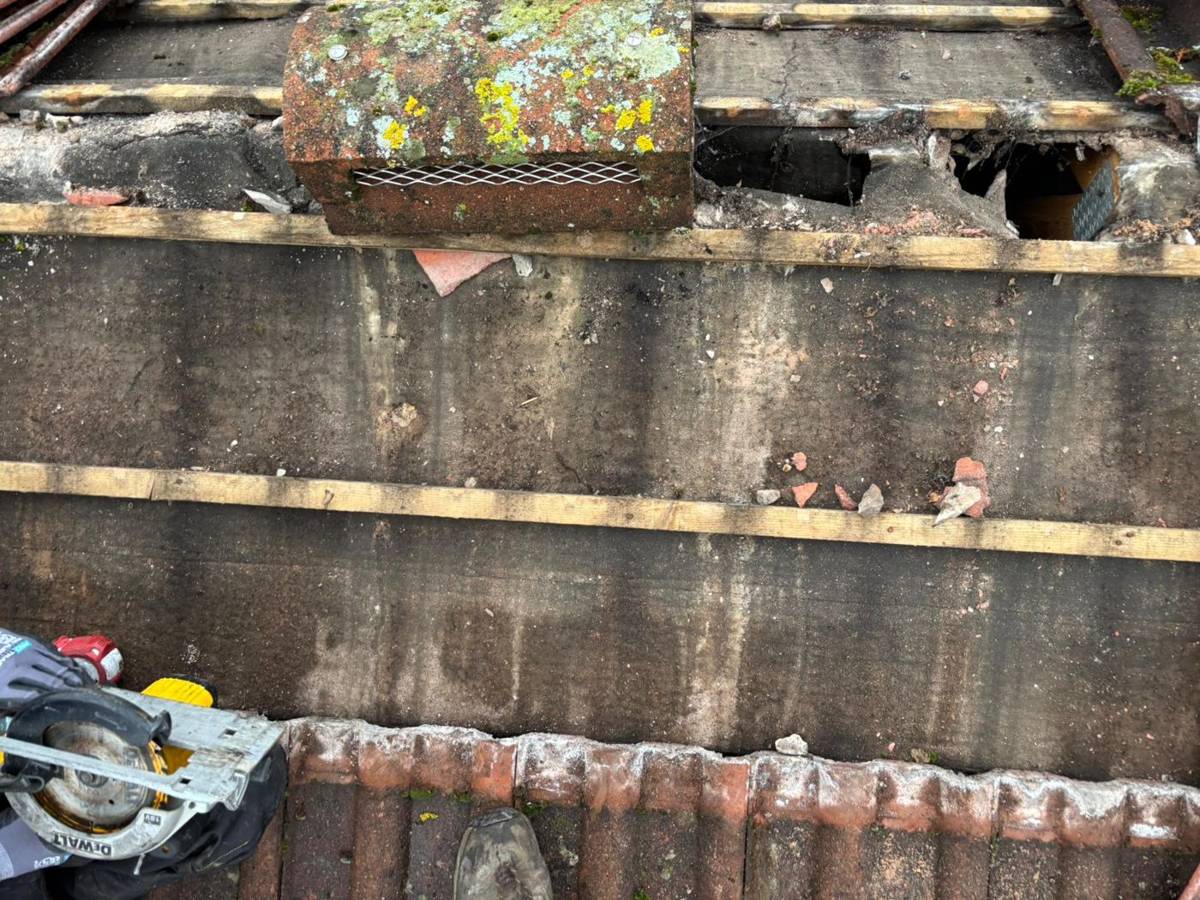
In the close-up shots you can see the stripped strip either side of the ridge line: dusty old felt, the timber battens, loose mortar and broken pieces left behind where the bedding was chipped away. At one point there is a gap straight through into the roof space, which is exactly the kind of opening that lets wind-blown rain and birds in once a ridge starts to fail.
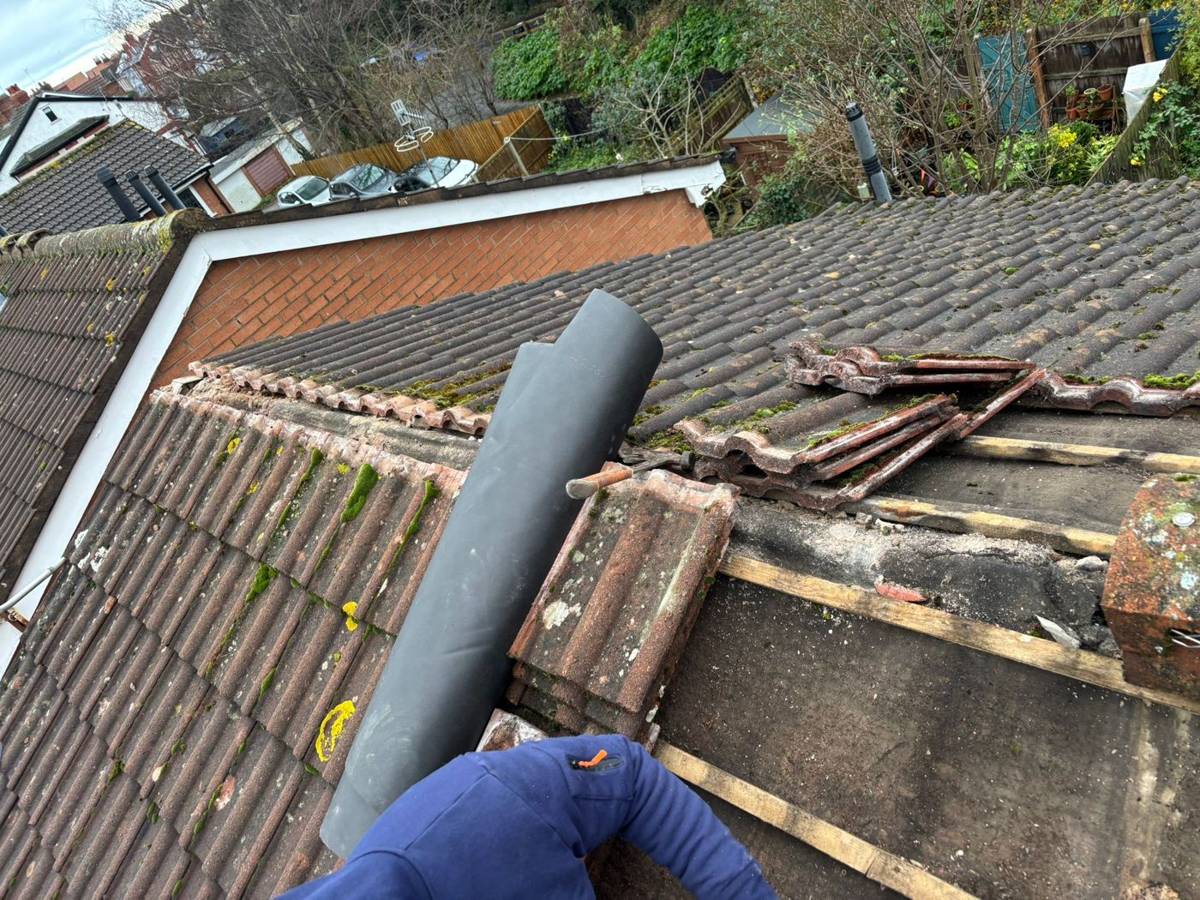
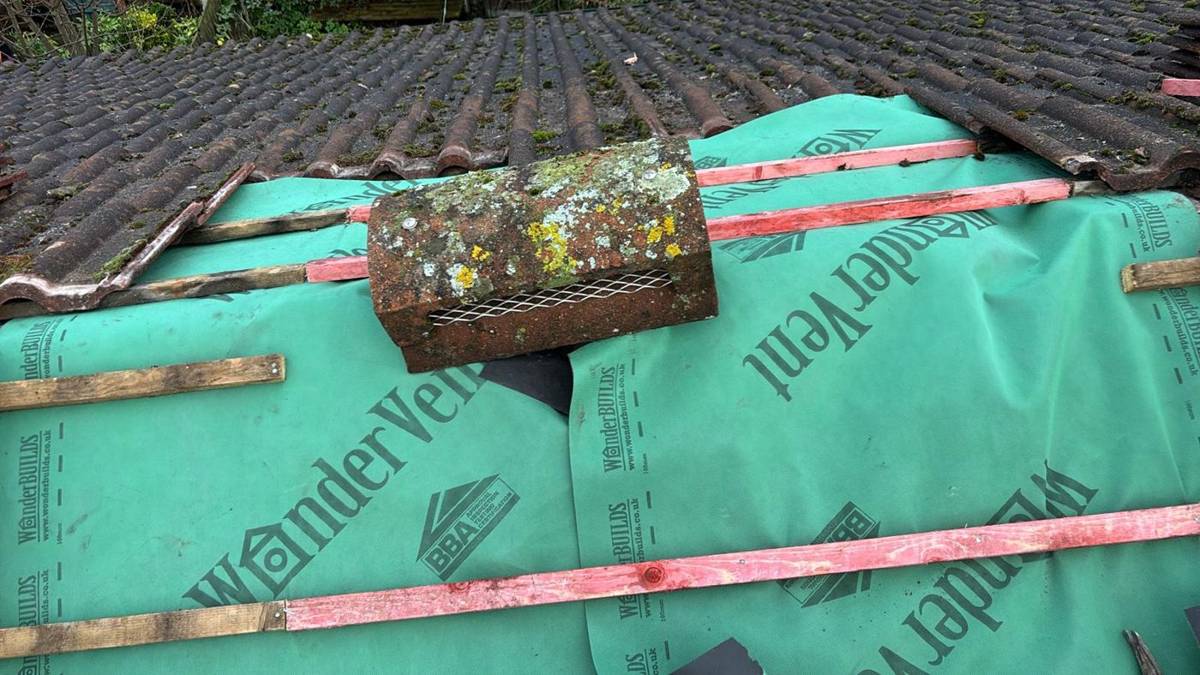
Across that stripped area we laid a new breathable membrane and fixed fresh treated battens over it. The removed tiles were stacked on the slope ready to go back, and one lichen-covered old ridge tile with a mesh insert sits on the membrane in one of the shots while the work carried on around it.
- Top courses lifted on both slopes along the ridge
- Old felt, battens and broken bedding exposed and cleared
- New breathable membrane and treated battens along the top
- Tiles relaid, then the dry ridge roll and ridge tiles fixed
How the dry ridge goes on
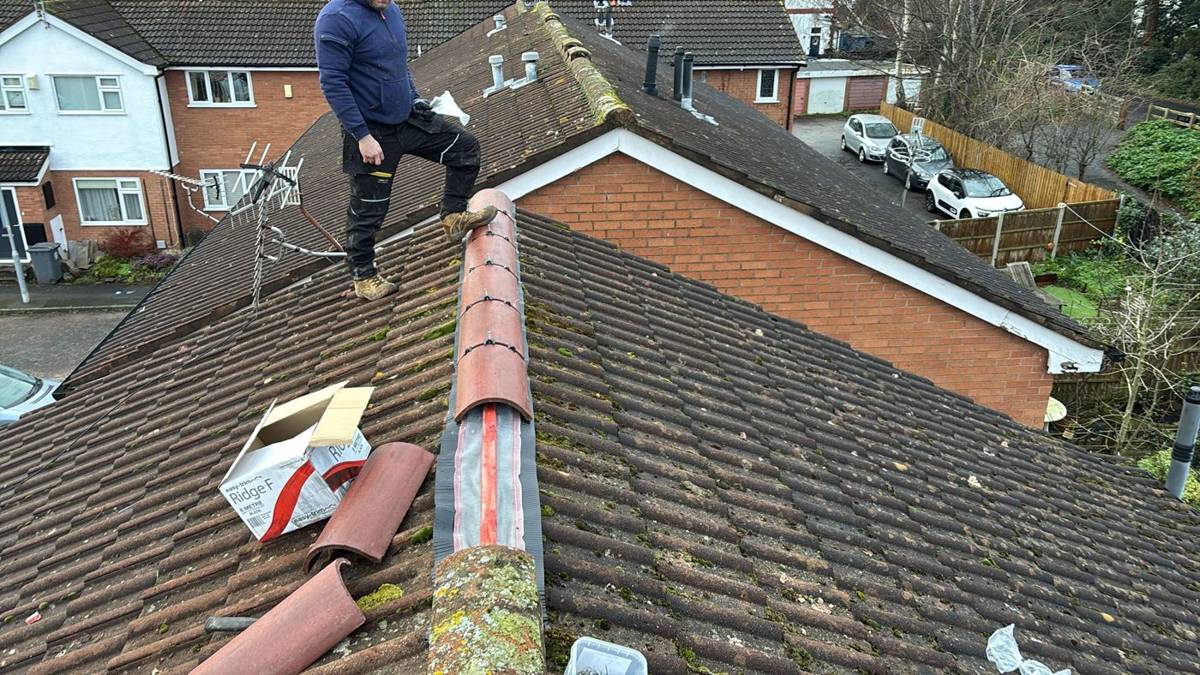
With the tiles back in place, a grey roll of dry ridge material is run along the top of the roof. It covers the gap where the two slopes meet, lets the roof breathe, and gives the ridge tiles a weathertight seat without any mortar. The last photo shows the ridge tiles going on one by one, each held with its own fixing, with the box of fixings sitting on the tiles beside the job.
The reason for doing it this way is simple. Mortar bedding shrinks, cracks and eventually lets go, and loose ridge tiles are one of the most common calls we get under roof repairs in Chester. A mechanically fixed ridge does not depend on the mortar staying intact. You can compare this job with the full ridge replacement in Hope Dean, done on a plain tiled hipped roof.
Questions About This Kind of Job
Why strip the top courses for a ridge job?
When the felt and battens at the top of the roof are tired, fixing a new ridge over them only solves half the problem. Stripping a few courses lets us renew that area so the ridge has something sound to fix into.
What is the roll that goes under the ridge tiles?
It is part of the dry ridge system. It seals the gap along the top of the roof while letting air move through, and the ridge tiles are fixed down over it.
Can a dry ridge go on a concrete tiled roof like this?
Yes. Dry ridge kits are made to suit common concrete profiles, including double-roman style tiles like the ones on this Chester roof.
How do I get my ridge looked at?
Get in touch with a photo of the ridge if you can, and we will come and take a proper look.