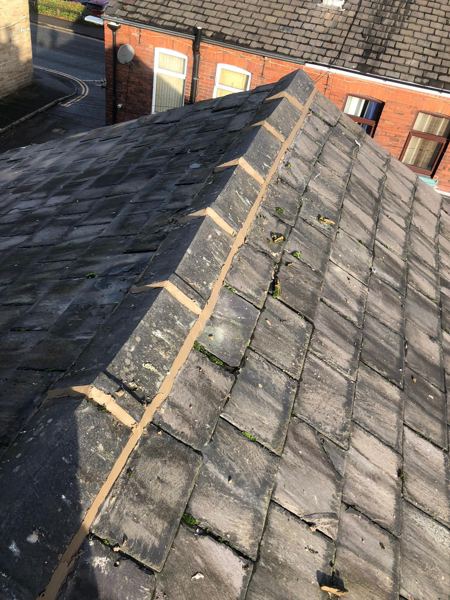
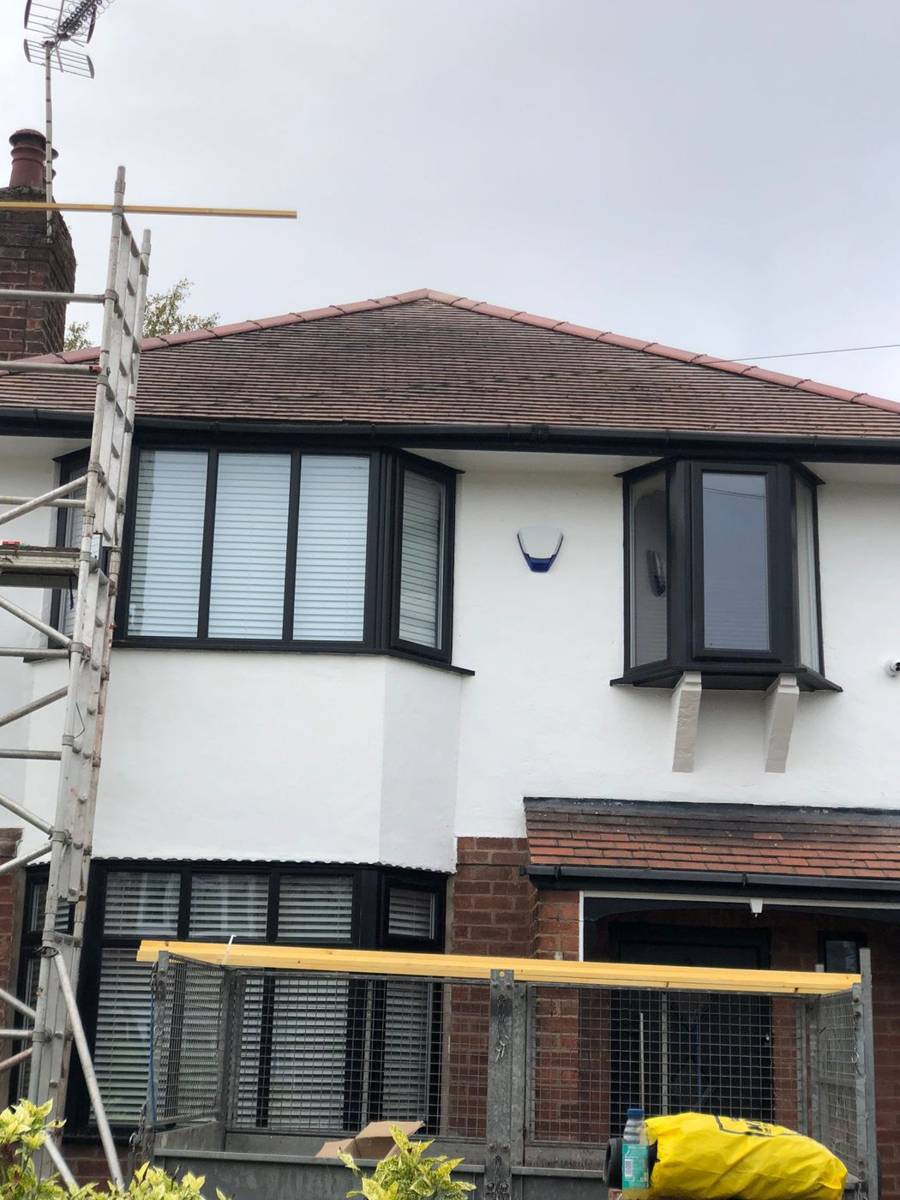
This house in Hope Dean, Chester, has a hipped roof finished in small red plain tiles, with a run of half-round ridge tiles along the top and down the hips. The mortar under those ridge tiles had deteriorated to the point where the tiles were no longer stable, and when bedding gets that far gone there is little point patching it.
So the whole ridge came off and went back on as a dry ridge.
From loose bedding to a clipped ridge
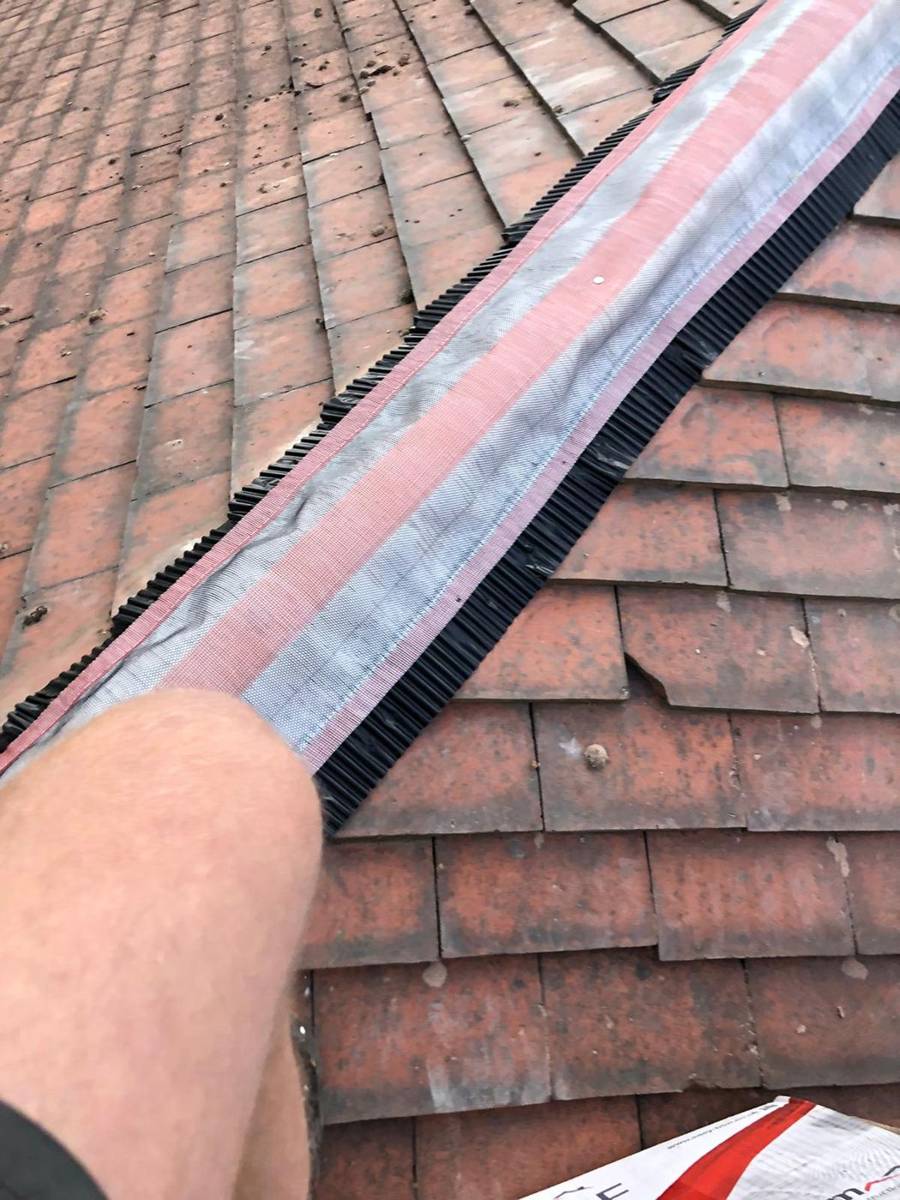
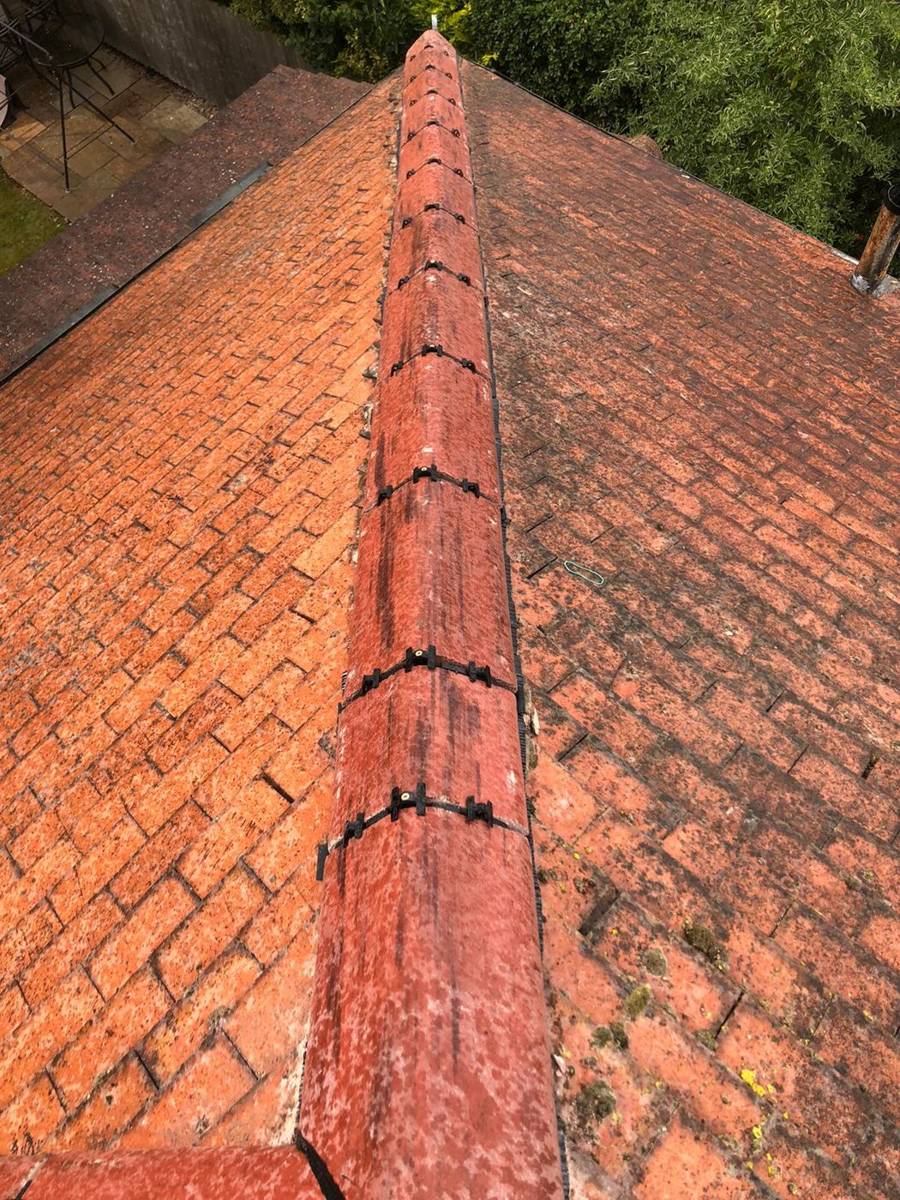
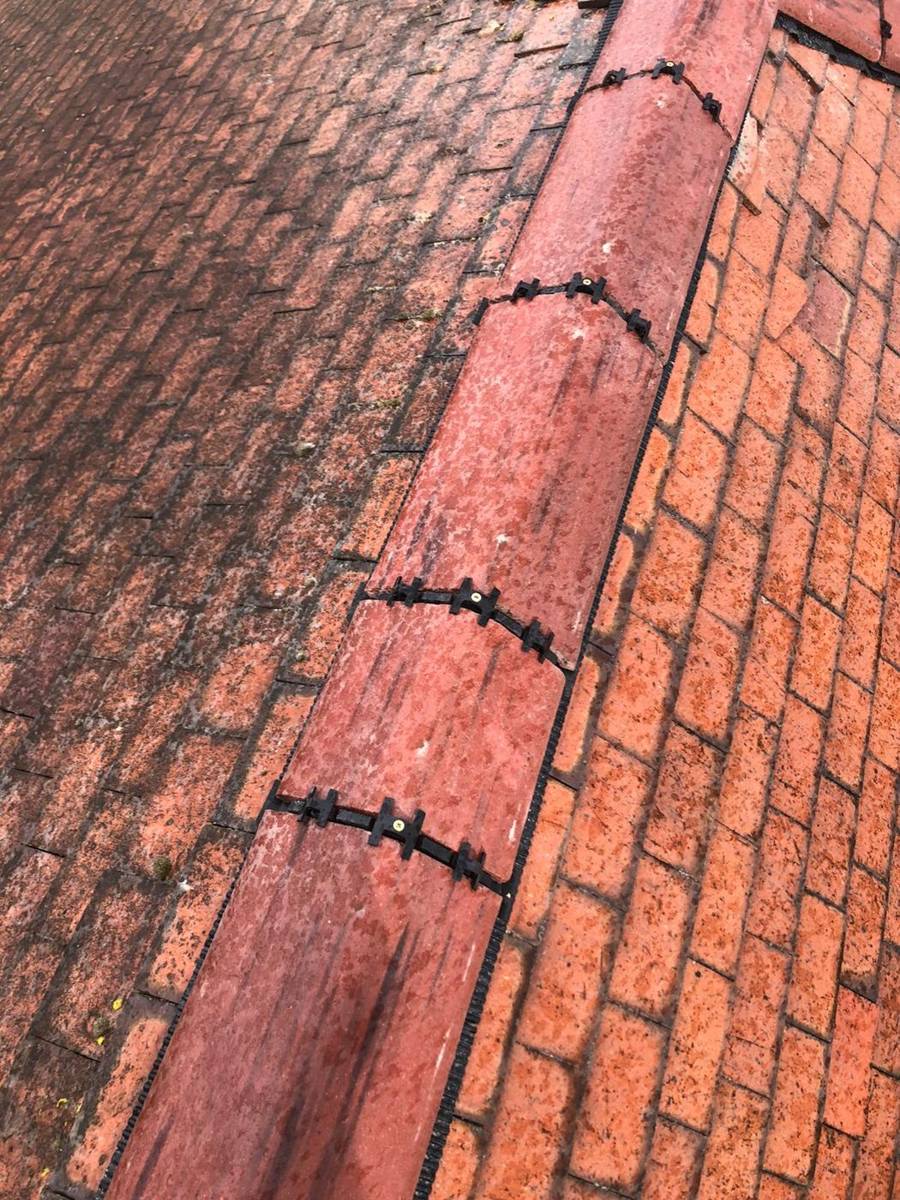
Once the ridge tiles were lifted and the crumbling mortar cleared, a dry ridge roll was laid along the top. In one of our photos you can see it running up the ridge on the plain tiles, a flexible strip with pleated black edges that dress down onto the tiles either side. Those edges follow the uneven surface of small plain tiles, which mortar never really did once it started to crack.
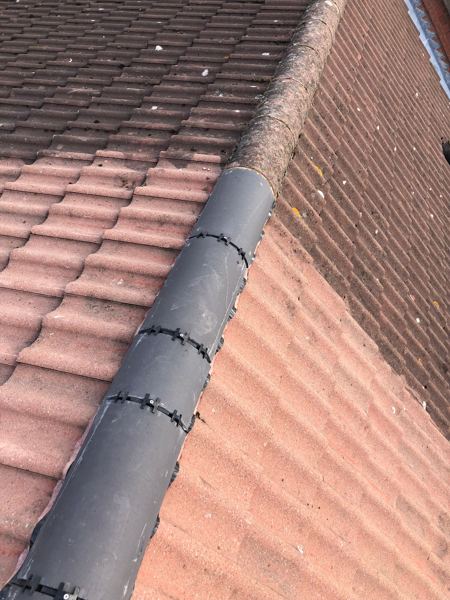
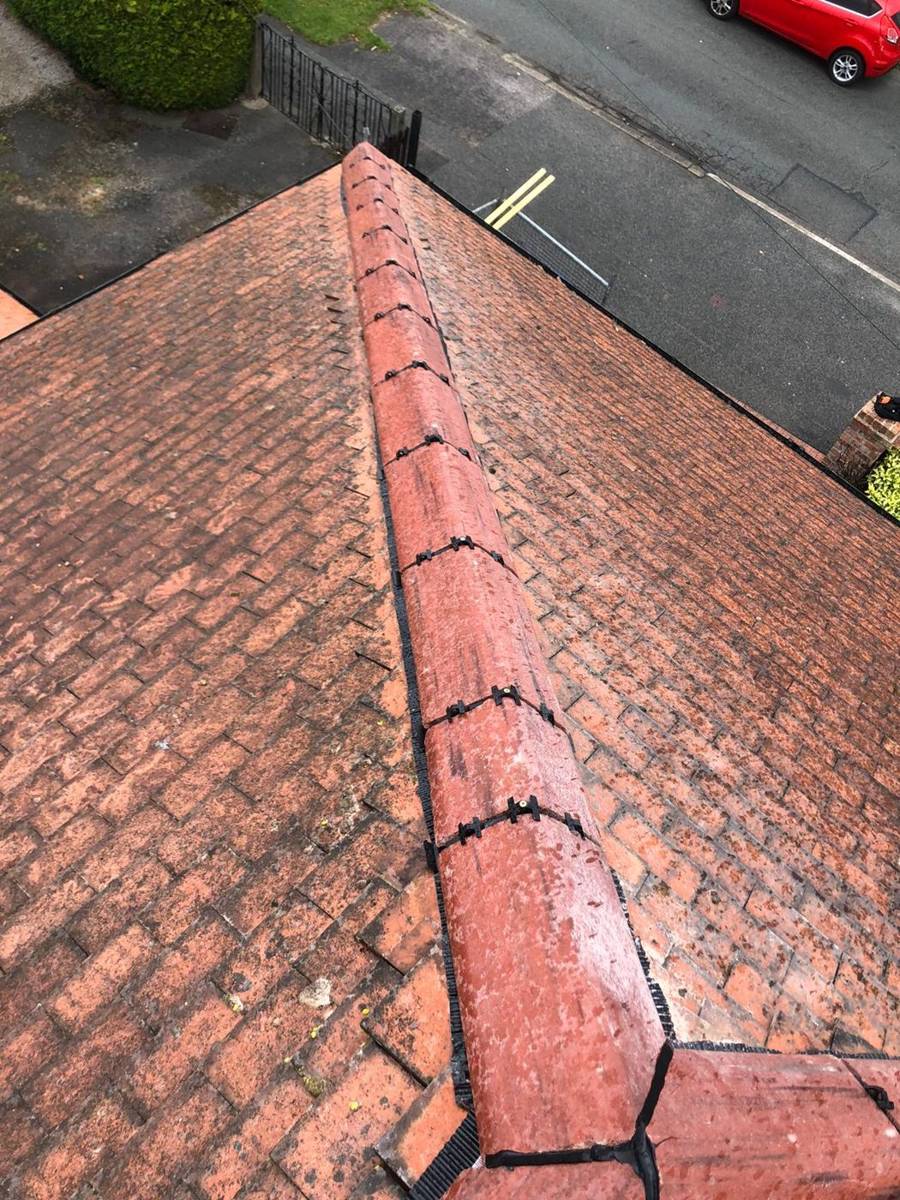
The ridge tiles were then fixed back over the roll. The finished shots show a black clip across every joint, holding each tile to its neighbour and down to the roof, with a neat black edge visible along both sides of the ridge. At the end of the run the ridge meets the hip, and the same clipped detail carries round the corner.
What changes for the homeowner
With mortar gone from the equation, there is no bedding left to crack, wash out or drop into the gutter. The tiles are held by their fixings rather than by the grip of the mortar, which is why a dry system makes sense when a ridge has gone loose along its length rather than in one spot.
From the ground the roof looks much as it did, with ridge tiles weathered to the same colour as the plain tiles below. That was the point: a sound ridge without changing the character of the house.
- Old mortar bedding cleared from the full ridge
- Dry ridge roll laid on the plain tiles
- Ridge tiles fixed back and clipped at every joint
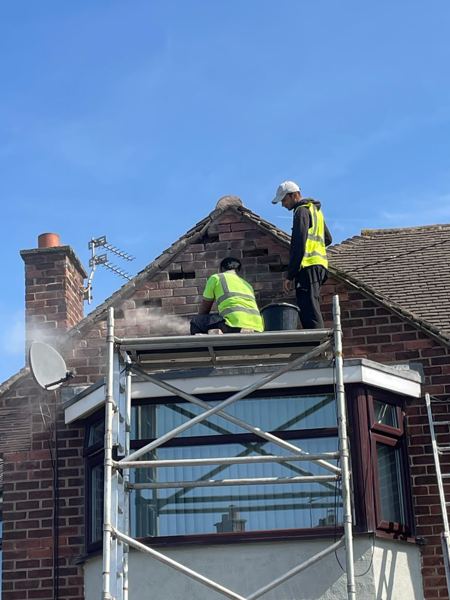
- Scaffold tower access from the side of the house
Questions About This Kind of Job
How do I know if my ridge bedding has failed?
Gaps under the ridge tiles, bits of mortar in the gutters, or ridge tiles that look out of line from the street are the usual signs. Ridge tiles that are no longer firm are the clearest sign of all, and that is the state this ridge had reached.
Can a dry ridge go on a plain tile roof?
Yes. The roll has flexible edges that settle onto the small plain tiles, and the ridge tiles are clipped and fixed over it just as on a concrete tiled roof.
Does a hipped roof make the job harder?
There is more ridge to do, because the hips need the same treatment, and the junctions need care so the clips and roll run neatly round the corners. It is the same system, just more of it. You can also see a dry ridge on a concrete tiled roof in Chester, where the top courses were renewed too.
Can you look at my ridge?
Of course. Send us a message and we will arrange a visit. Our roof repairs page covers the other work we do.