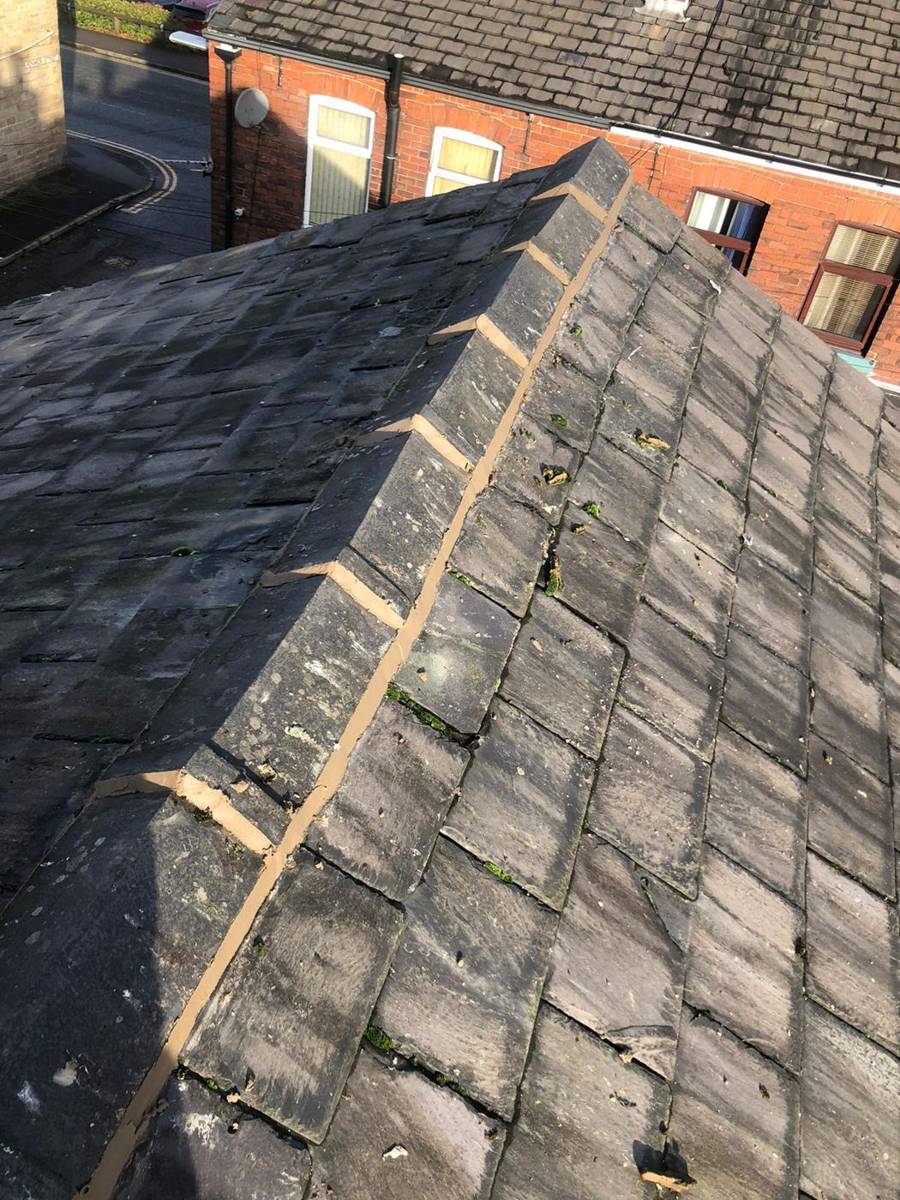
This is a slate roof in a terraced street in Chester, with a line of angled ridge tiles running along the top. The repair here was done in mortar, the traditional way, at the joints between the ridge tiles and along the edges where the ridge sits on the slates.
The single photo from this job was taken in low winter sun from roof level. It shows the ridge line after our repair, with a light band of fresh mortar at every joint and running along the bedding on both sides.
What this repair involved
On a slate roof like this, the ridge tiles are usually a sharp angled profile rather than rounded, and they sit on a bed of mortar along each side. Over the years that bedding shrinks away from the slates and the joints between the ridge tiles open up. Water then gets in under the ridge, and in a freeze it can push the remaining mortar apart.
Where the ridge tiles themselves are sound, the answer can be to clear the failed mortar and make the joints and edges good again, rather than replace the tiles. The photo shows the result: each joint filled, and the edges dressed so rain runs off the ridge rather than into it.
- Existing angled ridge tiles kept on the roof
- Joints between the angled ridge tiles filled with fresh mortar
- Bedding edges made good on both slopes
Repair, rebed or go dry?
There are three broad options when a ridge starts to fail. Re-pointing suits a ridge where the tiles are firm and only the outer mortar has gone. Rebedding means lifting the tiles and laying them on new mortar, which is needed when the bedding has failed right through. The third option is a dry ridge, where the tiles are fixed mechanically with no mortar at all, as on the dry ridge job in Chester from January.
Which one is right depends on what we find when we get up there, and we will explain the choice before any work starts. Ridge work sits within our wider roof repairs across Chester and the surrounding area.
Questions About This Kind of Job
Why does ridge mortar fail on older slate roofs?
Mortar is exposed to every bit of weather at the top of the roof. It shrinks, cracks and loosens with frost and movement, and eventually it stops sealing the gap under the ridge tiles.
Is pointing a ridge a permanent fix?
It is a sound repair when the tiles are firm, but it is still mortar, so it will need looking at again in time. If the bedding has failed underneath, rebedding or a dry ridge is the better route.
Can you tell if my ridge needs work from the ground?
Sometimes. Gaps under the ridge tiles, pieces of mortar in the gutter or on the path, and tiles out of line are all worth mentioning when you get in touch.