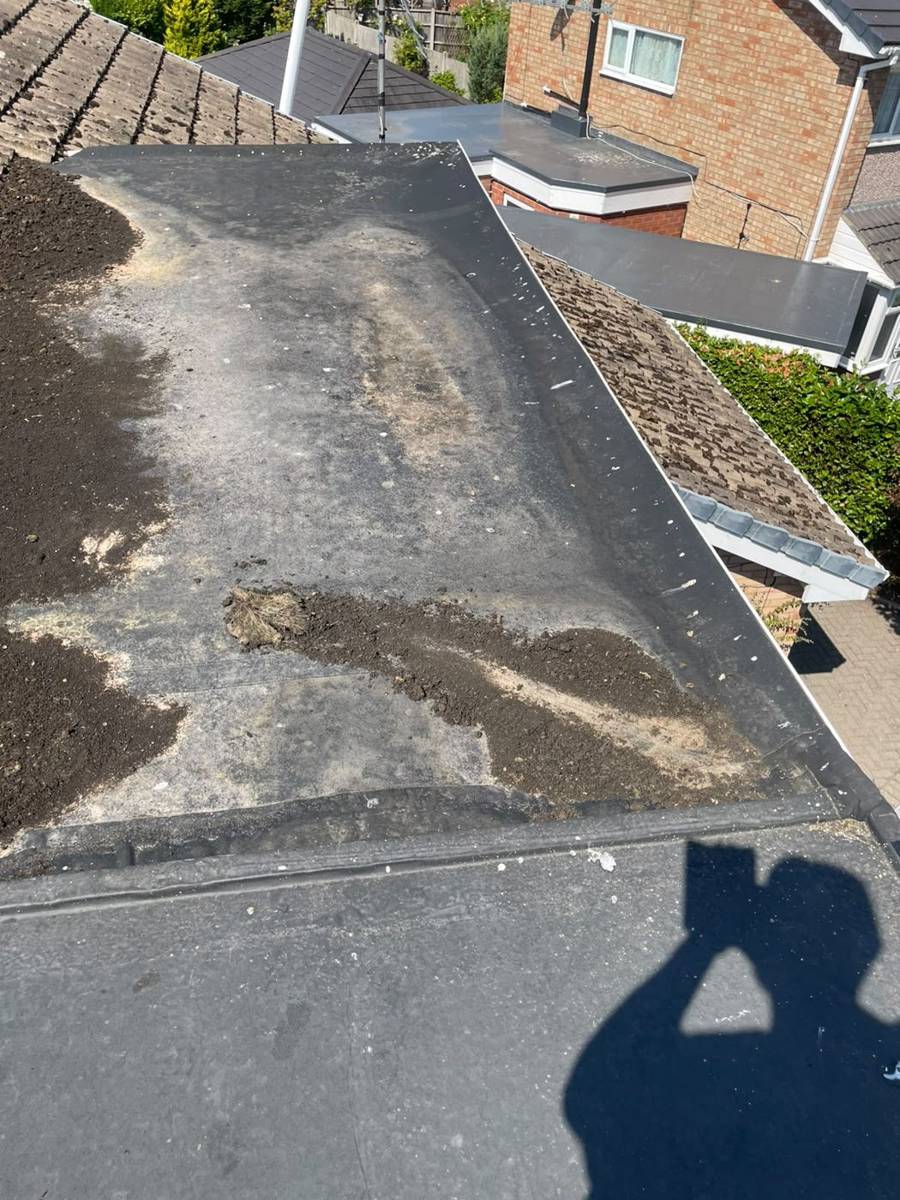
This Chester flat roof sits in an awkward spot: a narrow strip running between a concrete-tiled pitched roof on one side and a lower tiled slope on the other. Rain from both pitches ends up on it, so when the covering fails it fails quickly.
When we got up there the old surface was grey, cracked and carrying a layer of soil and moss that had built up over the years. We replaced it with a new deck and an EPDM rubber membrane as part of our flat roof and rubber roofing work.
Where the old roof had got to
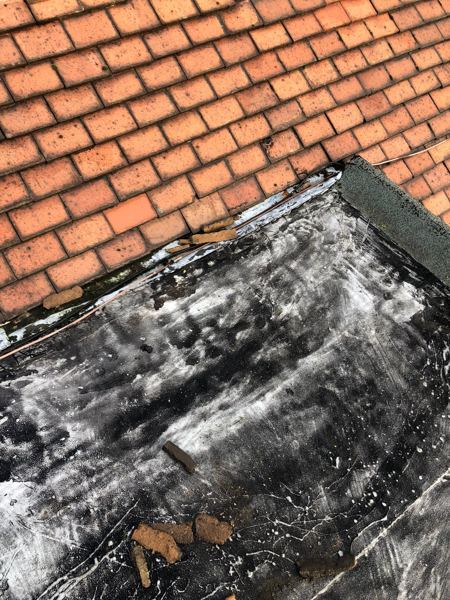
The before photo shows patches of dark soil and moss sitting on the covering, with bare, worn areas in between. Debris like that holds water against the roof and keeps it damp long after the rain has stopped, which speeds up wear on an older felt-type surface.
Once the covering and old boards came off, the joists and the insulation between them were open to view. That gave us a clear look at the structure before anything new went down.
How the new roof went on
The job followed the usual order for a flat roof renewal, with extra care at the tiled edge:
- Stripped the old covering and deck back to the joists.
- Lifted the concrete tiles nearest the flat roof so we could get at the junction properly.
- Laid new OSB deck boards across the joists.
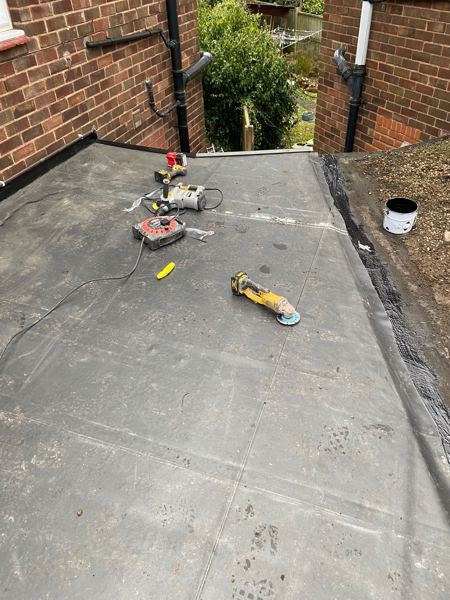
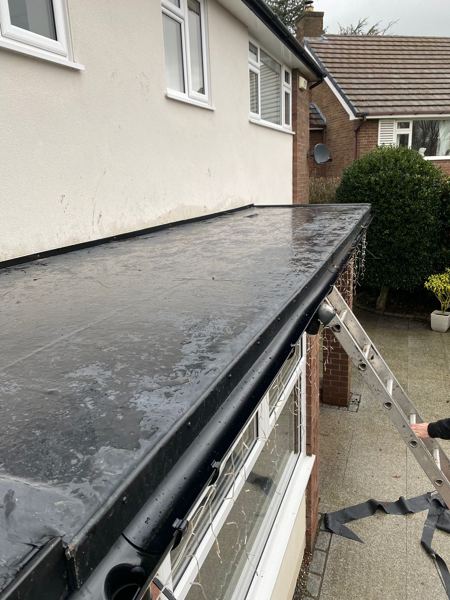
- Bonded the EPDM rubber membrane to the new deck and finished the edges with trims.
The finished roof
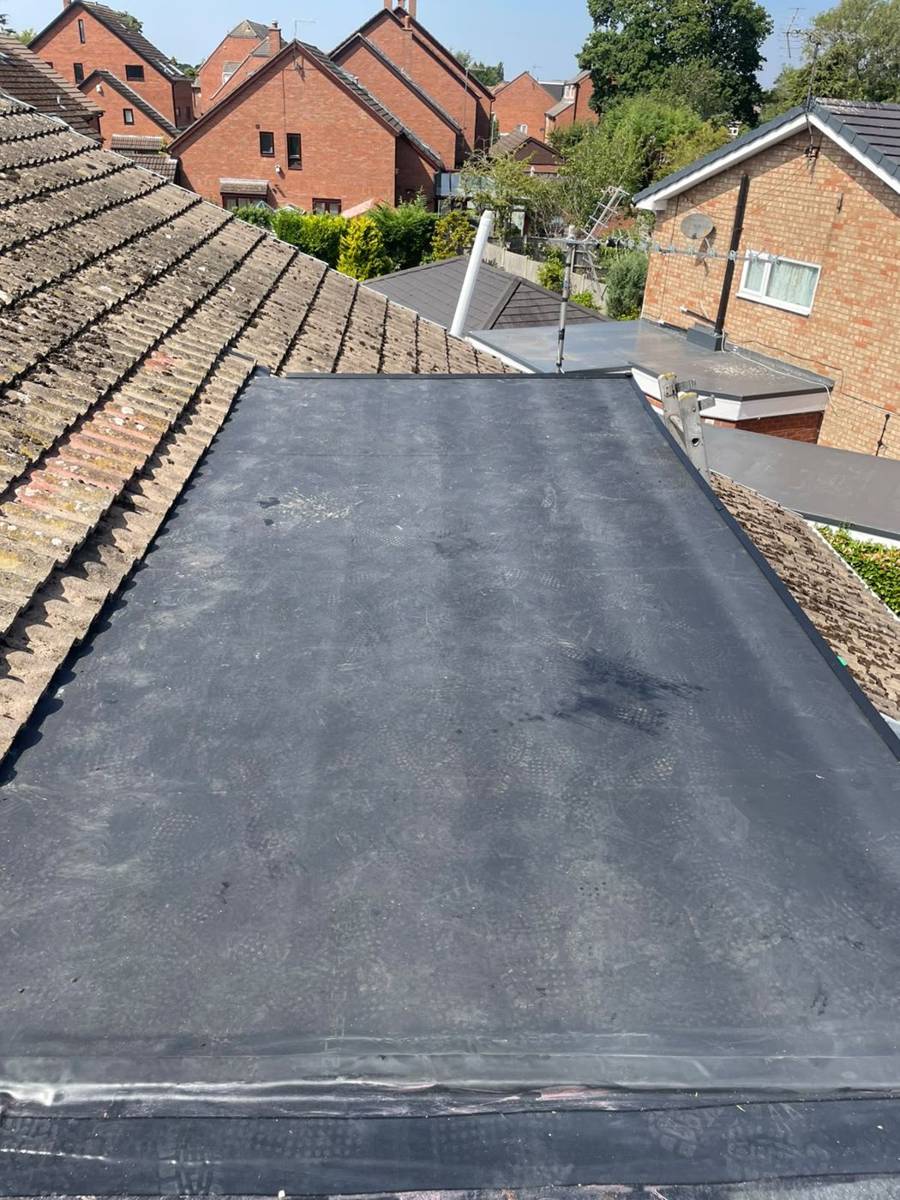
The after photo shows a clean, dark rubber surface running the full length between the two pitches, with the tiled slopes on either side. EPDM comes in large sheets, which keeps joins to a minimum on a roof that also takes the run-off from the slopes beside it.
If you have a flat section boxed in by pitched roofs like this and it is showing moss, ponding or leaks, send us a few photos and we will take a look. You can also see a similar rubber job on a front porch canopy in Chester.
Questions About This Kind of Job
Why do flat roofs next to pitched roofs wear out faster?
They collect the run-off from the slopes around them as well as their own rainfall, and leaves and moss wash down onto them. More water and more debris means the covering spends longer wet.
Do you always replace the decking under a flat roof?
Not always. If the boards are sound a new covering can sometimes go over them, but on this Chester roof we took the old deck off and laid new OSB so the membrane had a clean, flat base.
What happens at the edge where the flat roof meets the tiles?
That junction is where many flat roofs leak. We lift the nearest tiles to reach it, dress the new covering at that edge and then put the tiles back, rather than just sealing against the tile surface.