★★★★★
“I had a leak in my vally had a number of roofers to come and take a look couldn’t find the problem Roofline’s solutions fixed the problem first time. Very happy with these guys thank you for the brilliant service”
Michael PriceThree different people can turn up in the same claim, and only one of them is working for you. Here is who appoints whom, what each of them is actually for, and where a roofer stops.
The two job titles sound like variations on the same thing and they are opposites. Getting them round the right way is the whole of this page, so here it is in one line each. A loss adjuster is appointed by the insurance company and works for the insurance company. A loss assessor is engaged by the policyholder and works for the policyholder, and charges a fee for doing it. A roofer is neither of those things.
The adjuster is the insurer’s eyes. They may be in-house staff or an independent adjusting firm instructed on the insurer’s behalf, and on a roof they are often a surveyor sent by that firm rather than the adjuster in person. Their job is to establish what happened, whether the policy responds to it, and what putting it right should reasonably involve. They are not there to refuse things for sport, and treating them as an enemy tends to go badly — but their duty runs to the party paying them, and it is worth being clear-eyed about that.
The assessor is the mirror image. You find one, you appoint one, you pay one, and in return they prepare and present the claim on your side of the table. A firm managing a claim for you will usually need to be authorised by the Financial Conduct Authority, although there are exemptions — solicitors, and surveyors acting in the course of their own profession, among others. So the step worth taking is to check the Financial Services Register, and to ask outright what the firm is authorised to do, before anything is signed.
The roofer is not part of that structure at all. A roofer is a tradesman who can say what has failed on a roof, what condition it was in, what the repair involves and what it costs. That is evidence, not advocacy, and it is a great deal more useful for being evidence.
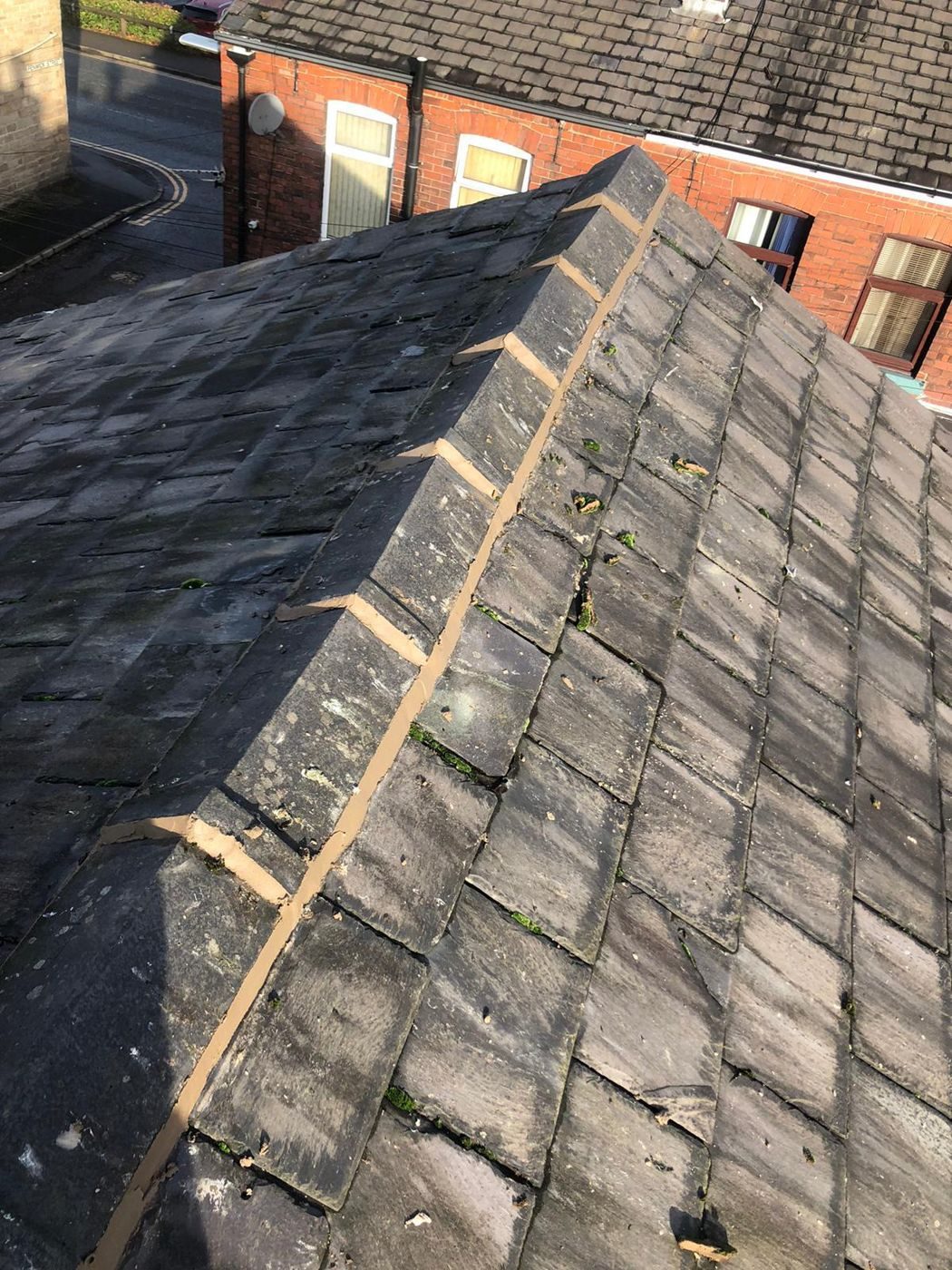
Photograph of our own work.
Not every claim gets a visit. Plenty are settled on photographs and a description, particularly where the damage is modest and the paperwork is clear, which is one reason a proper written account is worth having from the start. Where someone does attend, they will usually want to see the roof, the inside of the building where water has come through, and anything that came off. Much of what they ask about can be seen from the ground by anybody, and storm damage roof repairs: what to look for on our roof repairs section goes through it.
Four questions sit underneath everything they ask. Was the weather severe enough to be treated as a storm under this policy? Is the damage consistent with that weather? Was the weather the main cause, or was it finishing off something that had already failed? And is the rest of the property in reasonable repair, or does the condition of everything around the damage suggest a roof that was going to shed something in the next gale regardless? That third question has a guide of its own in storm damage or wear and tear, because it is the one that turns most roof claims down.
That last question is where a lot of claims are quietly decided, and it turns on small things that are easy to photograph and easy to lose. Mortar that has gone to dust, packing crushed flat under a tile, lead split along a fold: each of those is a record of condition, and it says something about the roof whether anyone photographs it or not. The difference is whether the record is yours, taken at the time, or theirs, taken after the make-safe has covered half of it up.
Straight answers work best. If you do not know when the roof was last touched, say that rather than guessing, because a detail that turns out to be wrong colours everything else you have said. Show the parts that do not help your case as well as the parts that do. An adjuster who finds something you did not mention will start wondering what else is missing.
What to have ready is a guide in its own right rather than a paragraph here, and what should be in a roofer’s report is where the evidence side of all this lives. Beyond that, have the policy schedule and the claim reference to hand, along with the date the damage happened and when you reported it, because insurers ask for all of it and a vague answer invites a second round of questions.
Assessors are a legitimate part of the landscape and this page is not going to sniff at them. On a large or complicated loss, on a claim that has been turned down and needs arguing properly, or for somebody who simply has no time or appetite for the correspondence, people do engage one and are glad they did. On a straightforward claim for a few tiles and a ridge run, others would say the fee eats the point of claiming. Both of those can be true.
What matters is that it is your decision and it is made with your eyes open. Read the agreement before signing it: how the fee is worked out, at what point it becomes payable, what happens if you change your mind or withdraw the claim, and whether the fee is still due if the insurer would have paid anyway. Ask what is included and what is charged separately. Take the paperwork away and read it somewhere other than your own doorstep.
That last point is not idle. After any serious spell of weather, people do go door to door offering to take the claim off your hands, and some of them are roofing firms and claim handlers rolled into one. There is nothing improper about the arrangement in itself, but keep the two halves separate in your head: who is repairing the roof, and who is being paid out of the settlement. Nobody needs a decision on the doorstep the same afternoon.
It is also worth knowing the free routes exist. If a claim is refused or handled badly, the insurer’s own complaints process comes first, and the Financial Ombudsman Service then considers consumer complaints at no cost to the consumer. If you bought through a broker, it is worth a call before you pay anybody, because a broker is usually acting for you and may help without charging for it — usually, not always. Under a binding authority or a delegated claims arrangement a broker can be acting for the insurer instead, and none of them is obliged to run a claim for you, so ask outright which it is. None of that is advice about which road to take — we are roofers, and how you run the money side is genuinely yours to choose.
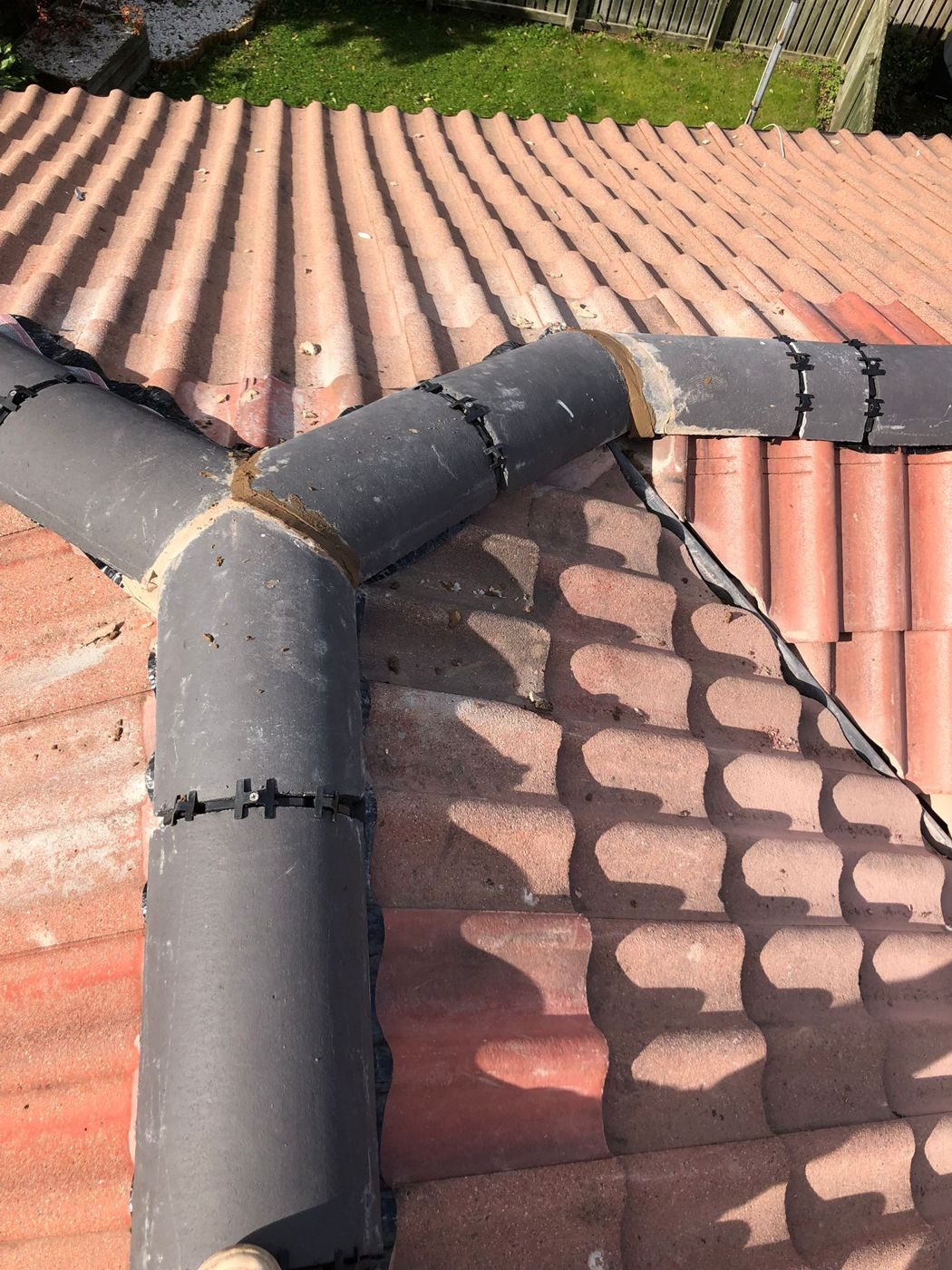
Photograph of our own work.
So that there is no doubt about it: we are not loss assessors, we do not handle or manage claims, and we do not deal with insurers or their adjusters on anybody’s behalf. We attend, we make the roof safe, and we provide a written report with photographs. You are the one who sends it in, and the claim stays yours throughout.
That division is deliberate rather than a shortcoming. A description of a failed junction carries more weight when it comes from the tradesman who knelt next to it than from anyone with a stake in the size of the settlement, and the report is written to be read by somebody whose job is to assess it. It names the components, their condition, where they are, what the make-safe involved and what the permanent repair needs, with dated photographs from the roof itself.
What we will not do is tell you what your policy covers or offer a prediction about how the claim ends. We have not read your policy, no two are identical, and a roofer guessing at wordings is worth nothing to anybody. The same goes for the sums: we quote for roofing work and stop there. Whether the excess and the effect on future renewals make claiming worthwhile is a judgement for you. The storm damage section explains the rest of the process, and tile matching on a part-repair covers the question that comes up next on most older roofs.
The other guides in this set. What happens in the hours right after a storm is covered in detail on our roof repairs section, and linked throughout these pages rather than repeated.
Emergency call-outs across all of it, including Chester, Ellesmere Port, Neston, Runcorn, Frodsham, Helsby, Tarvin, Birkenhead, Wallasey, Heswall, Hoylake, West Kirby, Bebington, Deeside, Flint, Widnes, Warrington, Northwich, Winsford and Tarporley.
Start with the main storm damage page, or the town pages on roof repairs.
“I had a leak in my vally had a number of roofers to come and take a look couldn’t find the problem Roofline’s solutions fixed the problem first time. Very happy with these guys thank you for the brilliant service”
Michael Price“Highly recommend. Very quick and efficient. Great communication. Went above and beyond to work the weekend to complete the work that needed to be done. Very happy with the results.”
Karen Jones“Excellent work from the lads at roofline solutions. I had a leak in my valley, they came out and sorted it within a day.”
Chris HollewellDescribe the roof and roughly where you are, and we will come back to you — usually the same day. If water is coming in now, please call instead.
Prefer to talk? Call 07464 259566 · WhatsApp 0044 7464 259566 · Email Evensbuddy@yahoo.com
We cover Chester, Cheshire, the Wirral and Deeside from Elton, just north of Chester.
2 Manley View
Elton
Chester
CH2 4QF
Almost all of our work happens at your property rather than here, so please call before travelling.
Monday – Friday — 24hrs — Emergency Call-Outs
Saturday — 8:00 – 19:00
Sunday — 8:00 – 19:00
Weekday emergency call-outs are answered around the clock. Weekend cover is 8:00 to 19:00.