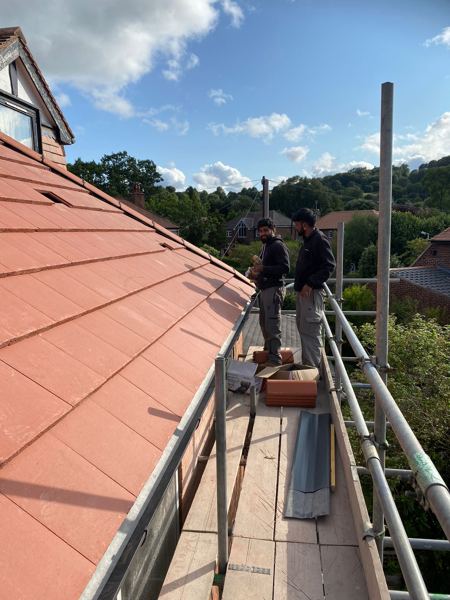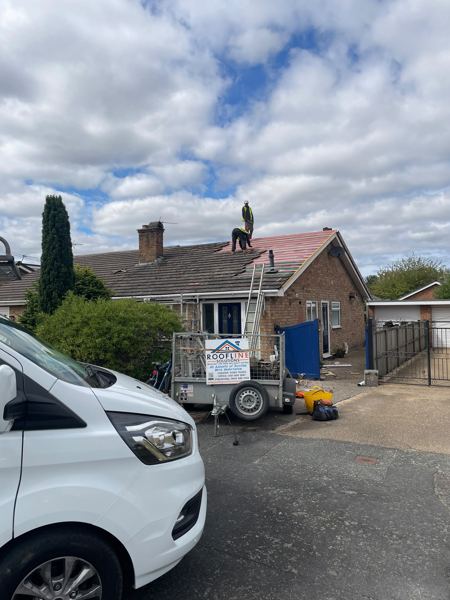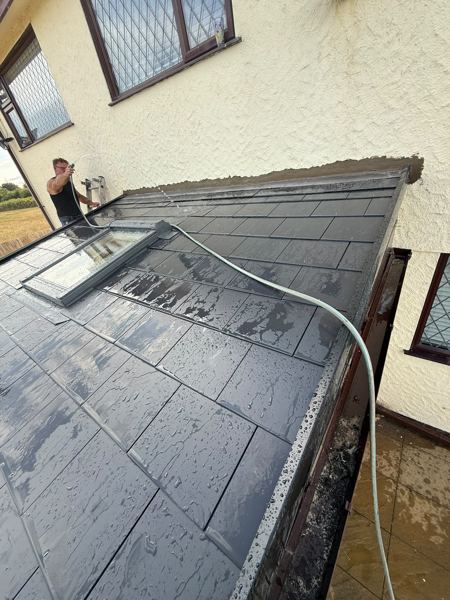
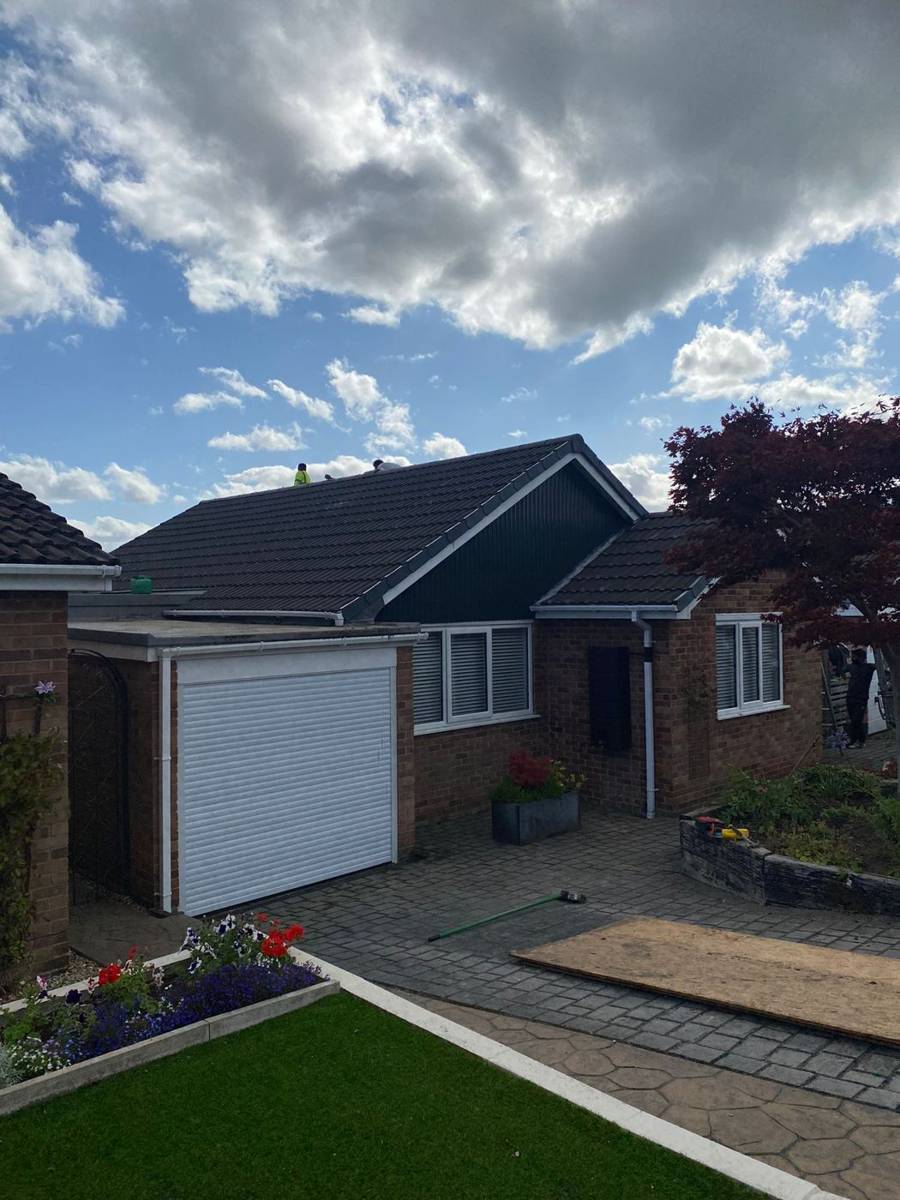
In August 2025 we replaced the tiled roof on a brick bungalow in Tarporley. It is a typical layout for the area: a main pitched roof with a gable to the front, and a lower pitched roof stepping down to one side.
The job was a full replacement roof, finished with a dry ridge system along the top and gable end caps, so none of the ridge or verge relies on mortar. Four photos cover it, from the strip to the finished roof seen from the drive.
Off with the old
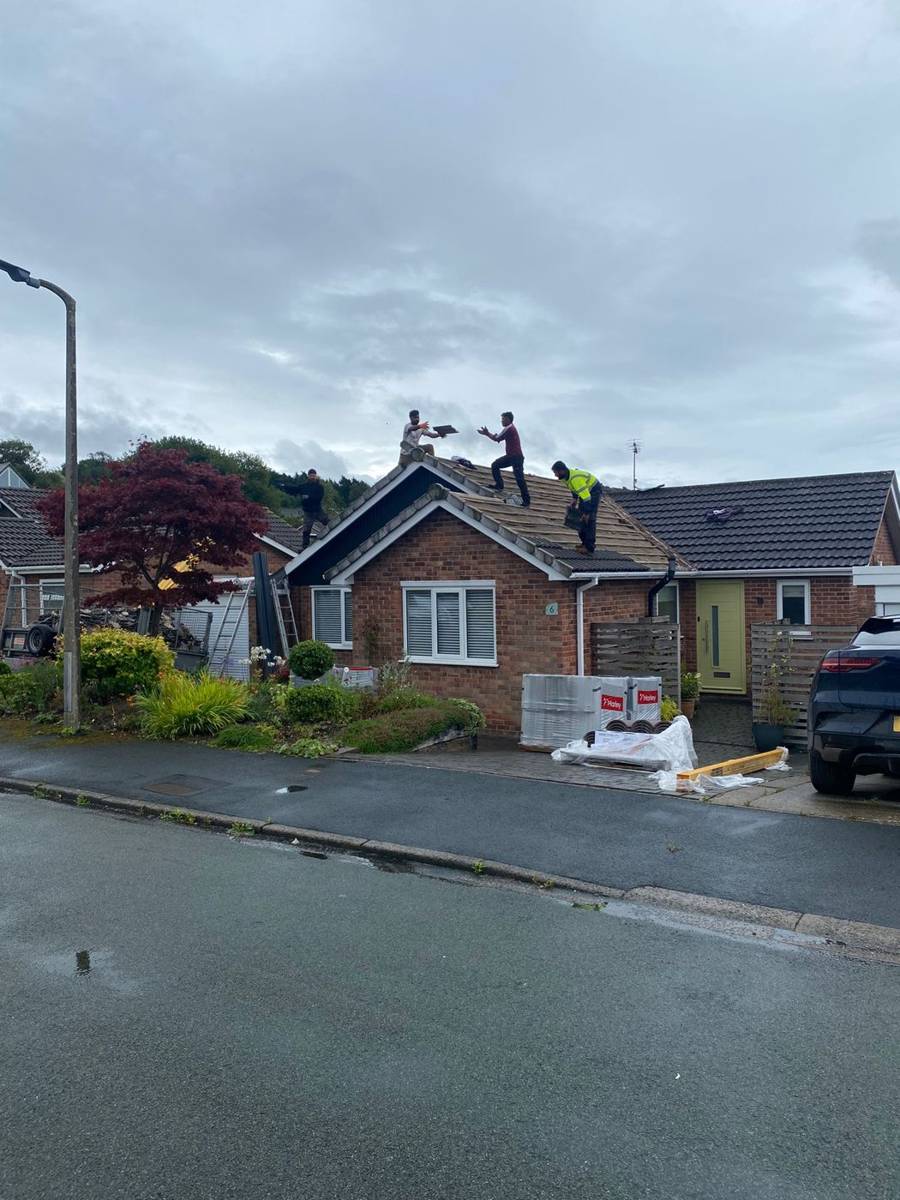
The first photo, taken from the road on a grey day, shows the team up on the roof stripping the old covering, with the old tiles coming down and bags of waste and materials gathering on the drive. The rest of the photos were taken once the new roof was on.
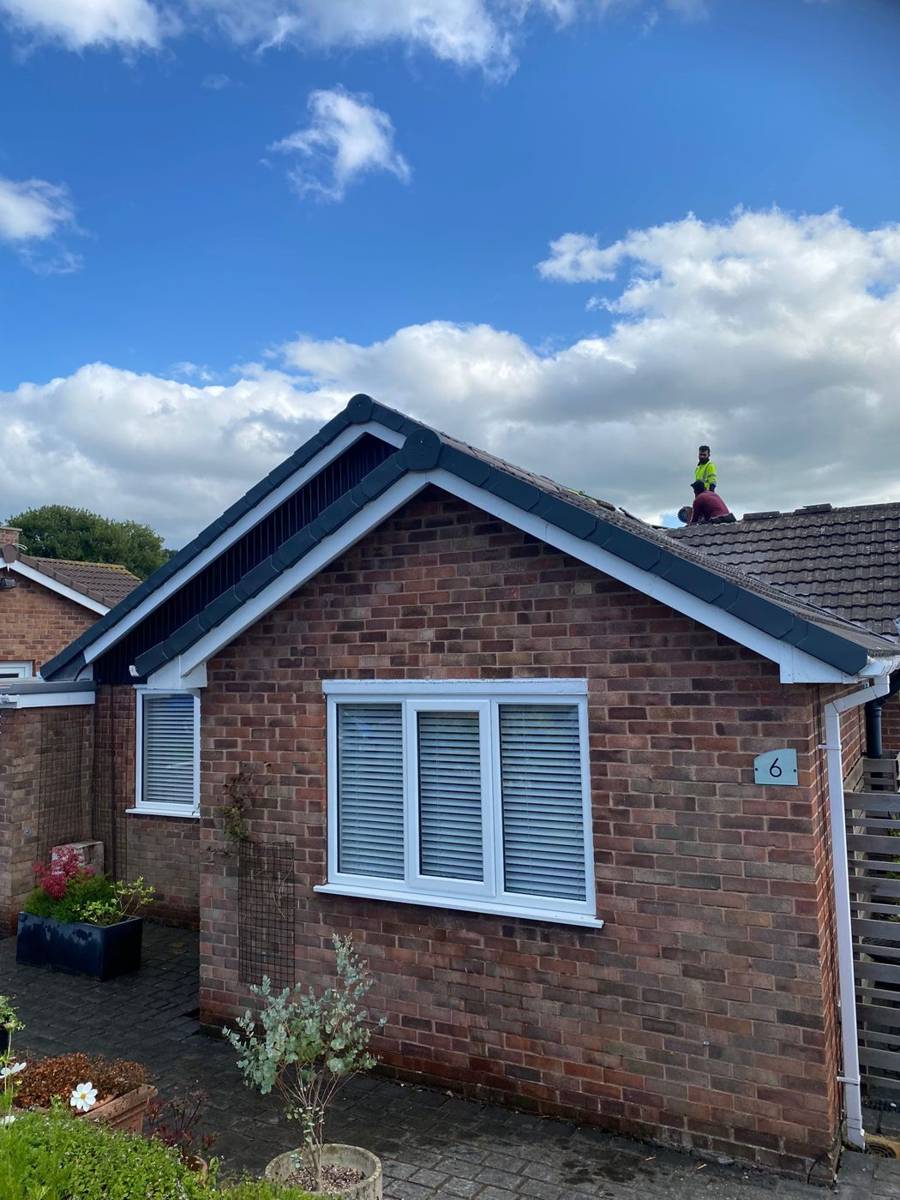
Seen from the front, the finished roof is a clean run of dark grey tiles, with the lower side roof tiled to match. The dark cladding in the gable ties in with the new colour.
Why a dry ridge and gable end caps
On older roofs, ridge tiles and the tiles along the gable edge are usually bedded in sand and cement. That mortar is exposed to every bit of weather the roof gets, and over time it cracks, drops out in lumps and lets the ridge tiles work loose. It is a common cause of the problems we see on roof repairs calls.
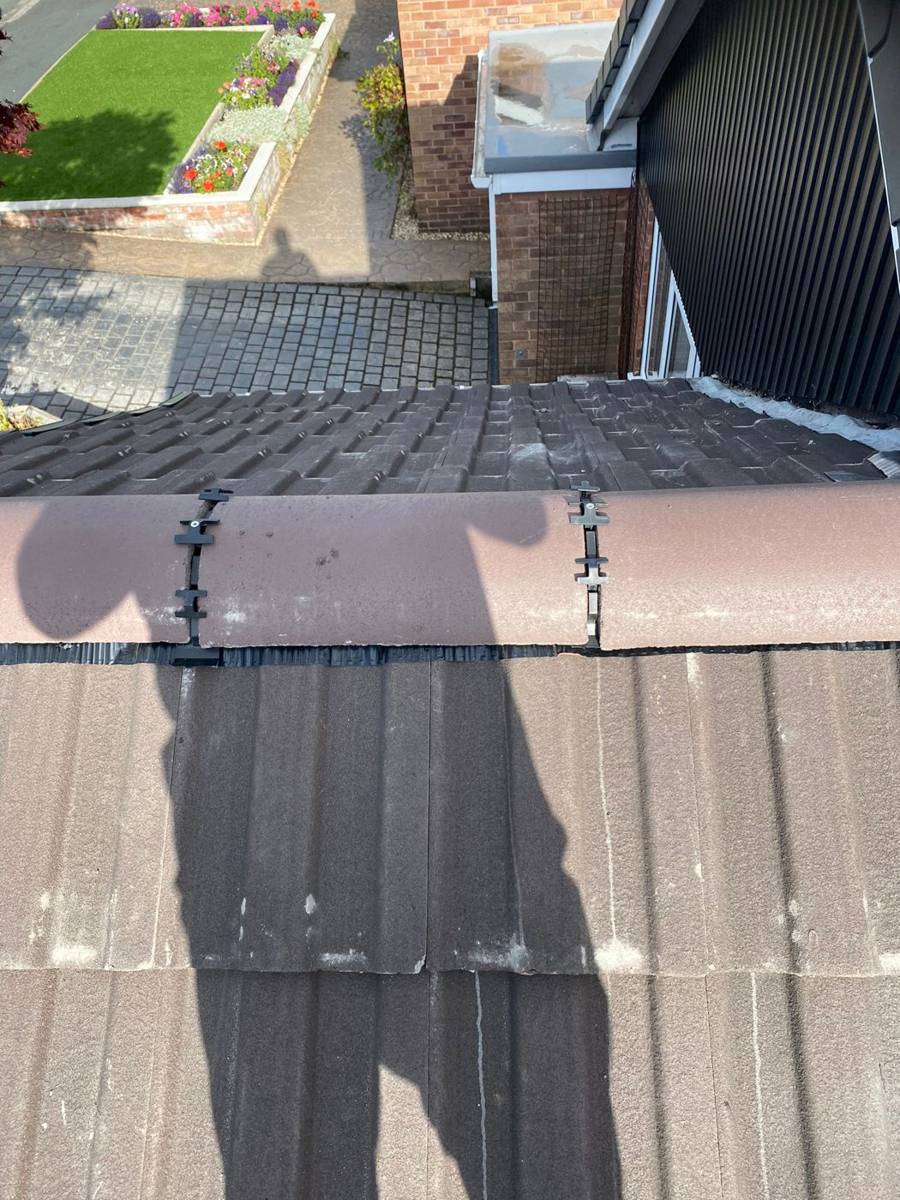
A dry ridge system does the same job mechanically. Each ridge tile is fixed down and joined to the next with a clip, and a roll underneath keeps water out while letting the roof space breathe. The close-up photo shows the ridge from above, with the black joint clips visible between each ridge tile.
At the ends of the ridge and along the gables, gable end caps cover the exposed edges of the tiles instead of a line of mortar. They give a neat, even finish and do not need re-pointing. We have covered a verge-only version of this on our dry verge project in Chester.
- Old roof covering stripped
- Replacement dark grey tiles across the main roof and lower side roof
- Dry ridge system with clipped joints
- Gable end caps in place of mortar bedding
Questions About This Kind of Job
Can a dry ridge be fitted without replacing the whole roof?
Often, yes. If the tiles and underlay are sound, the old mortar-bedded ridge can be lifted and refitted with a dry ridge system on its own.
Do dry ridge systems need maintenance?
There is no mortar to crack or re-point, so there is far less to go wrong. It is still sensible to have a roof looked over now and then, especially after strong winds.
Is a bungalow roof quicker to replace than a house roof?
It is lower and easier to reach, but the work is the same: strip, new underlay and battens, tiles, then ridge and verges. How long it takes depends on the size and shape of the roof and the weather. Ask us and we can talk it through for your roof.