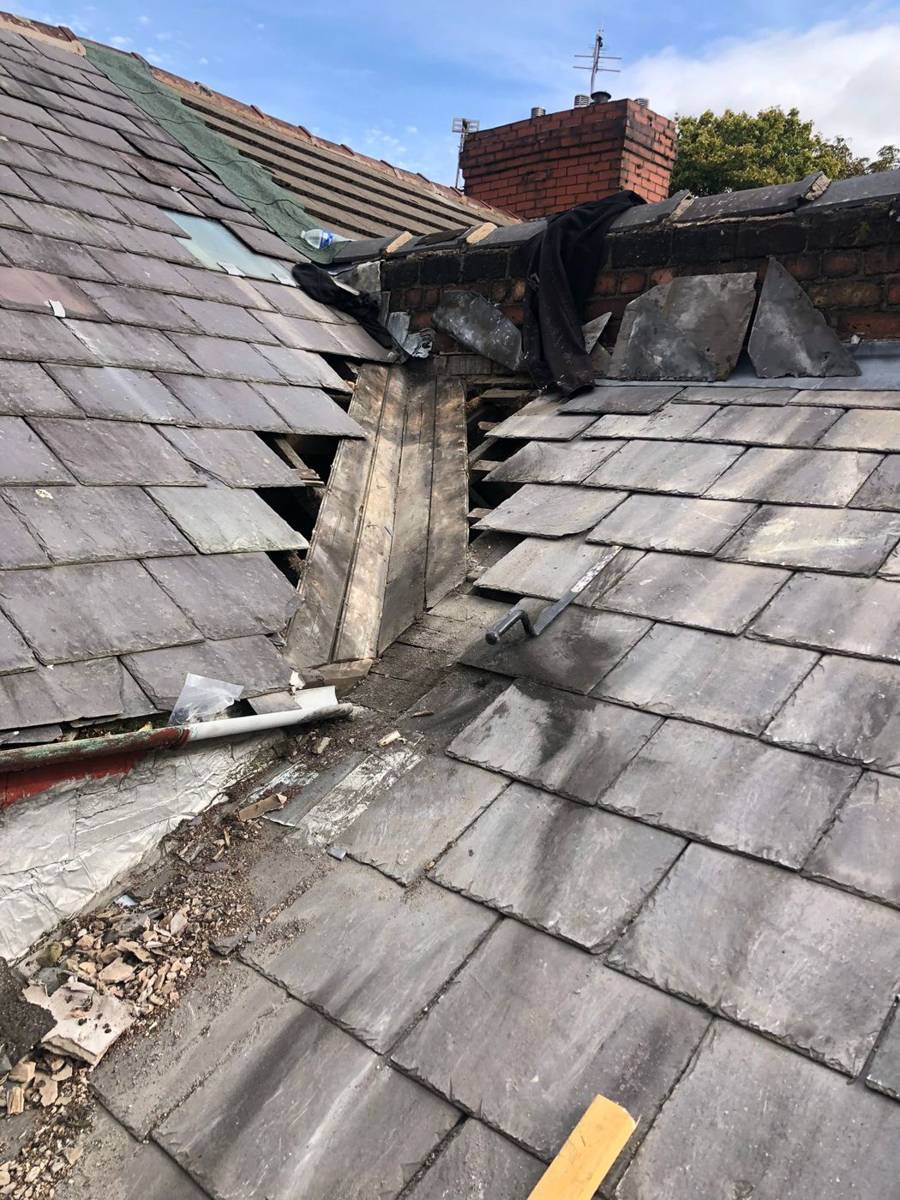
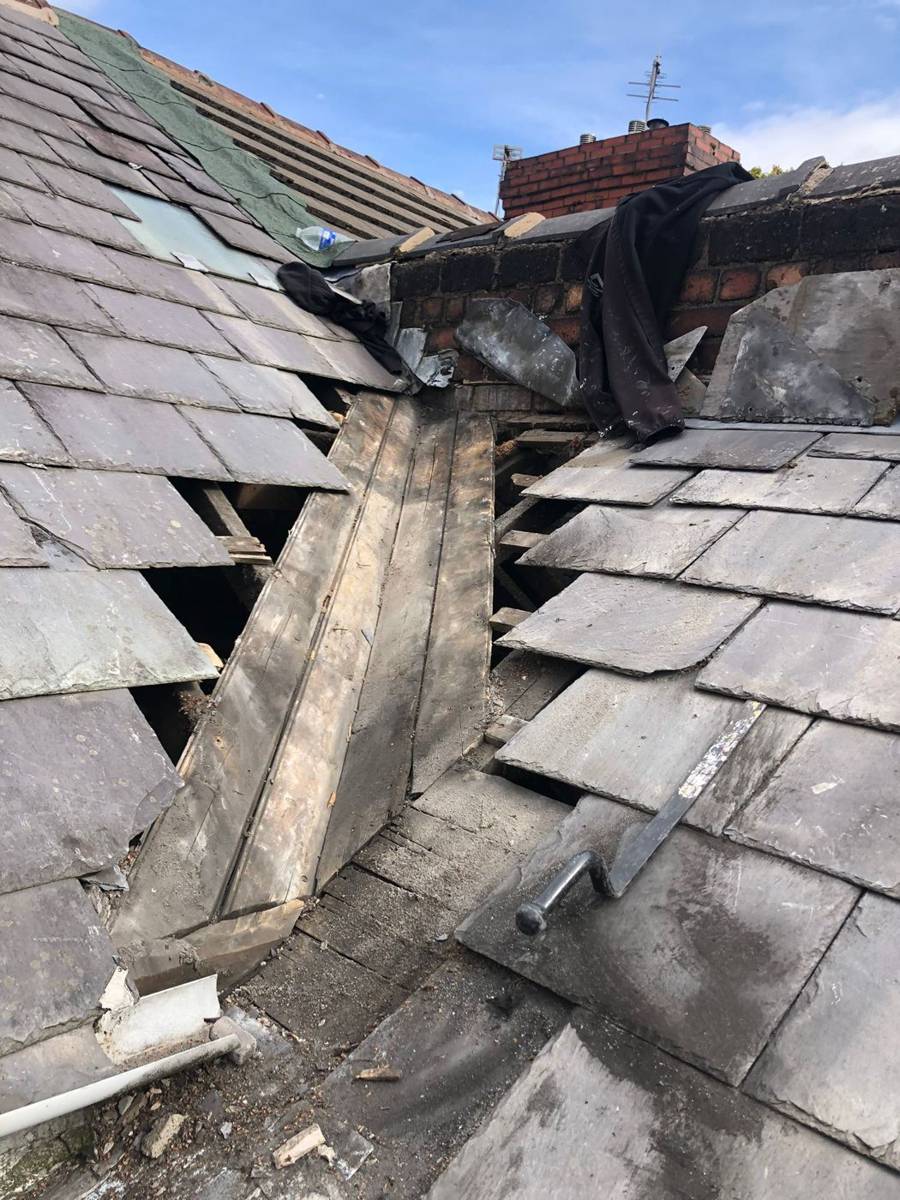
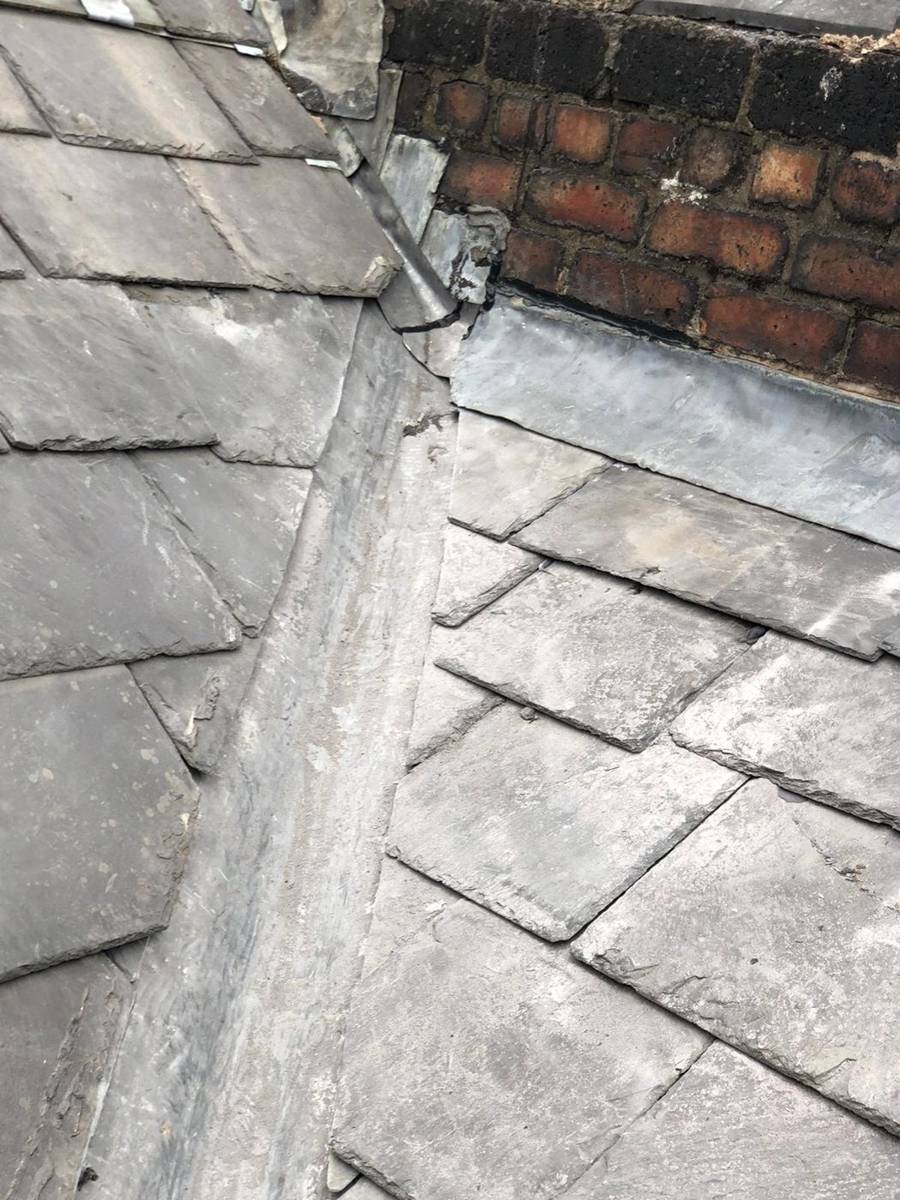
This St Helens job was a full valley replacement on a natural slate roof. The valley runs down between two slopes and finishes at the top against an old red brick parapet, with a chimney stack just beyond. Rather than patch the old lining, we stripped the whole valley out and started again with new lead work.
We photographed it from start to finish, so this page follows the job in order: opening up, the bare valley, the new lead going in, and the slates back in place.
Stripping out the old valley
The first step was to take off the slates along both sides of the valley. In the early photos you can see the slates removed in a wide strip each side, stacked at the top of the roof, and the old valley boards and timbers exposed underneath. A slate ripper, the long hooked tool used to cut the old nails, lies on the slates beside the work.
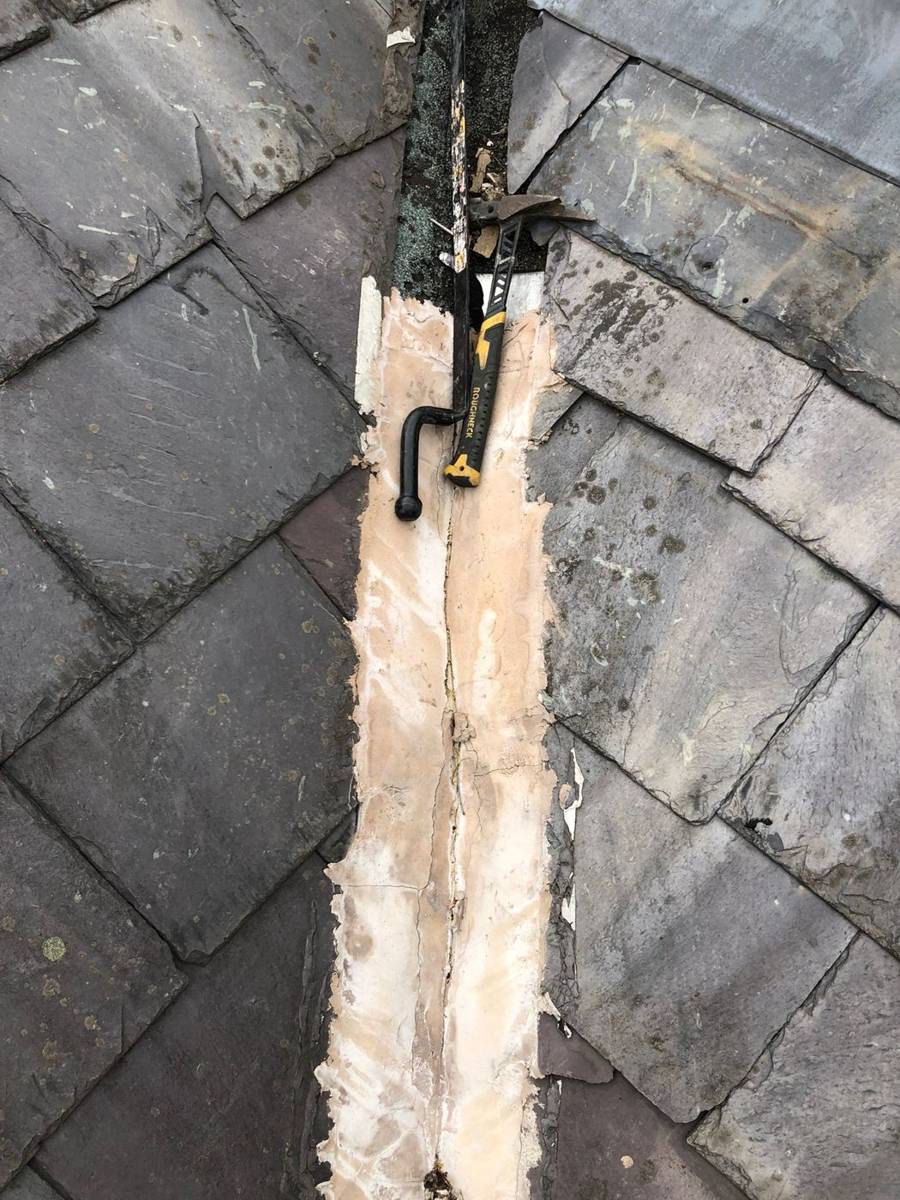
With the old lining lifted out, the bare valley boards show pale and dusty where the lining once sat. This is the moment to check the timber and make sure the base of the valley is sound and smooth, because lead needs a firm, even bed to sit on.
New lead and the slates cut back in
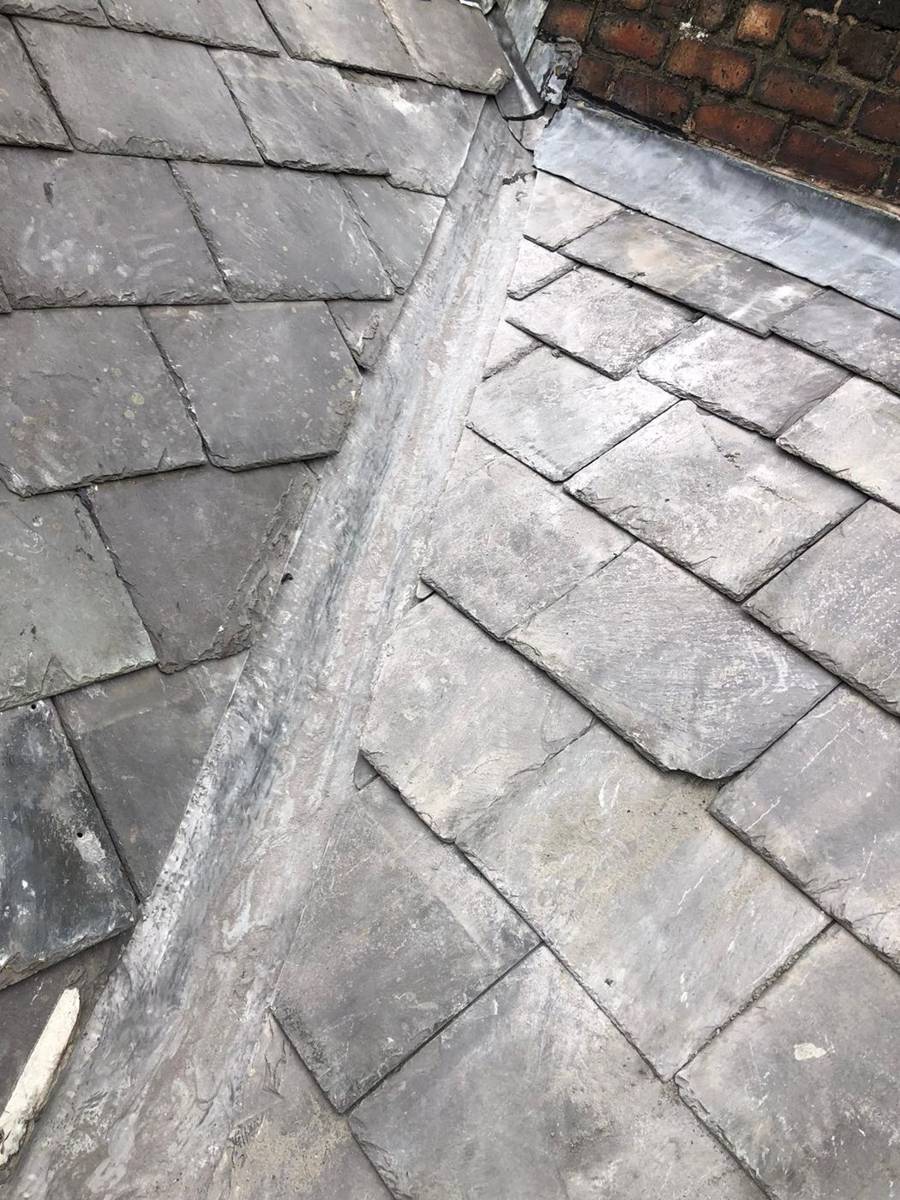
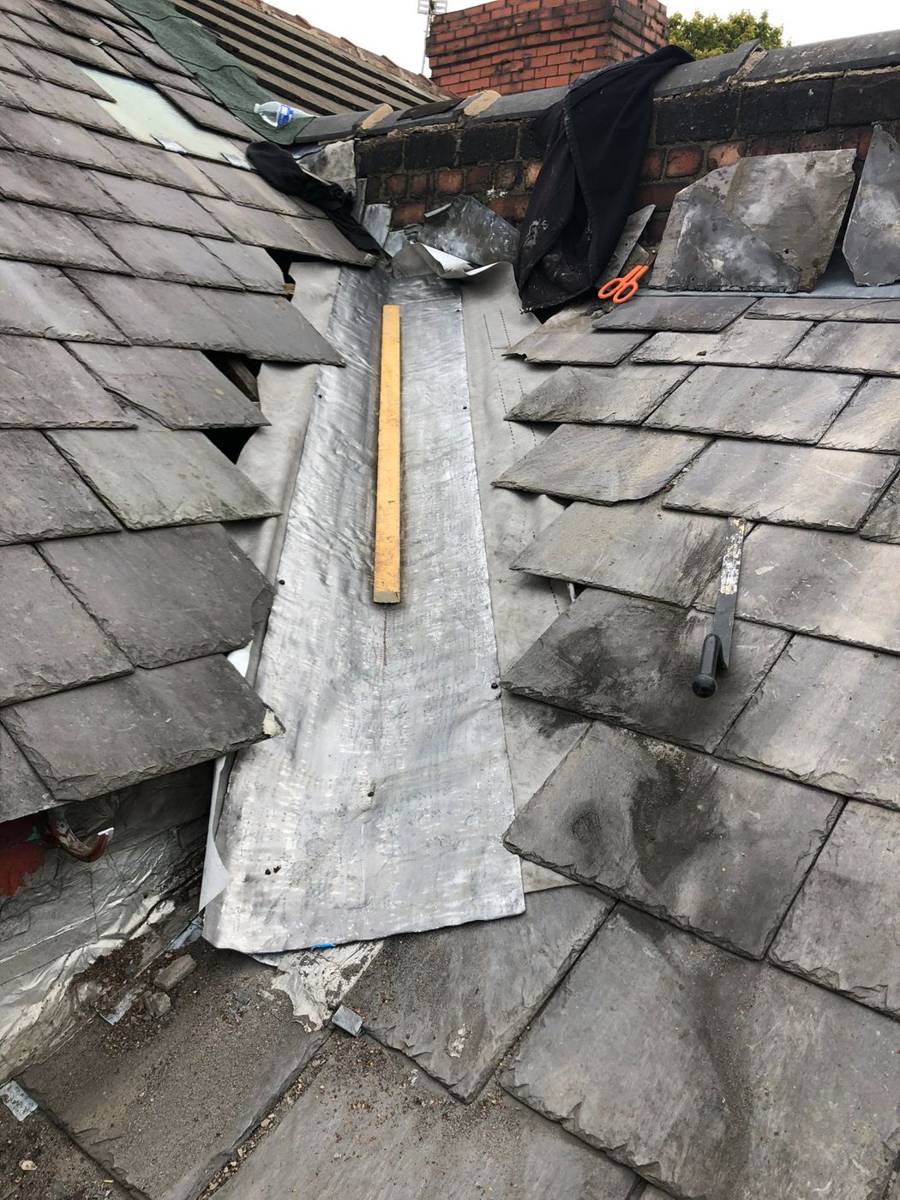
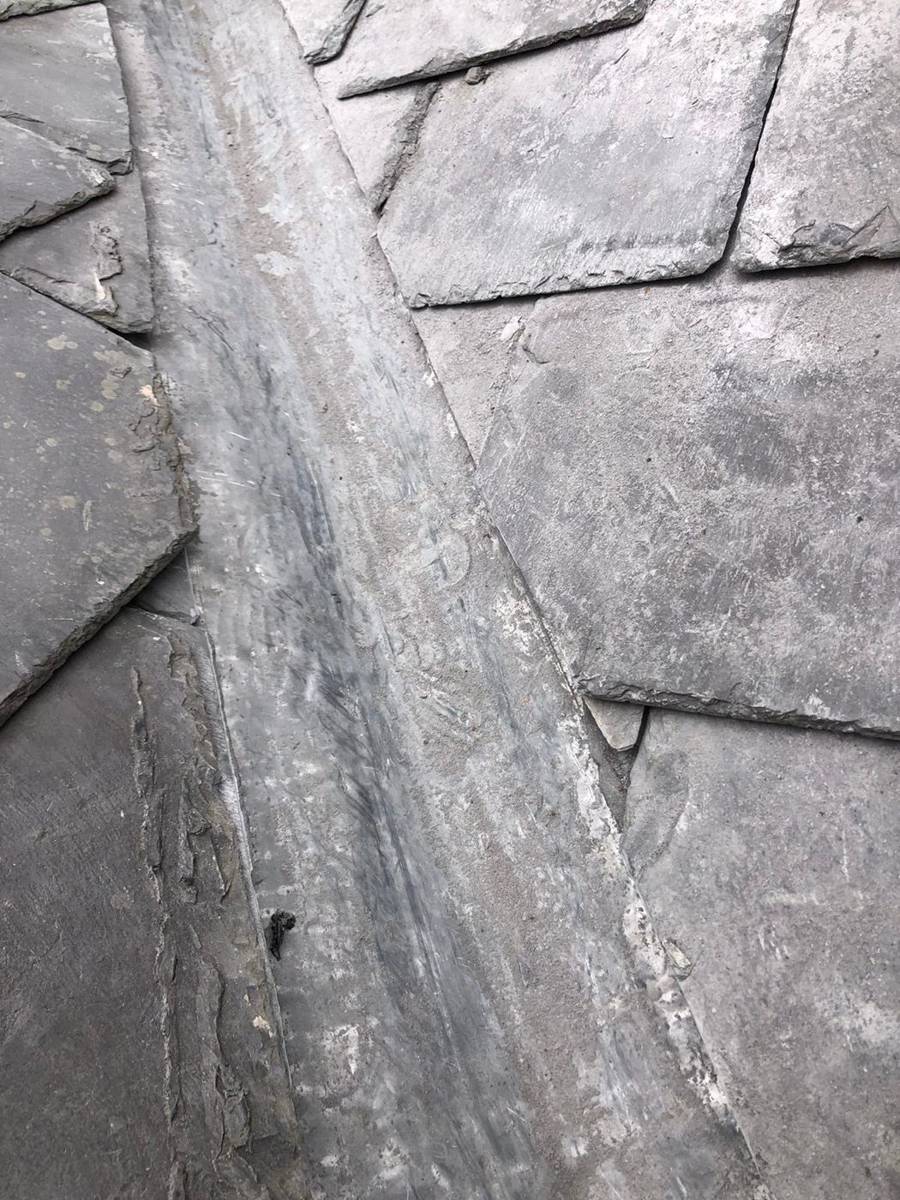
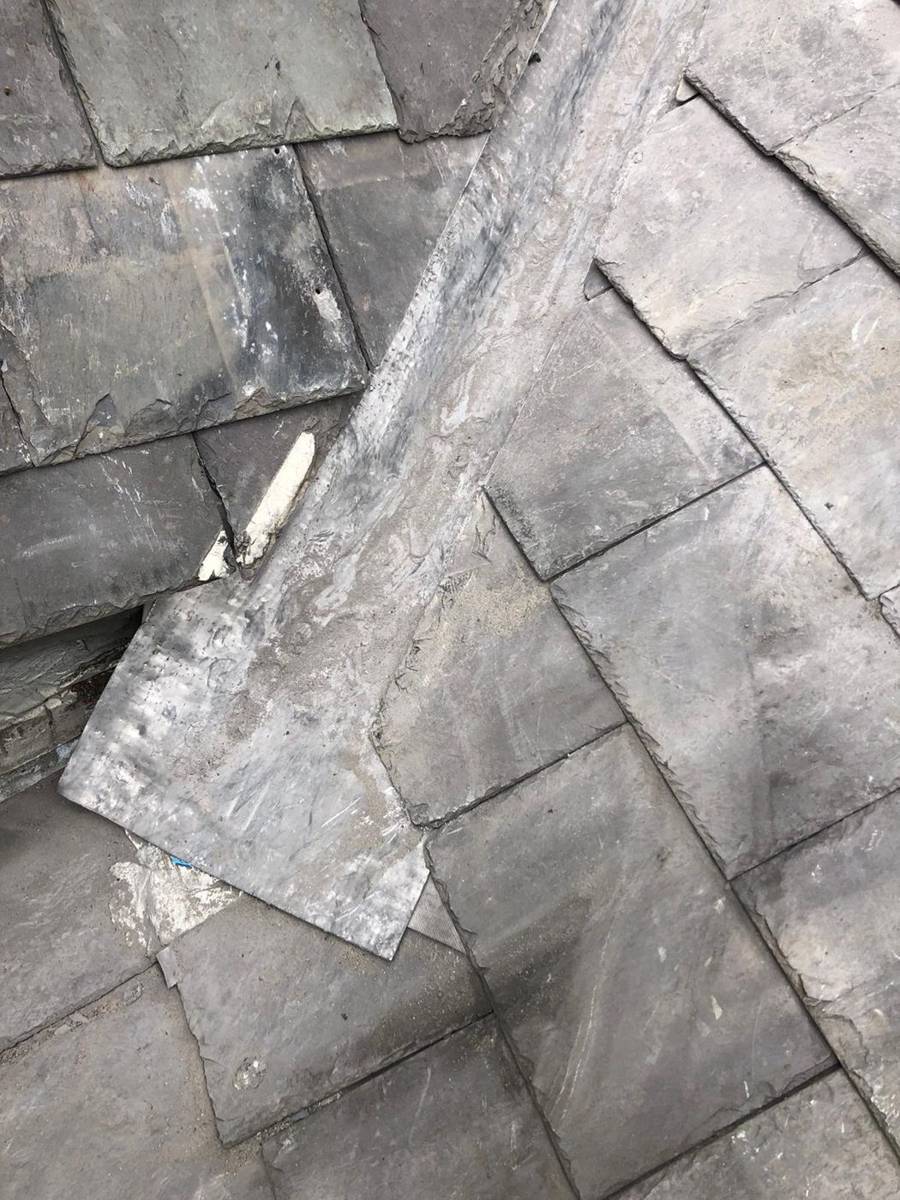
The new lead was laid down the length of the valley in one of the middle photos, a bright grey sheet dressed into the channel with its edges turned up either side. The slates were then refitted along both edges, each one cut to follow the line of the valley and leave an open channel of lead down the middle for the water to run in.
The finished shots show that clean, open lead channel running down between the two slopes, the lead lapping neatly over the slates at the bottom, and a new lead flashing tucked against the brickwork at the top where the valley meets the parapet.
- Slates stripped along both sides of the valley
- Old valley lining removed down to the boards
- New lead laid and dressed into the channel
- Slates cut and refitted to leave an open lead valley
- Lead flashing finished against the brick parapet
Questions About This Kind of Job
Why replace a valley rather than repair it?
Once an old lead or felt valley has split, thinned or been patched several times, repairs rarely last. Stripping it out lets us deal with the boards underneath as well as the lining.
Why lead for a slate roof valley?
Lead can be shaped to follow the valley and dressed around awkward details such as a parapet or chimney, and it suits the look of a traditional slate roof.
Can the old slates be reused?
Where they are in good condition, yes. On a valley job the slates along the edges are cut to line up with the new channel, and any broken ones are replaced.
Do you work in St Helens?
Yes. Valley work is part of our roof repairs, and you can get in touch to arrange a visit.