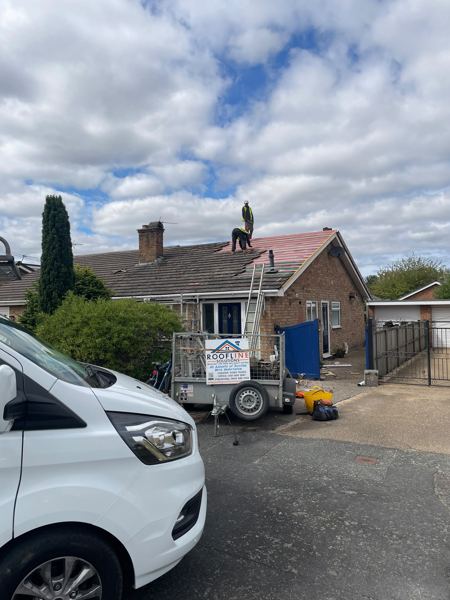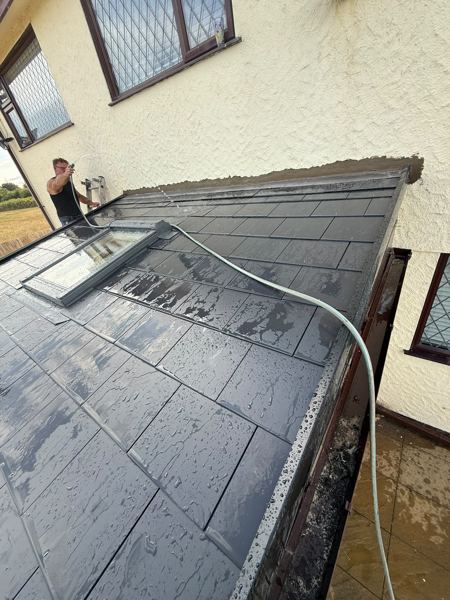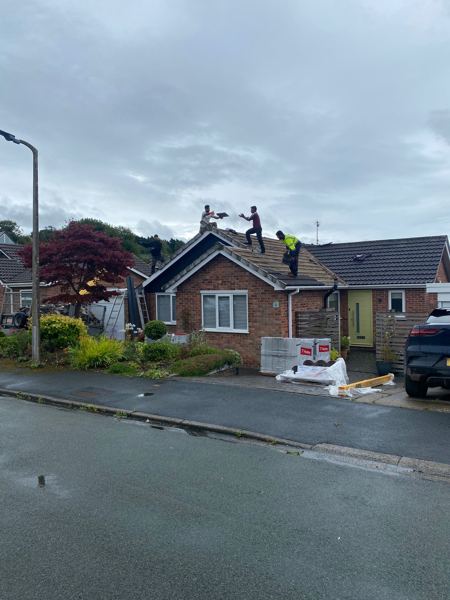
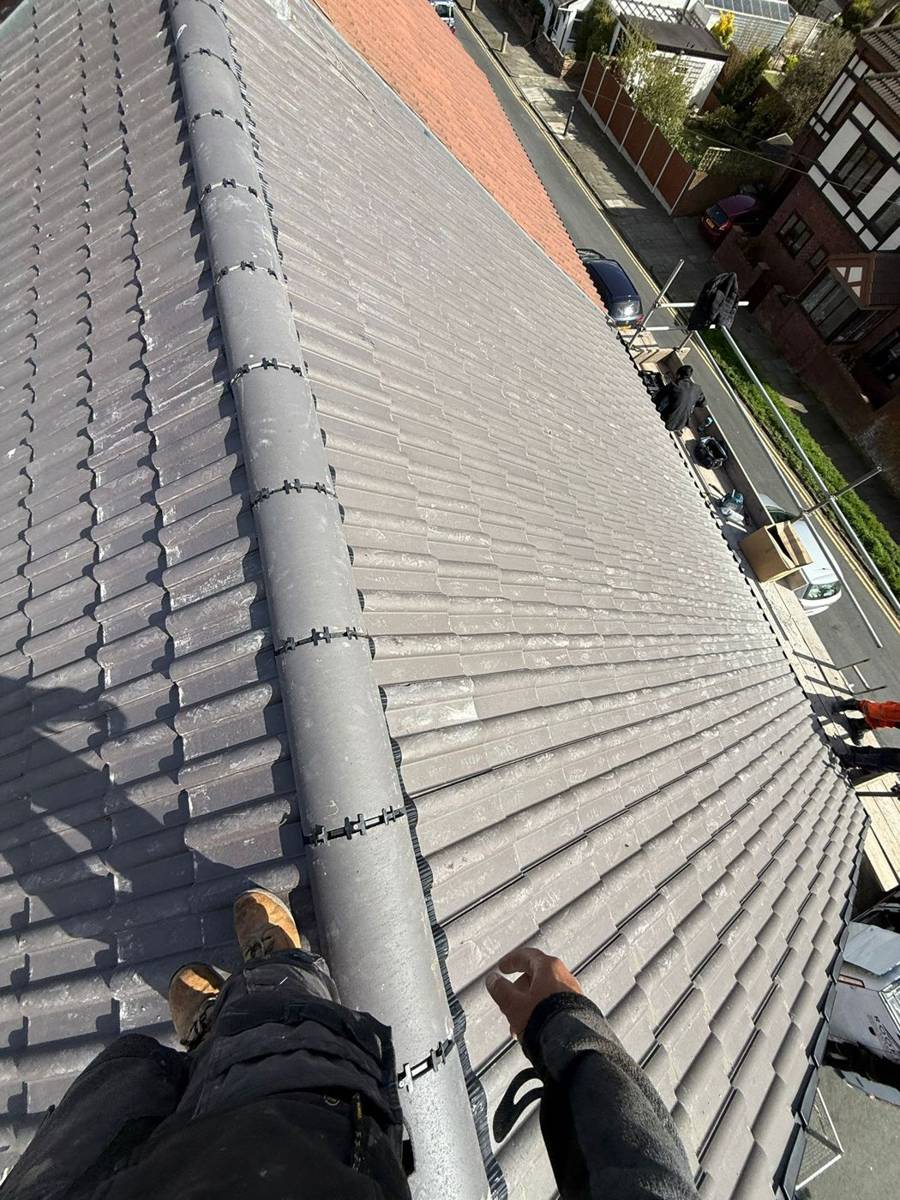
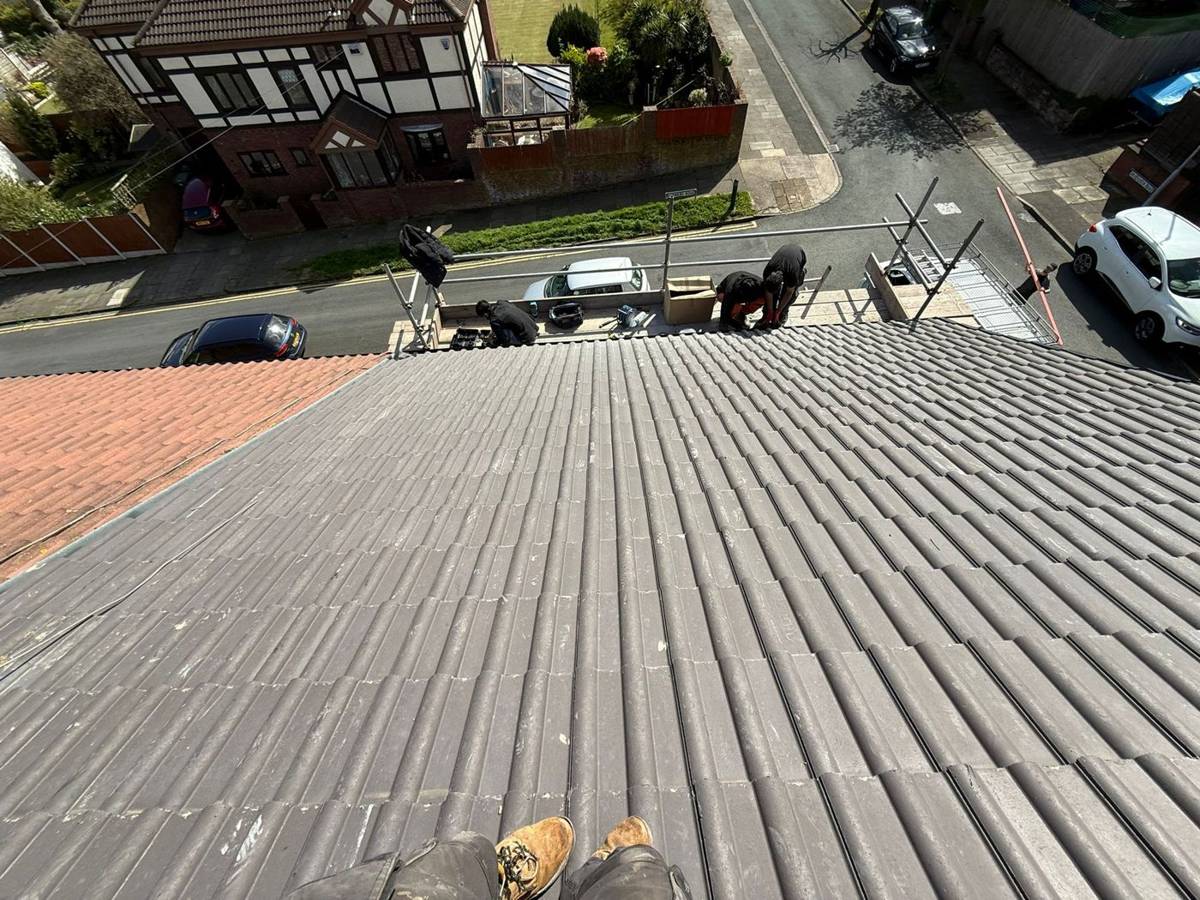
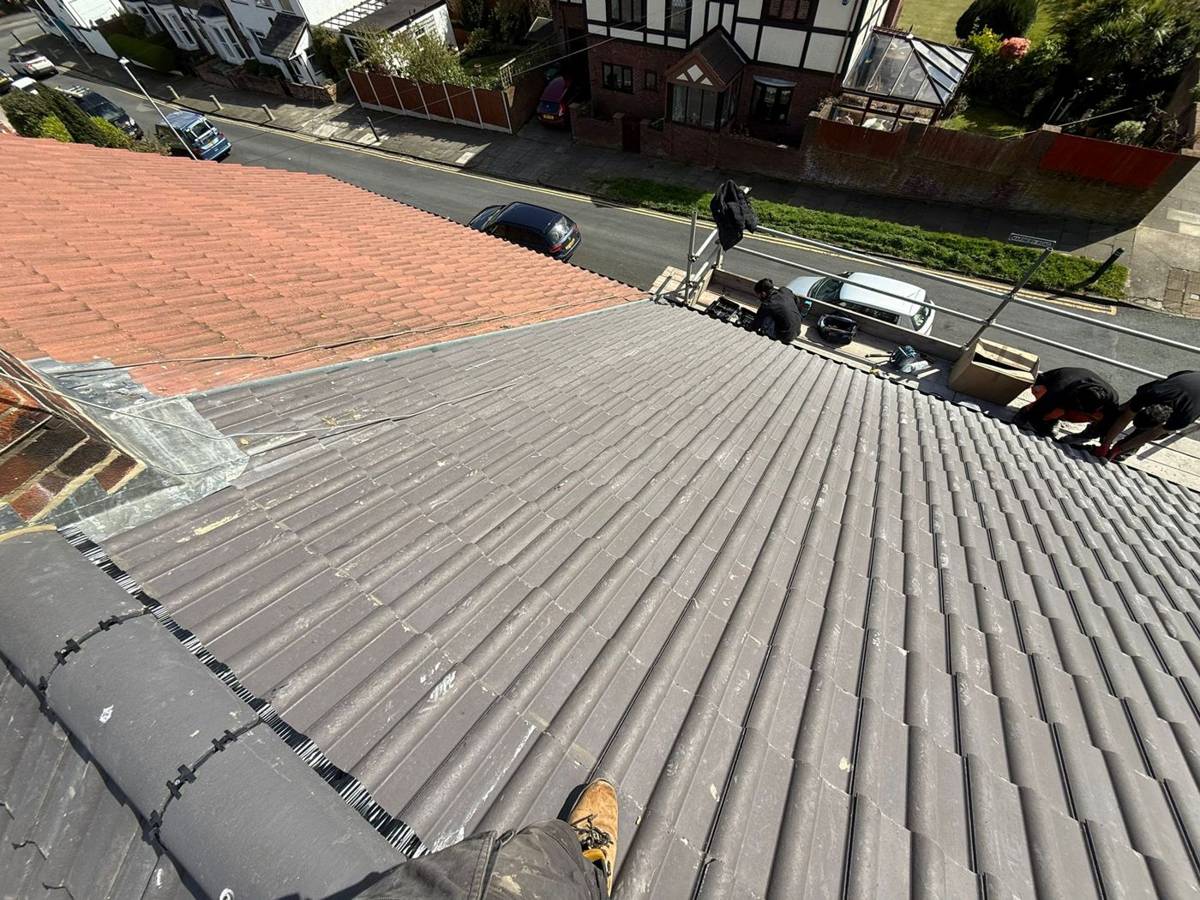
In April we re-roofed one half of a hipped semi-detached house in Chester. The neighbouring half keeps its red tiles, so the photos make an easy before-and-after comparison: red on one side of the party line, new grey concrete interlocking tiles on ours.
There are nine photos from this job, taken from the roof and the scaffold as the work went on. They cover the stripped slope with fresh membrane and battens, the tiling, the dry-fixed ridge and hip, and the new lead around the chimney stack that sits on the party wall.
From battens to tiles
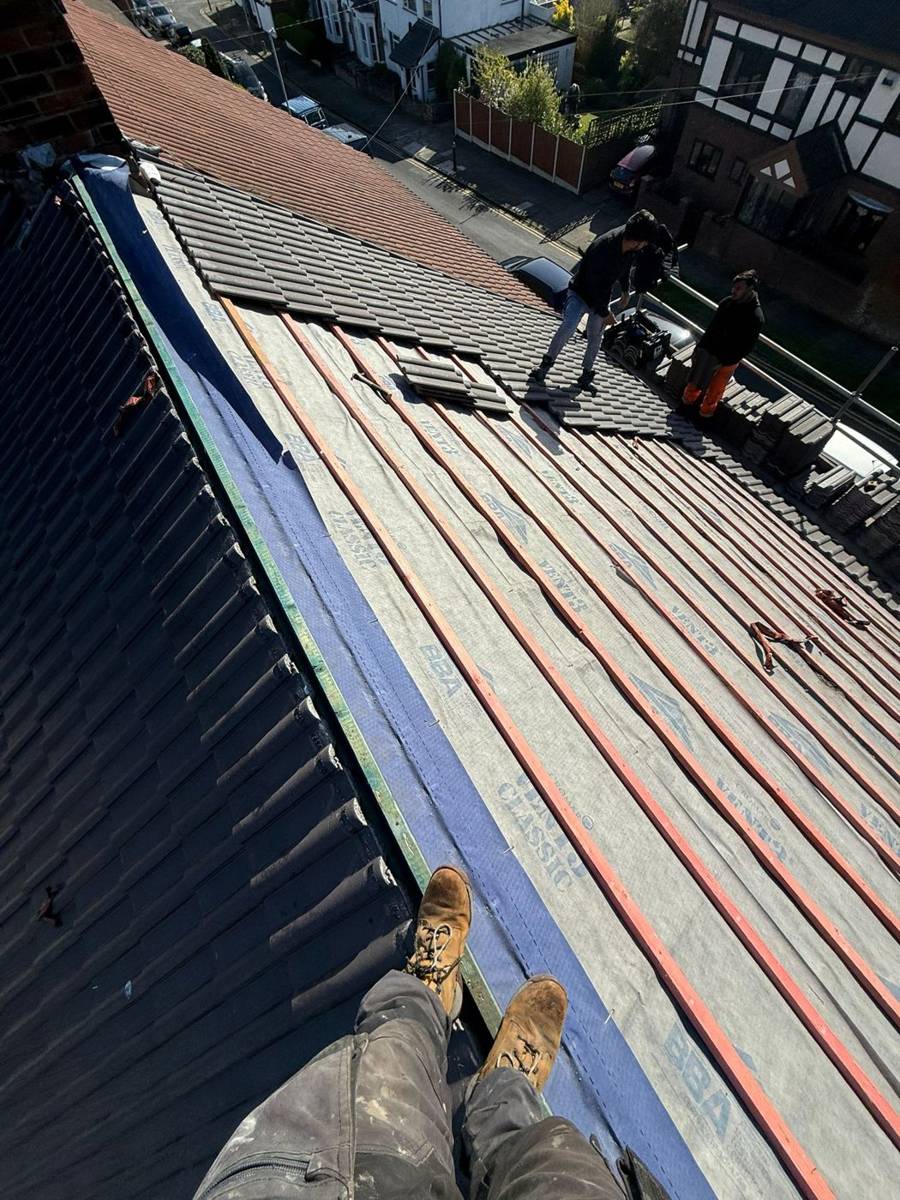
A scaffold went up along the front with a guard rail at the eaves, which gave the team a safe edge to work from and somewhere to stack tiles. The old covering was stripped and a new breathable membrane laid over the rafters, with new battens fixed through it. A strip of blue membrane runs down the slope where our half meets the neighbour's.
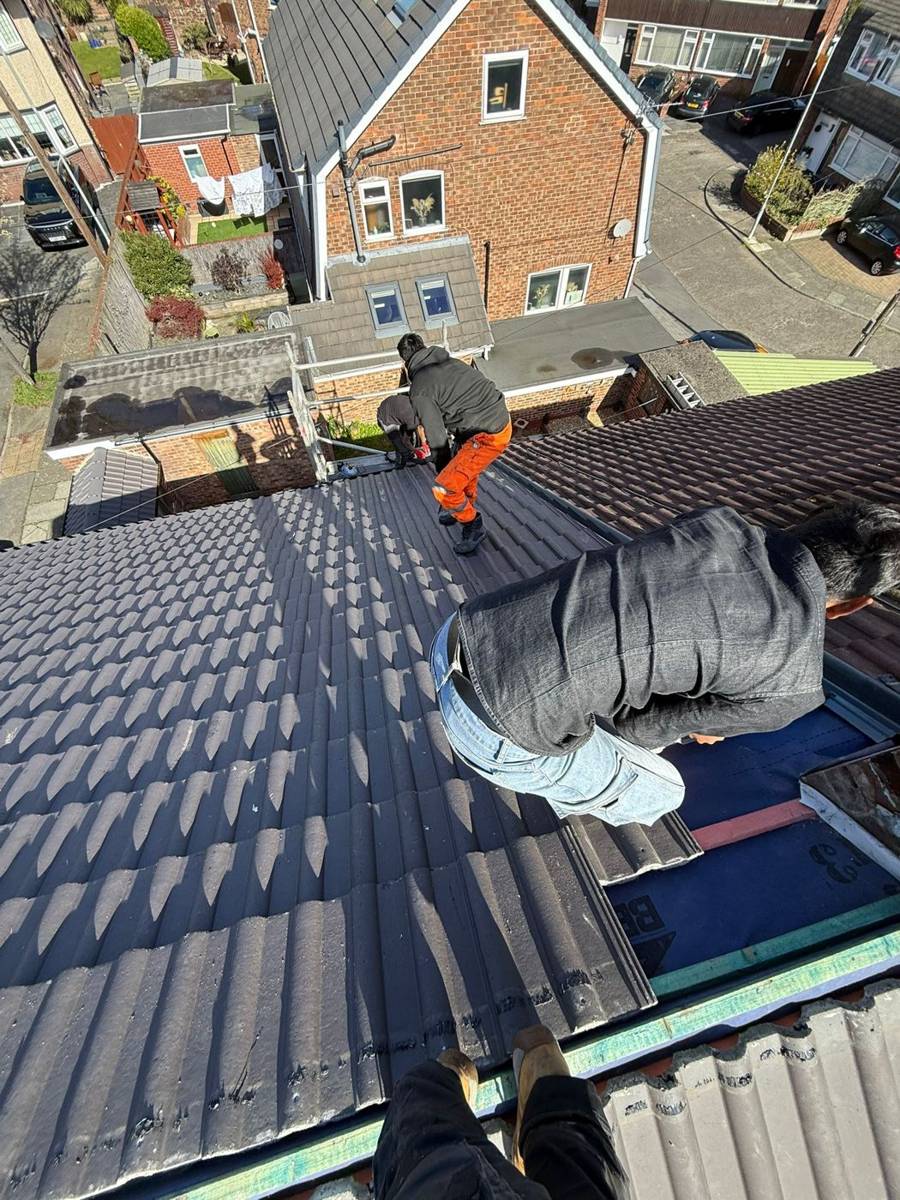
Tiling started at the eaves and worked upwards, with packs of new tiles loaded out across the battens ahead of the team. On one side the slope finishes above a lower roof, and the photos show the tiling being taken down to that edge.
Ridge, hip and chimney
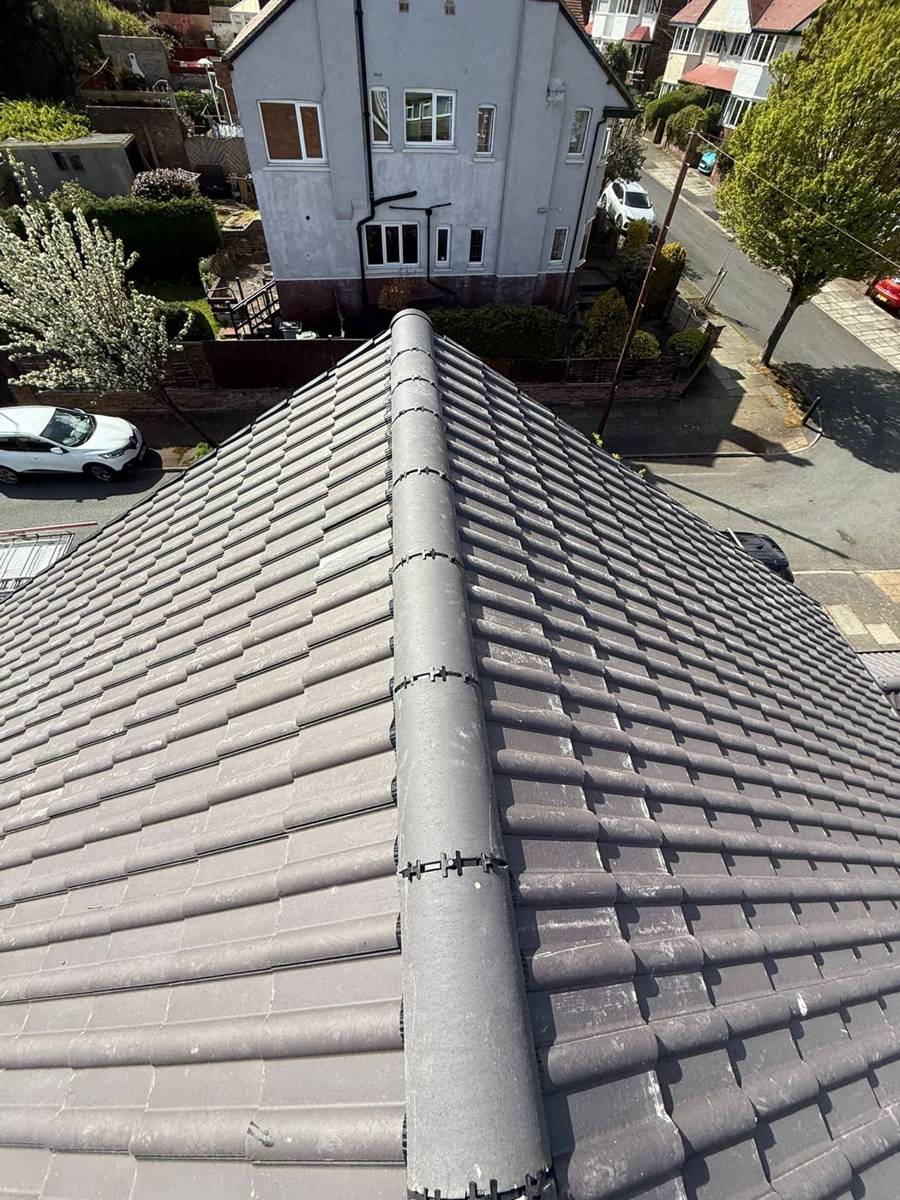
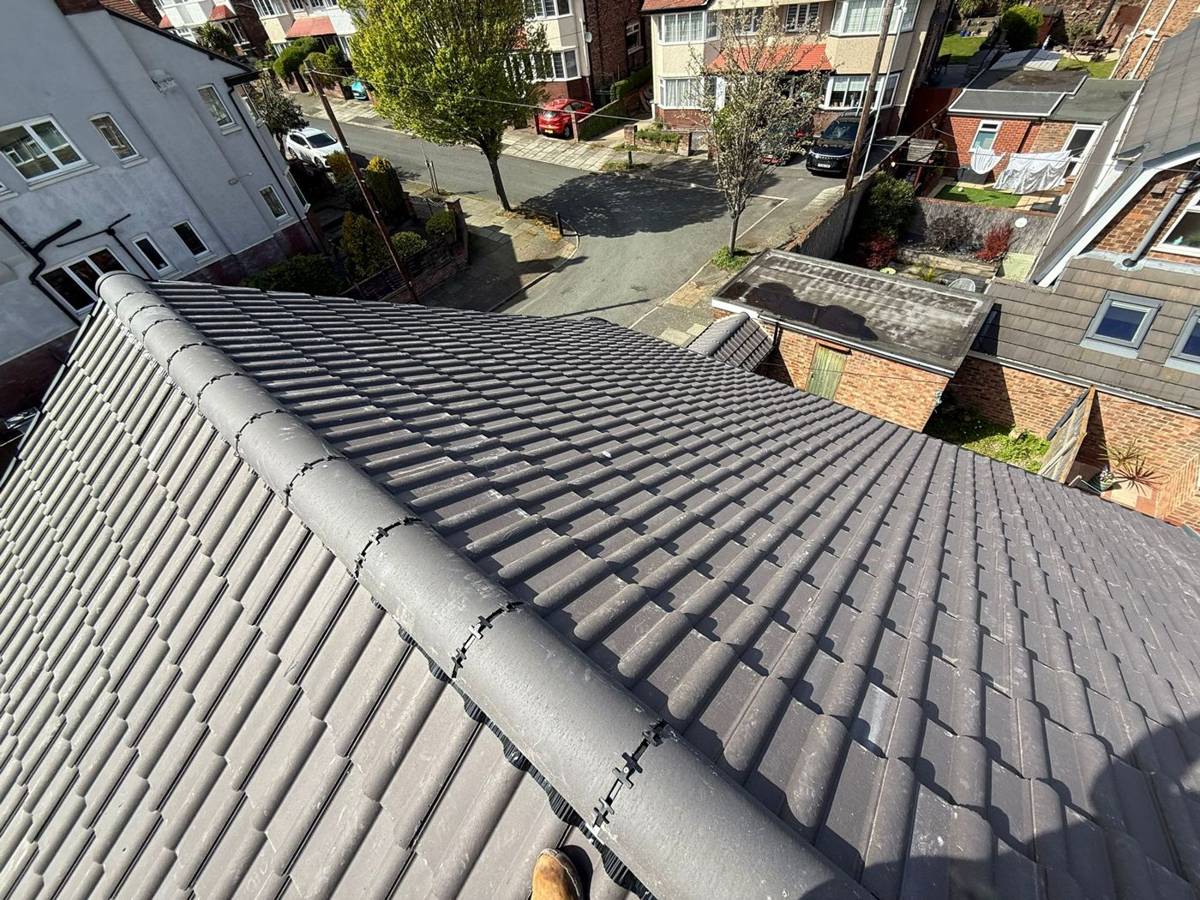
The ridge and hip were finished with a dry fix system rather than mortar. Each ridge tile is mechanically fixed over a roll that sits along the top of the tiles, with a clip at every joint, which you can see as the black fixings running the length of the ridge. Mortar bedding tends to crack and wash out over the years, and a dry fix removes that weak point.
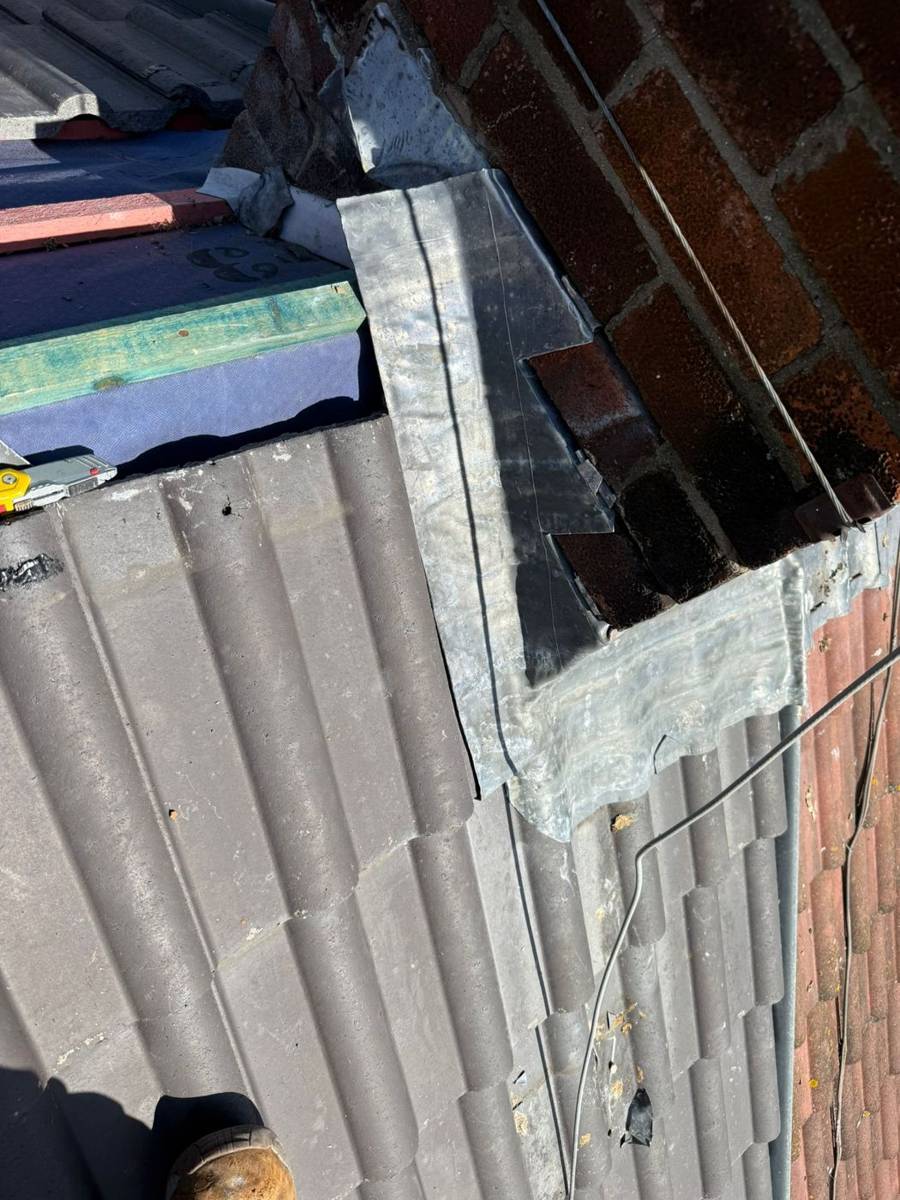
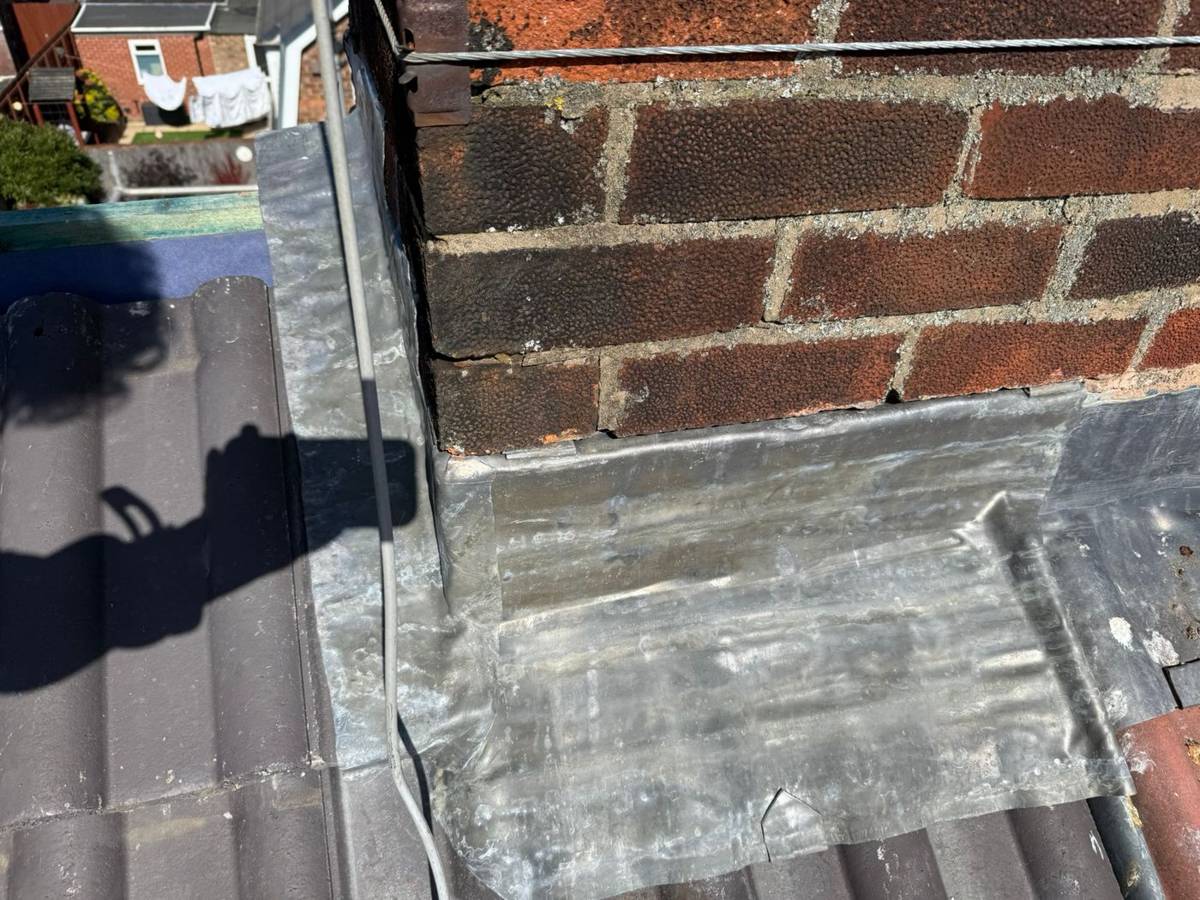
The chimney needed new leadwork to go with the new tiles. A lead apron was dressed over the tiles at the front of the stack and stepped flashings were cut into the brick joints up the side, so rain running down the brickwork is carried back out onto the tiles. Where the flashings turn into the neighbour's half, the lead is worked down over their red tiles to close the gap. Our chimney repairs page covers this kind of work on its own.
- Scaffold with edge protection along the eaves
- New breathable membrane and battens
- Grey concrete interlocking tiles
- Dry fix ridge and hip with clipped joints
- New lead apron and stepped flashings on the chimney stack
Thinking about your own roof?
If your roof is showing its age, whether it is slipped tiles, cracked ridge mortar or tired flashings, it is worth having it looked at before water gets in. Some roofs only need a repair; others are better re-roofed like this one. You can read more about new roof installations, or ask us to come out and take a look.
Questions About This Kind of Job
Can you re-roof just our half of a semi?
Yes. This job was exactly that. The key part is finishing the join with the neighbouring roof neatly, and making sure any shared features like a chimney are properly flashed.
Why use a dry ridge instead of mortar?
Mortar bedding can crack and wash out, which lets ridge tiles loosen. A dry fix system screws and clips each ridge tile in place, so it does not rely on mortar at all.
Does the chimney lead need replacing with a new roof?
Often it does. New tiles sit at a slightly different level from the old ones, and old lead that has been disturbed or has split will not seal properly against them.